MATLAB analysis package for 'Extreme Bow Shock Motions and Magnetopause Compression During the 20 April 2002 Storm' (Cluster/ACE event analysis, figures, and Table 1
Aug 2026· Zenodo (CERN European Organization for Nuclear Research)
Abstract
MATLAB analysis package accompanying the article "Extreme Bow Shock Motions and Magnetopause Compression During the 20 April 2002 Storm: Predictability Limits at an ICME Leading Edge" (T. Y. Alrefay, submitted to Earth and Space Science). The package downloads all required spacecraft data from public archives and reproduces every figure and table of the article, end to end, from a single driver script. What it does. The pipeline (1) retrieves ACE MAG/SWEPAM data and the OMNI 1-min SYM-H index from NASA/GSFC CDAWeb via the CDAS REST service, and full-resolution Cluster FGM data from the ESA Cluster Science Archive via its HAPI server; (2) performs minimum variance analysis with bootstrap uncertainty, Rankine–Hugoniot jump analysis and discontinuity classification, and four-spacecraft constant-velocity timing of bow shock crossings; (3) implements the two-anchor arrival-time reconstruction introduced in the article, propagating the interplanetary front both from the L1 monitor and from the near-Earth four-spacecraft-timed crossing, with full error budgets; (4) evaluates the Shue et al. (1998) magnetopause and Farris & Russell (1994) bow shock standoff before and after the discontinuity; and (5) computes the deterministic bow shock velocity prediction of Meziane et al. (2015, Eq. 4) for comparison with the six timed crossings. Reproduces: Figures 1–5 and Table 1 of the article. Requirements: MATLAB (base installation; no toolboxes required) and internet access for the first run's data download. Run main_analysis.m section by section; see README for details and for the mapping between scripts, figures, and table. Data sources: all input data are publicly available from CDAWeb (https://cdaweb.gsfc.nasa.gov) and the ESA Cluster Science Archive (https://csa.esac.esa.int); no spacecraft data are redistributed in this archive.
This publication proposes a definition and a classification of agile software development approaches and analyses ten software development methods that can be characterized as being "agile" against the defined criterion.
P. Abrahamsson, O. Salo, Jussi Ronkainen et al.· arXiv.org· 727 citations· ⚡54
The study shows that agile practices improve both informal and formal communication, but indicates that, in larger development situations involving multiple external stakeholders, a mismatch of adequate communication mechanisms can sometimes even hinder the communication.
M. Pikkarainen, Jukka Haikara, O. Salo et al.· Empirical Software Engineeri...· 401 citations· ⚡48
The results indicate that software engineering work practices are chosen opportunistically, adapted and configured to provide value under the constrains imposed by the startup context.
Nicolò Paternoster, Carmine Giardino, M. Unterkalmsteiner et al.· Information and Software Tec...· 394 citations· ⚡54
The perception of the impact of agile methods is predominantly positive, and several challenge areas were discovered, but based on this study, agile methods are here to stay.
M. Laanti, O. Salo, P. Abrahamsson· Information and Software Tec...· 260 citations· ⚡20
AI is making software generation faster, but speed does not remove the need for expertise. As more work is delegated to AI, tacit knowledge may become one of the most important human advantages in software engineering. The post Beyond Prompt Engineering: The Role of Tacit Knowledge in Software Engineering appeared first on GPT-Lab.
MIT News · Artificial Intelligence· news.mit.eduSep 9, 2026
A weeklong summer workshop brought higher education faculty to campus to explore how AI and machine learning materials can be adapted for their classrooms.
MIT News · Artificial Intelligence· news.mit.eduSep 2, 2026
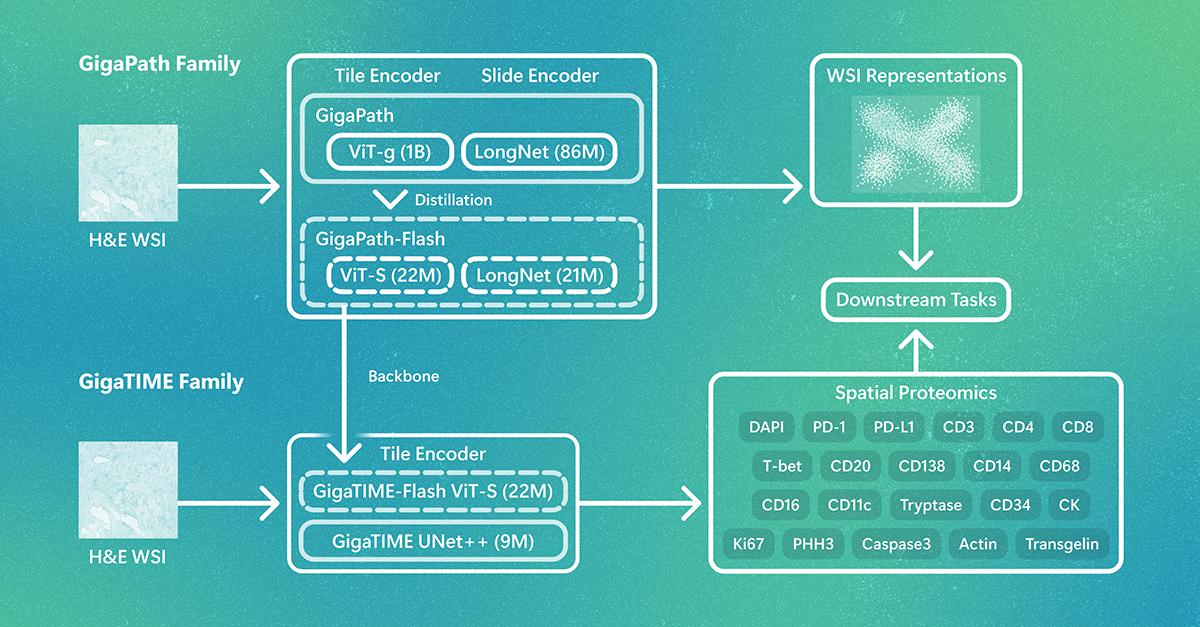
What if pathology foundation models could do more with less? GigaPath-Flash and GigaTIME-Flash cut computational demands while maintaining strong performance, opening the door to larger studies and broader exploration. The post GigaPath-Flash and GigaTIME-Flash: Toward population-scale discovery with efficient pathology foundation models appeared first on Microsoft Research.
We use cookies to run the site and, with your consent, for analytics and to show ads.
See our Cookie Policy.