Skip to content
#machine learning #computer vision Preprint Open access

Residual-Stream Burden Shapes Representation Learning in Diffusion Transformers

Tongtong Liang Siqi Kou Ziqiao Xi Esha Singh Kun Zhou Zhijie Deng Alexander Cloninger Yu-Xiang Wang Rahul Parhi
Sep 2026
Machine Learning Computer Vision

Abstract

In diffusion-based generation, a neural network can be trained to predict the clean data, the noise, or the velocity from a noisy input. These prediction targets are interconvertible and describe the same generative process, yet plain Diffusion Transformers operating on large pixel patches succeed with clean prediction and fail with noise or velocity prediction. We argue that this asymmetry arises because noisy targets require the residual stream to preserve noise-dependent input variation through depth for the final readout, forcing subsequent layers to compute on noisy representations. A spectrally concentrated clean target imposes a lighter demand, leaving greater freedom to organize hidden representations for subsequent computation. We call this preservation requirement *residual-stream burden* and show how it shapes representation learning in Diffusion Transformers. Controlled experiments indicate that the exploitable structure is spectral concentration in patch space and that the bandwidth of the persistent residual state is a key resource for noisy prediction. We further show that this account is consistent with recent decoupled pixel-space architectures, whose diverse designs all reduce the residual-stream burden on the main pathway. To examine this understanding from a complementary direction, we expand and reorganize the residual-stream bandwidth directly, introducing Spatially Indexed Hyper-Connections (SiHC) that reach FID 1.71 on ImageNet $256^2$. Together, these results identify residual-stream burden as a mechanism through which prediction targets and architecture jointly shape representation learning in Diffusion Transformers.

View source

Similar papers

#computer vision Review Sep 2017

Agile Software Development Methods: Review and Analysis

This publication proposes a definition and a classification of agile software development approaches and analyses ten software development methods that can be characterized as being "agile" against the defined criterion.

P. Abrahamsson, O. Salo, Jussi Ronkainen et al. · 727 citations · ⚡54
#computer vision Jun 2008

The impact of agile practices on communication in software development

The study shows that agile practices improve both informal and formal communication, but indicates that, in larger development situations involving multiple external stakeholders, a mismatch of adequate communication mechanisms can sometimes even hinder the communication.

M. Pikkarainen, Jukka Haikara, O. Salo et al. · 401 citations · ⚡48
#machine learning Review Open access Oct 2014

Software development in startup companies: A systematic mapping study

The results indicate that software engineering work practices are chosen opportunistically, adapted and configured to provide value under the constrains imposed by the startup context.

Nicolò Paternoster, Carmine Giardino, M. Unterkalmsteiner et al. · 394 citations · ⚡54

Diffusion models as plug-and-play priors

The possibility of inferring high-dimensional data inference in a model that consists of a prior and an auxiliary differentiable constraint given some additional information is considered, thereby allowing a range of potential applications in adapting models to new domains and tasks.

Alexandros Graikos, Esmeralda S. Whitammer, N. Jojic et al. · 316 citations · ⚡15

Related blog posts

Microsoft Research Blog Aug 11, 2026

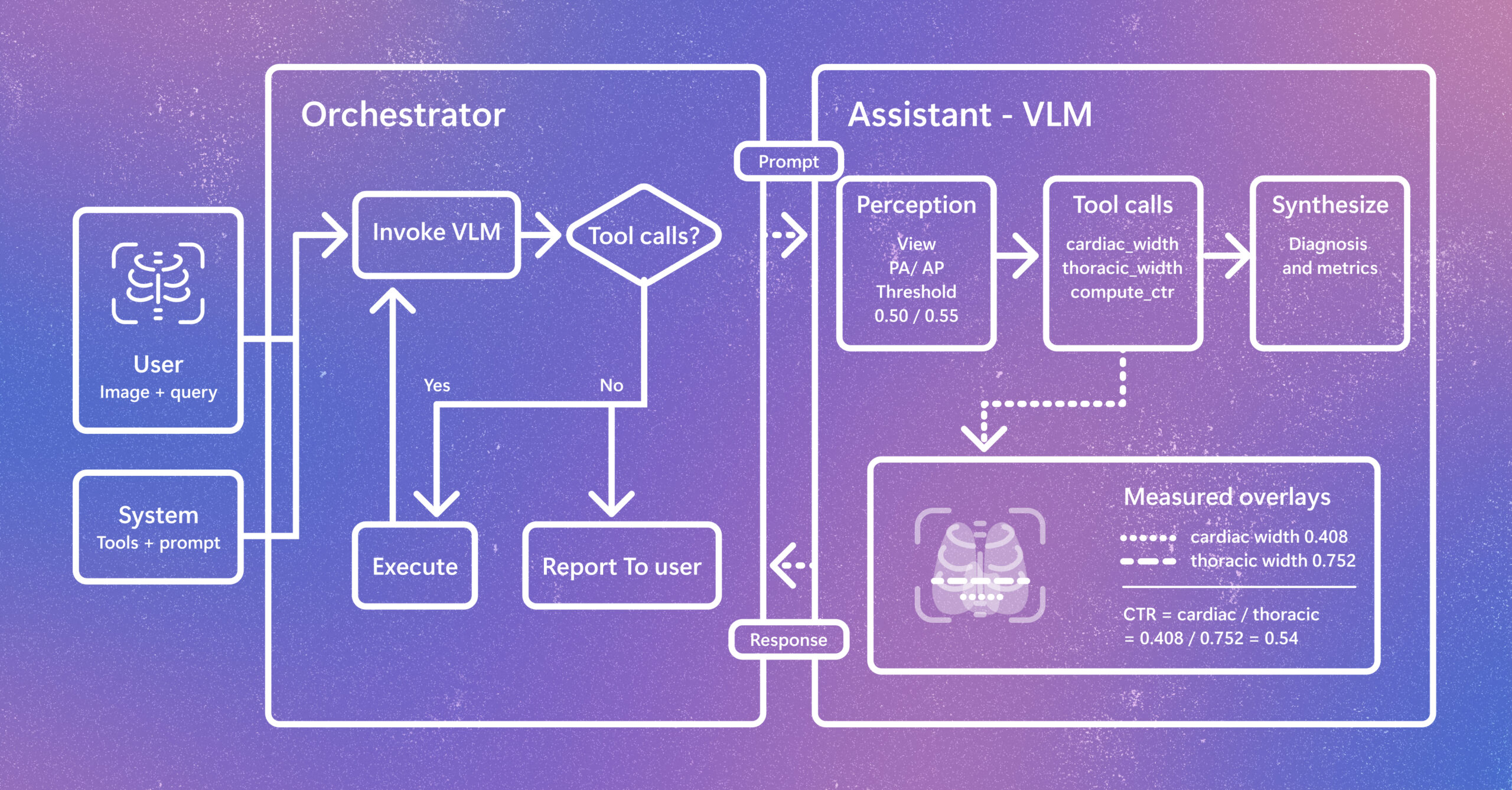
Introducing CARE-X: Towards Clinically Useful Radiology VLMs with Auxiliary Supervision, Reward-Aligned Learning, and Tool-Augmented Measurement

Radiology AI is evolving beyond report generation. CARE-X explores a unified approach that combines flexible reasoning, calibrated predictions, and measurement-based tools for chest X-ray interpretation. The post Introducing CARE-X: Towards Clinically Useful Radiology VLMs with Auxiliary Supervision, Reward-Aligned Learning, and Tool-Augmented Measurement appeared first on Microsoft Research.

MIT News · Artificial Intelligence Oct 7, 2026

Discovering the value of humanistic inquiry

Students in MIT’s Concourse program delve deeply into the human condition, debate challenging questions, and learn to develop judgment about issues that can’t be quantified.

We use cookies to run the site and, with your consent, for analytics and to show ads. See our Cookie Policy.
