Skip to content

Learning When to Recur: Token-Adaptive Recursion for Imbalanced Ophthalmic Domain Incremental Learning

Sep 2026 · 0 citations · 56 references
Computer Science

Abstract

Domain incremental learning is essential for adapting ophthalmic deep learning models to sequential clinical domains while preserving diagnostic expertise. Existing domain incremental learning methods predominantly address the domain shift induced by style variations. However, they often overlook the severe class imbalance inherent in real-world clinical scenarios, such as clinical referral systems. Institutions in these systems encounter drastic fluctuations in class priors, resulting in label distribution shift, a critical form of domain shift that triggers severe catastrophic forgetting. To address these challenges, we propose ToRe, a rehearsal-free and parameter-efficient framework that leverages frozen ophthalmic foundation models for robust incremental adaptation. ToRe employs a parameter isolation strategy to decouple domain-specific optimization paths, thereby helping mitigate catastrophic forgetting driven by both label distribution shift and style variations. Simultaneously, it introduces token-adaptive recursion that adaptively allocates additional computational depth across tokens, allowing simple tokens to exit the recursion loop early while subjecting complex tokens, such as those associated with lesions, to deeper recursive processing. This mechanism enhances the feature representations for minority classes, thereby supporting generalization throughout the domain incremental learning process. Extensive evaluations on nine heterogeneous datasets demonstrate that ToRe consistently outperforms state-of-the-art methods in overall performance across the three benchmarks, while maintaining near-zero forgetting. Together, these results support the applicability of ToRe to dynamic and imbalanced clinical environments. The code is available at https://github.com/Nancyolo/ToRe


View source

Similar papers

#artificial intelligence Preprint Jul 2024

The Llama 3 Herd of Models

It is found that Llama 3 delivers comparable quality to leading language models such as GPT-4 on a plethora of tasks, and performs competitively with the state-of-the-art on image, video, and speech recognition tasks.

Aaron Grattafiori, Abhimanyu Dubey, Abhinav Jauhri et al. · 21,082 citations · ⚡3,832
#artificial intelligence Conference Open access Jun 2018

Gibson Env: Real-World Perception for Embodied Agents

This paper investigates developing real-world perception for active agents, proposes Gibson Environment for this purpose, and showcases a set of perceptual tasks learned therein.

F. Xia, Amir Zamir, Zhi-Yang He et al. · 1,069 citations · ⚡112
#computer vision Review Sep 2017

Agile Software Development Methods: Review and Analysis

This publication proposes a definition and a classification of agile software development approaches and analyses ten software development methods that can be characterized as being "agile" against the defined criterion.

P. Abrahamsson, O. Salo, Jussi Ronkainen et al. · 727 citations · ⚡54
#computer vision Jun 2008

The impact of agile practices on communication in software development

The study shows that agile practices improve both informal and formal communication, but indicates that, in larger development situations involving multiple external stakeholders, a mismatch of adequate communication mechanisms can sometimes even hinder the communication.

M. Pikkarainen, Jukka Haikara, O. Salo et al. · 401 citations · ⚡48
#machine learning Review Open access Oct 2014

Software development in startup companies: A systematic mapping study

The results indicate that software engineering work practices are chosen opportunistically, adapted and configured to provide value under the constrains imposed by the startup context.

Nicolò Paternoster, Carmine Giardino, M. Unterkalmsteiner et al. · 394 citations · ⚡54

Related blog posts

MIT News · Artificial Intelligence Oct 28, 2026

Making machines that can listen

Professor Paris Smaragdis develops computers with superhuman hearing for applications like speech recognition, music understanding, and environmental monitoring.

Microsoft Research Blog Aug 11, 2026

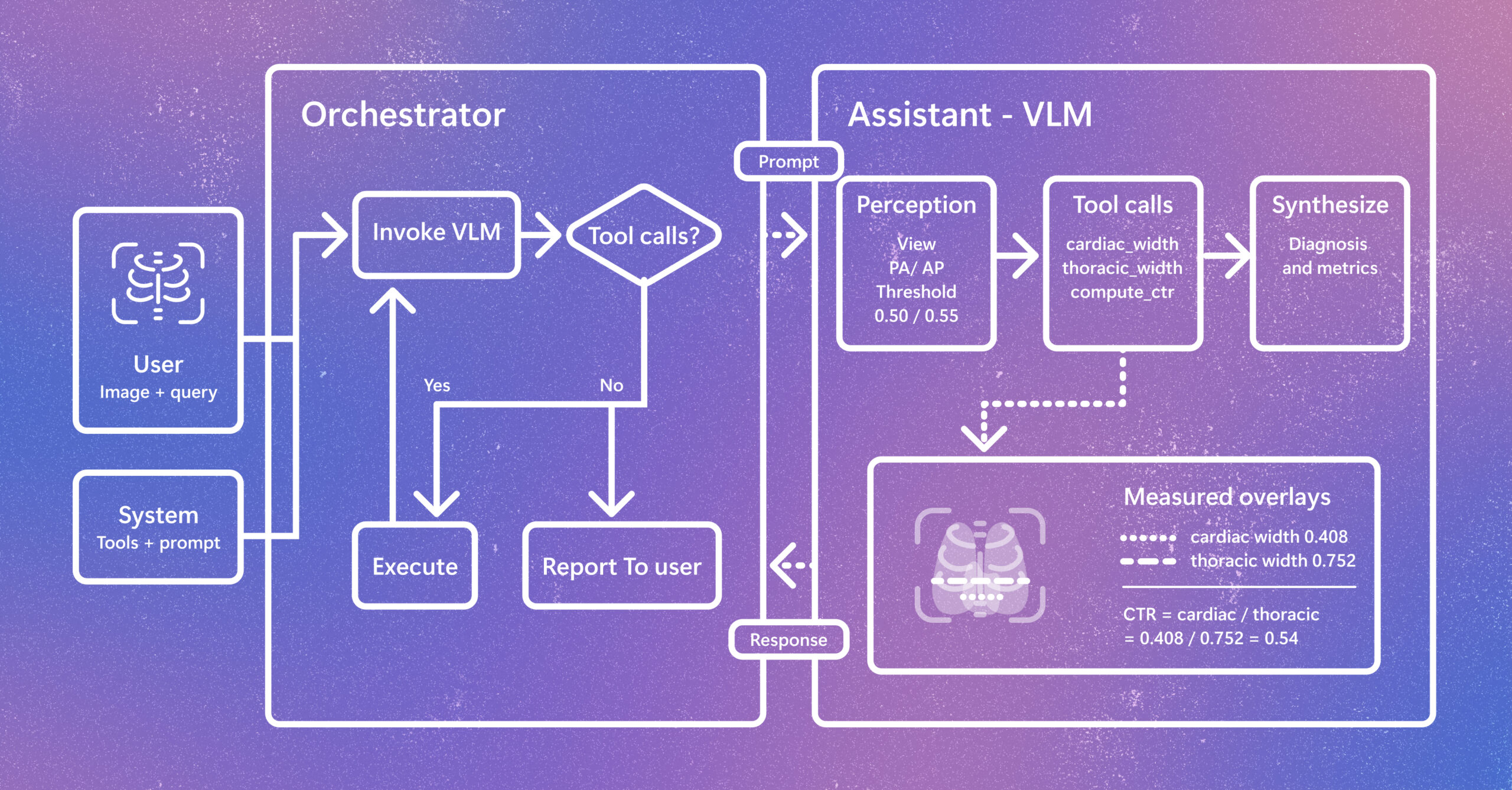
Introducing CARE-X: Towards Clinically Useful Radiology VLMs with Auxiliary Supervision, Reward-Aligned Learning, and Tool-Augmented Measurement

Radiology AI is evolving beyond report generation. CARE-X explores a unified approach that combines flexible reasoning, calibrated predictions, and measurement-based tools for chest X-ray interpretation. The post Introducing CARE-X: Towards Clinically Useful Radiology VLMs with Auxiliary Supervision, Reward-Aligned Learning, and Tool-Augmented Measurement appeared first on Microsoft Research.

We use cookies to run the site and, with your consent, for analytics and to show ads. See our Cookie Policy.