Skip to content
#machine learning #computer vision Preprint Open access

FIDAL: Diversity-Aware Federated Active Learning Under Real-World Distribution Shifts

David Due\~nas Gaviria Shadi Albarqouni
Sep 2026
Machine Learning Computer Vision

Abstract

Federated learning enables collaborative model training across institutions without centralizing data, yet high annotation costs, domain shifts, and class imbalance remain major obstacles, especially when irrelevant out-of-distribution (OOD) samples dilute the labeled data. Existing active learning methods target uncertainty or diversity within in-distribution (ID) data and overlook unknown samples in federated clinical settings. We propose FIDAL, an open-set federated active learning framework that combines calibrated global-local evidential uncertainty, support-set diversity weighting, and adaptive OOD rejection. The rejection gate thresholds a foundation-model Gaussian-coverage signal per client and per round with Otsu's criterion, so that highly informative ID samples are queried while irrelevant outliers are excluded without any hand-tuned threshold. Evaluated on three multi-center medical imaging benchmarks (dermatology, histopathology, and mammography with organically occurring artifacts) in realistic open-set scenarios, FIDAL outperforms detector-based open-set methods by up to about 12 percentage points of balanced accuracy and is the only method on the accuracy-ID purity Pareto front of all three benchmarks. At an equal query budget it spends at least 1.3 times fewer annotations on OOD samples than every accuracy-matched baseline, saving an estimated 7-29 hours of expert reading on the mammography benchmark. By labeling only a fraction of the data pool, it matches or exceeds fully supervised performance across modalities. These results highlight the value of integrating uncertainty, diversity, and OOD rejection in open-set federated active learning for medicine.

View source

Similar papers

#computer vision Review Sep 2017

Agile Software Development Methods: Review and Analysis

This publication proposes a definition and a classification of agile software development approaches and analyses ten software development methods that can be characterized as being "agile" against the defined criterion.

P. Abrahamsson, O. Salo, Jussi Ronkainen et al. · 727 citations · ⚡54
#computer vision Jun 2008

The impact of agile practices on communication in software development

The study shows that agile practices improve both informal and formal communication, but indicates that, in larger development situations involving multiple external stakeholders, a mismatch of adequate communication mechanisms can sometimes even hinder the communication.

M. Pikkarainen, Jukka Haikara, O. Salo et al. · 401 citations · ⚡48
#machine learning Review Open access Oct 2014

Software development in startup companies: A systematic mapping study

The results indicate that software engineering work practices are chosen opportunistically, adapted and configured to provide value under the constrains imposed by the startup context.

Nicolò Paternoster, Carmine Giardino, M. Unterkalmsteiner et al. · 394 citations · ⚡54

Diffusion models as plug-and-play priors

The possibility of inferring high-dimensional data inference in a model that consists of a prior and an auxiliary differentiable constraint given some additional information is considered, thereby allowing a range of potential applications in adapting models to new domains and tasks.

Alexandros Graikos, Esmeralda S. Whitammer, N. Jojic et al. · 316 citations · ⚡15

Related blog posts

Microsoft Research Blog Aug 11, 2026

Introducing CARE-X: Towards Clinically Useful Radiology VLMs with Auxiliary Supervision, Reward-Aligned Learning, and Tool-Augmented Measurement

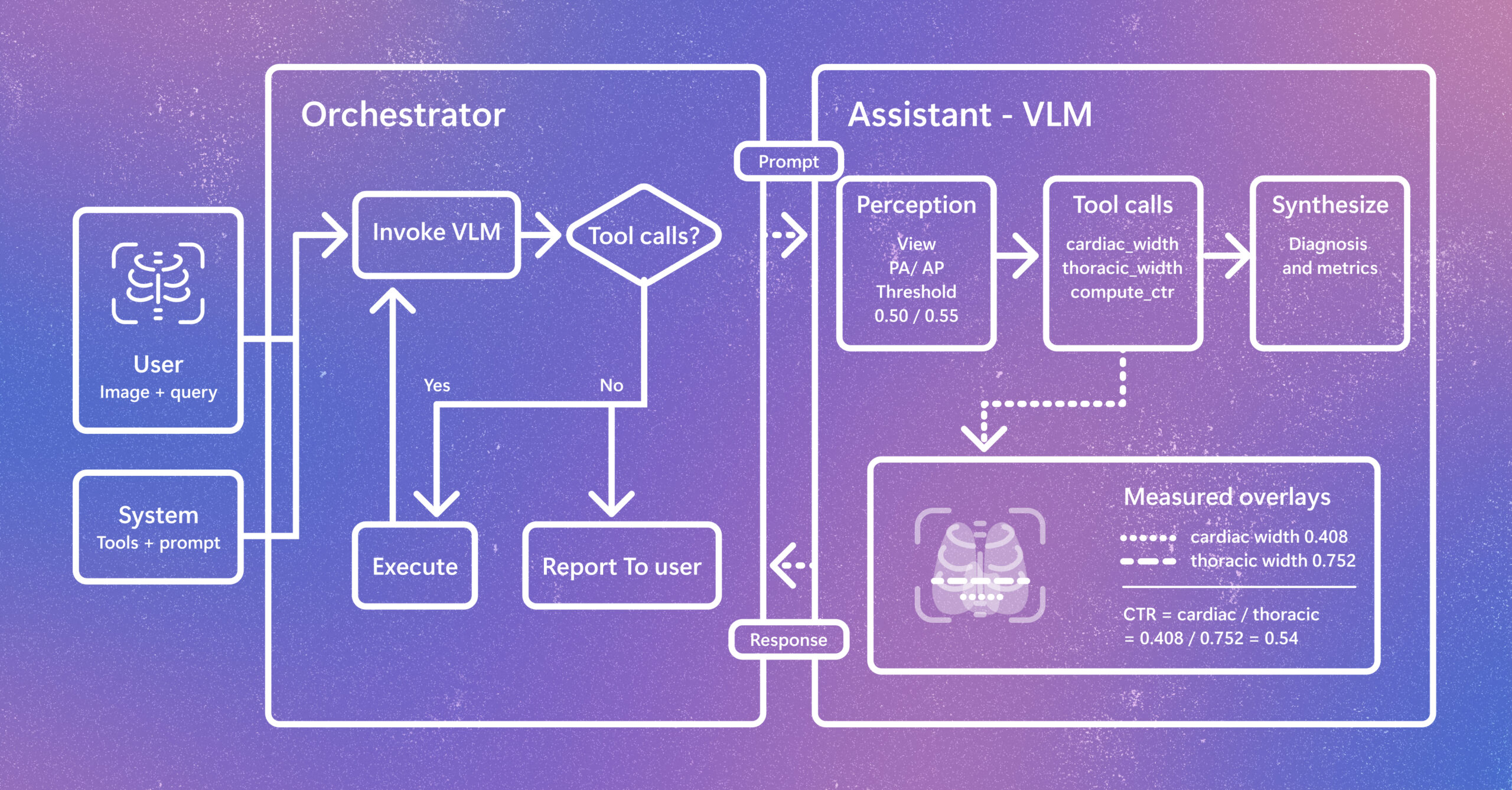
Radiology AI is evolving beyond report generation. CARE-X explores a unified approach that combines flexible reasoning, calibrated predictions, and measurement-based tools for chest X-ray interpretation. The post Introducing CARE-X: Towards Clinically Useful Radiology VLMs with Auxiliary Supervision, Reward-Aligned Learning, and Tool-Augmented Measurement appeared first on Microsoft Research.

MIT News · Artificial Intelligence Oct 7, 2026

Discovering the value of humanistic inquiry

Students in MIT’s Concourse program delve deeply into the human condition, debate challenging questions, and learn to develop judgment about issues that can’t be quantified.

We use cookies to run the site and, with your consent, for analytics and to show ads. See our Cookie Policy.
