Skip to content
#software testing Open access

O: Observer and the Conceptual Resolution — The Mens Protocol and the Layered Coupling of Relativity with Quantum Mechanics

Aug 2026 · Zenodo (CERN European Organization for Nuclear Research)

Abstract

This paper establishes the observer as a physical node embedded in the causal graph and resolves the conceptual relation between General Relativity and Quantum Mechanics within the N.E.A. (Network Emergent Architecture) framework. The Mens Protocol defines the observer as a self-referential sampling operator, subject to the same finite bandwidth B=1 as every other node. The Stride-10 sampling window imposes a Nyquist limit on perceptual resolution. An SVD spectral audit reveals that over 95% of perceptual energy is concentrated in a single dominant mode across all tested lattice sizes — the topological origin of the subjective flow of time. This dominant mode is not a saturation plateau claim; the trend is monotonic and robust, with verification on larger lattices left as future numerical work. Three spatial dimensions are inherited from the d=3 efficiency plateau (H); the temporal dimension is inherited from the dominant singular mode of the directed sampling operator. Special and General Relativity are shown to be the geometry of bandwidth allocation on the causal graph (hardware). Motion is defined as the re-indexing of adjacency edges; the Pythagorean constraint f_int^2 + f_ext^2 = B^2 yields time dilation as an algebraic necessity. The 1/r gravitational potential is the Discrete Green's Function of the 3D graph Laplacian — a topological fingerprint of three-dimensional space. Quantum Mechanics describes the information-theoretic limits of observing that hardware with finite resources (software). The wavefunction arises as a beat envelope from aliased sampling, inheriting linearity from hardware unitarity. Measurement collapse is bandwidth hijacking. The uncertainty principle is the Nyquist limit, with a dimensionless uncertainty floor from the bandwidth constraint. Pauli exclusion is buffer-overflow protection with spin-±1/2 as time-division multiplexing. Entanglement is interpreted as a candidate topological trace on the 1D causal skeleton mandated by the Being Tax — a hypothesis, not yet a derivation. These two descriptions are not contradictory but are descriptively orthogonal, dynamically coupled layers of a single computational stack governed by the Pythagorean bandwidth constraint. The contradiction dissolves upon recognizing that physicists have been attempting to locate hardware bus specifications within software rendering algorithms. The observer's sampling rent is quantitatively denominated in Zhangyu (ZY): H_obs ≈ 1.0117 ZY as a preliminary numerical estimate. The hydrogen atom spectrum is reproduced on the discrete C8 lattice, converging to the continuum Schrödinger limit with 0.0024% deviation. ħ is demoted from fundamental status: ħ = Z × t_Tick, the product of bandwidth currency and the Tick. The preferred basis problem (OP-8), the first-principles derivation of the GR coefficient 2GM/c² (OP-O1), and Bell statistics for skeletal entanglement (OP-24) are honestly marked as open problems. The Born rule is identified as a maximum-entropy hypothesis, not yet a formal derivation from graph topology. A complete Scope and Logical Boundaries declaration is included, alongside extended classical references (Nyquist, Shannon, Born, Einstein, Bell).


View source

Similar papers

#computer vision Review Sep 2017

Agile Software Development Methods: Review and Analysis

This publication proposes a definition and a classification of agile software development approaches and analyses ten software development methods that can be characterized as being "agile" against the defined criterion.

P. Abrahamsson, O. Salo, Jussi Ronkainen et al. · 727 citations · ⚡54
#computer vision Jun 2008

The impact of agile practices on communication in software development

The study shows that agile practices improve both informal and formal communication, but indicates that, in larger development situations involving multiple external stakeholders, a mismatch of adequate communication mechanisms can sometimes even hinder the communication.

M. Pikkarainen, Jukka Haikara, O. Salo et al. · 401 citations · ⚡48
#machine learning Review Open access Oct 2014

Software development in startup companies: A systematic mapping study

The results indicate that software engineering work practices are chosen opportunistically, adapted and configured to provide value under the constrains imposed by the startup context.

Nicolò Paternoster, Carmine Giardino, M. Unterkalmsteiner et al. · 394 citations · ⚡54
#computer vision Review Mar 2008

Agile methods in European embedded software development organisations: a survey on the actual use and usefulness of Extreme Programming and Scrum

The results show that the embedded industry has been able to apply agile methods in its development processes and that the appreciation of the agile methods and their individual practices appears to increase once adopted and applied in practice.

O. Salo, P. Abrahamsson · 238 citations · ⚡9
#computer vision Open access Jul 2017

What happens when software developers are (un)happy

Consequences of happiness and unhappiness that are beneficial and detrimental for developers' mental well-being, the software development process, and the produced artifacts are found.

D. Graziotin, Fabian Fagerholm, Xiaofeng Wang et al. · 236 citations · ⚡13
#computer vision Open access Oct 2004

Mobile-D: an agile approach for mobile application development

The Mobile-D approach is briefly outlined here and the experiences gained from four case studies are discussed, which helped develop an agile development approach for mobile application development.

P. Abrahamsson, Antti Hanhineva, H. Hulkko et al. · 225 citations · ⚡18

Related blog posts

GPT-Lab Sep 17, 2026

Beyond Prompt Engineering: The Role of Tacit Knowledge in Software Engineering

AI is making software generation faster, but speed does not remove the need for expertise. As more work is delegated to AI, tacit knowledge may become one of the most important human advantages in software engineering. The post Beyond Prompt Engineering: The Role of Tacit Knowledge in Software Engineering appeared first on GPT-Lab.

MIT News · Artificial Intelligence Aug 17, 2026

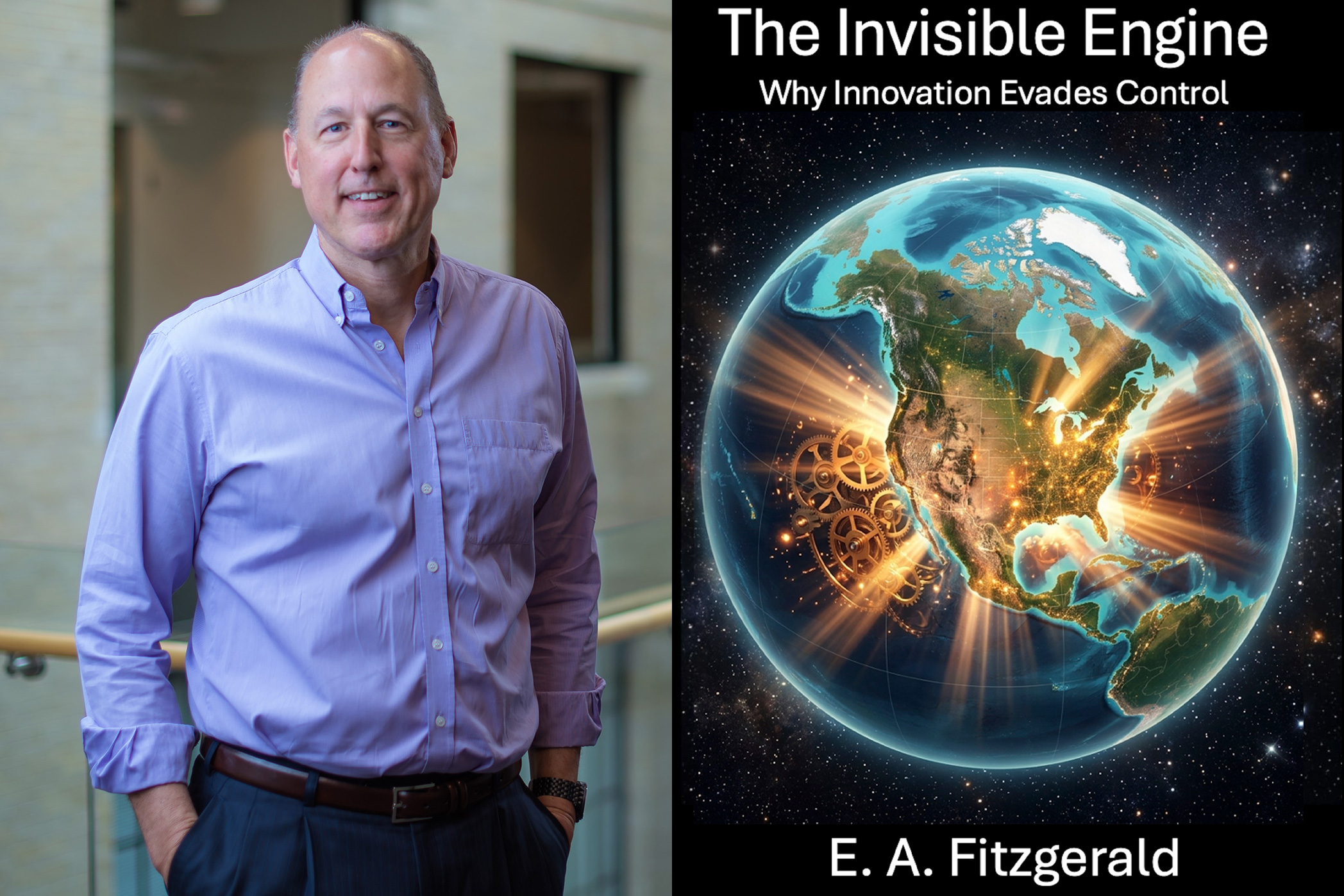
Q&A: Rethinking how innovation happens

In his latest book, Professor Eugene Fitzgerald examines the forces that turn breakthroughs into value — and why innovation resists simple formulas.

Microsoft Research Blog Aug 12, 2026

MindTopo reveals VLMs’ spatial reasoning abilities

A path, a fence, a knot. MindTopo sets a new benchmark for testing how AI understands topological relationships and highlights new opportunities to strengthen spatial reasoning and planning. The post MindTopo reveals VLMs’ spatial reasoning abilities appeared first on Microsoft Research.

We use cookies to run the site and, with your consent, for analytics and to show ads. See our Cookie Policy.