Skip to content
#explainable ai Review Open access

A Clinically Grounded and Uncertainty-Aware Explainable Artificial Intelligence Detailed Analysis for Skin Lesion Diagnosis

Sep 2026 · Open Access Research Journal of Engineering and Technology · 0 citations

TL;DR

A conceptual framework is proposed that integrates dermoscopic image analysis, lesion segmentation, deep learning-based prediction, clinical concept recognition, uncertainty estimation, clinical reasoning, and structured explanation and distinguishes the reliability of the prediction from the reliability of the explanation.

Abstract

Artificial intelligence (AI), specifically machine learning and deep learning, has demonstrated remarkable potential for the automated diagnosis of skin lesions using dermoscopic images. While deep learning models can achieve high classification performance, significant barriers to clinical adoption remain, including limited interpretability, uncertainty in model predictions, dataset bias, and limited clinical validation. This review examines the development of AI-based skin lesion diagnosis placing special emphasis on explainable AI (XAI), clinically meaningful concept representation, uncertainty estimation, and dermatologist-centred evaluation. The reviewed literature suggests that traditional pixel-level interpretation methods can identify image regions associated with model predictions but fail to effectively communicate clinically meaningful evidence. In contrast, clinically grounded approaches can link visual information to recognizable dermatological concepts such as asymmetry, border characteristics colour variation, diameter-related features, and relevant dermoscopic structures. This paper synthesizes these developments and highlights critical research gaps regarding concept-level interpretation, uncertainty-aware interpretation, longitudinal assessment, dataset generalization, and clinical validation. Based on this synthesis, a conceptual framework is proposed that integrates dermoscopic image analysis, lesion segmentation, deep learning-based prediction, clinical concept recognition, uncertainty estimation, clinical reasoning, and structured explanation. This framework distinguishes the reliability of the prediction from the reliability of the explanation and characterizes concepts as clearly detected undetected uncertain or non assessable particular attention is paid to progression, which cannot be reliably determined from a single dermoscopic image without longitudinal evidence. The proposed framework aims to support transparent and clinically meaningful AI-assisted skin lesion assessment while maintaining the dermatologist as the ultimate clinical decision-maker. Future research should involve quantitative validation of the framework through dermatologist-centred studies and evaluate the quality of explanations, consistency, uncertainty calibration, and clinical utility.

Read PDF

Similar papers

#explainable ai Open access Sep 2026

An Explainable Deep Learning Framework for Early Skin Cancer Detection Using Dermoscopic Image Analysis

Experimental results indicate that the proposed framework achieves high diagnostic accuracy while providing interpretable insights that assist dermatologists in understanding model predictions.

Choudhuri Saswat Pattnaik, Priyanka Shit, Subhashree Raul et al. · 0 citations
Aug 2026

Multi-view explainability and ensemble deep learning for prostate lesion classification: A comprehensive study.

These findings suggest that interpretability quality can be quantitatively assessed and improved through multi-method and ensemble-based analysis and enhances explanation robustness and supports reliable and transparent clinical decision support for prostate magnetic resonance imaging.

M. Gulum, M. Kantardzic, Christopher M. Trombley et al. · 0 citations
Oct 2026

Bridging Research and Practice: A Systematic Evaluation of Generalist and Dermatology-Specific Models in Clinical Skin Lesion Classification

The application of machine learning to dermatology has grown substantially in recent years, moving beyond proof-of-concept studies toward potential applications. However, clinical dermatology remains a challenging and still open problem. Diagnostic assessment is often ambiguous, and skin lesions exhibit high variabilit...

Emanoel dos Santos, Kelvin Cunha, Rodrigo Mota et al. · 0 citations
Review Open access Jun 2026

Artificial Intelligence in preventing and detecting skin cancer. A narrative review

Abstract Objectives We present a comprehensive literature review regarding the role of Artificial Intelligence in prevention and detection of skin cancer, emphasizing its diagnostic accuracy, interpretability, and clinical integration while reducing healthcare burden and costs. Methods Research has been conducted acros...

Razvan Soric, O. Cotoi, I. Cocuz · 0 citations
Open access Sep 2026

Multi-criterion uncertainty estimation improves skin cancer distribution shift detection and malignancy prediction

Accessible imaging technologies and stronger machine learning (ML) architectures have spurred a race to develop models to complete dermatological tasks like automated skin cancer diagnosis. However, models with high performance on benchmark datasets deteriorate when challenged with data from disparate clinical source...

W. Schreyer, Ravikant Samatham, Elizabeth G. Berry et al. · 0 citations

Related blog posts

Google DeepMind Blog Nov 18, 2026

Genie 4 is now available

We are rolling out a new Project Genie experience to eligible Google AI Ultra subscribers, opening access to our new Genie 4 world model.

MIT News · Artificial Intelligence Nov 17, 2026

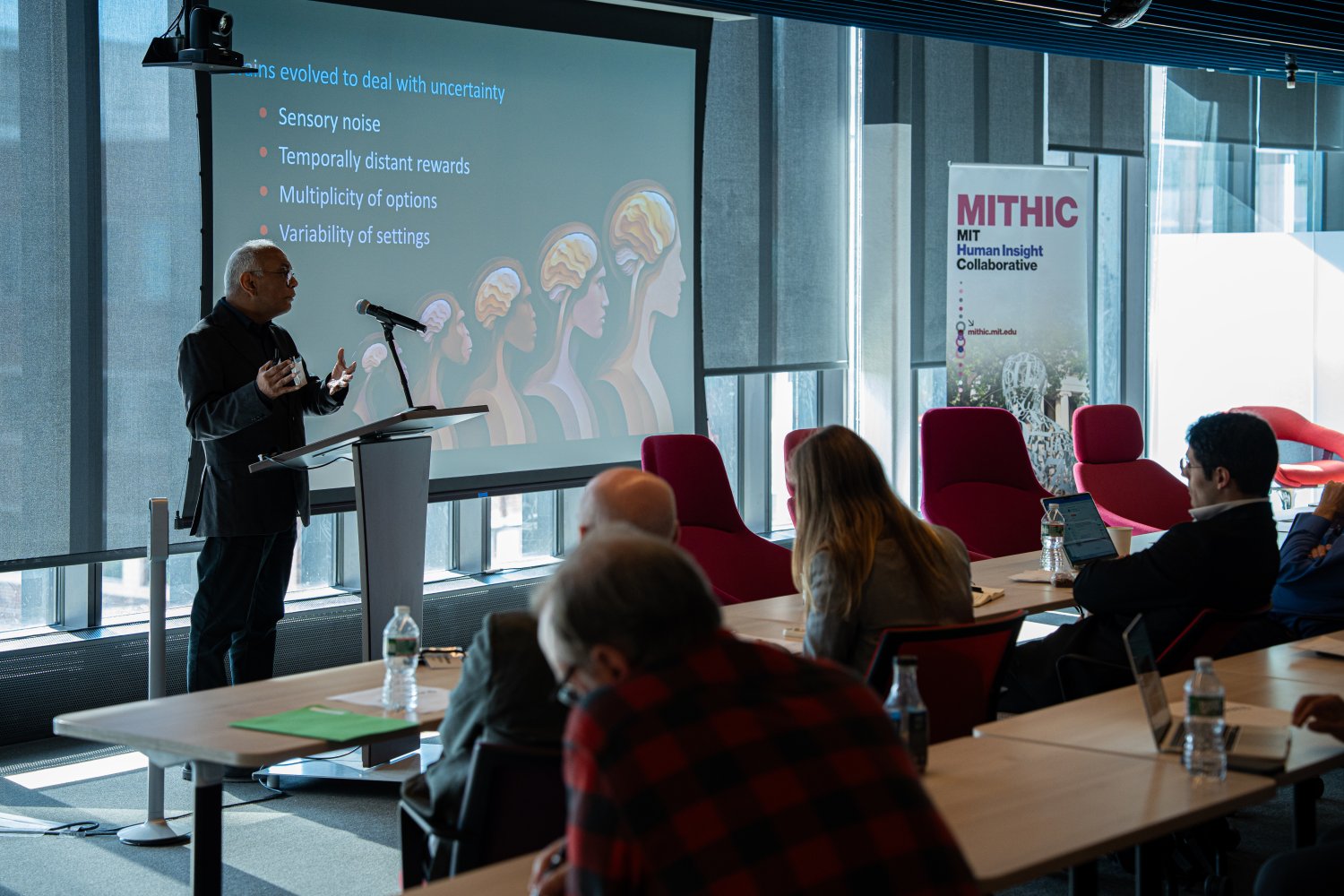
Putting a spotlight on AI, society, and humanity

Supported by the MIT Human Insight Collaborative, scholars are exploring how AI is impacting the human experience and reshaping higher education.

Microsoft Research Blog Nov 17, 2026

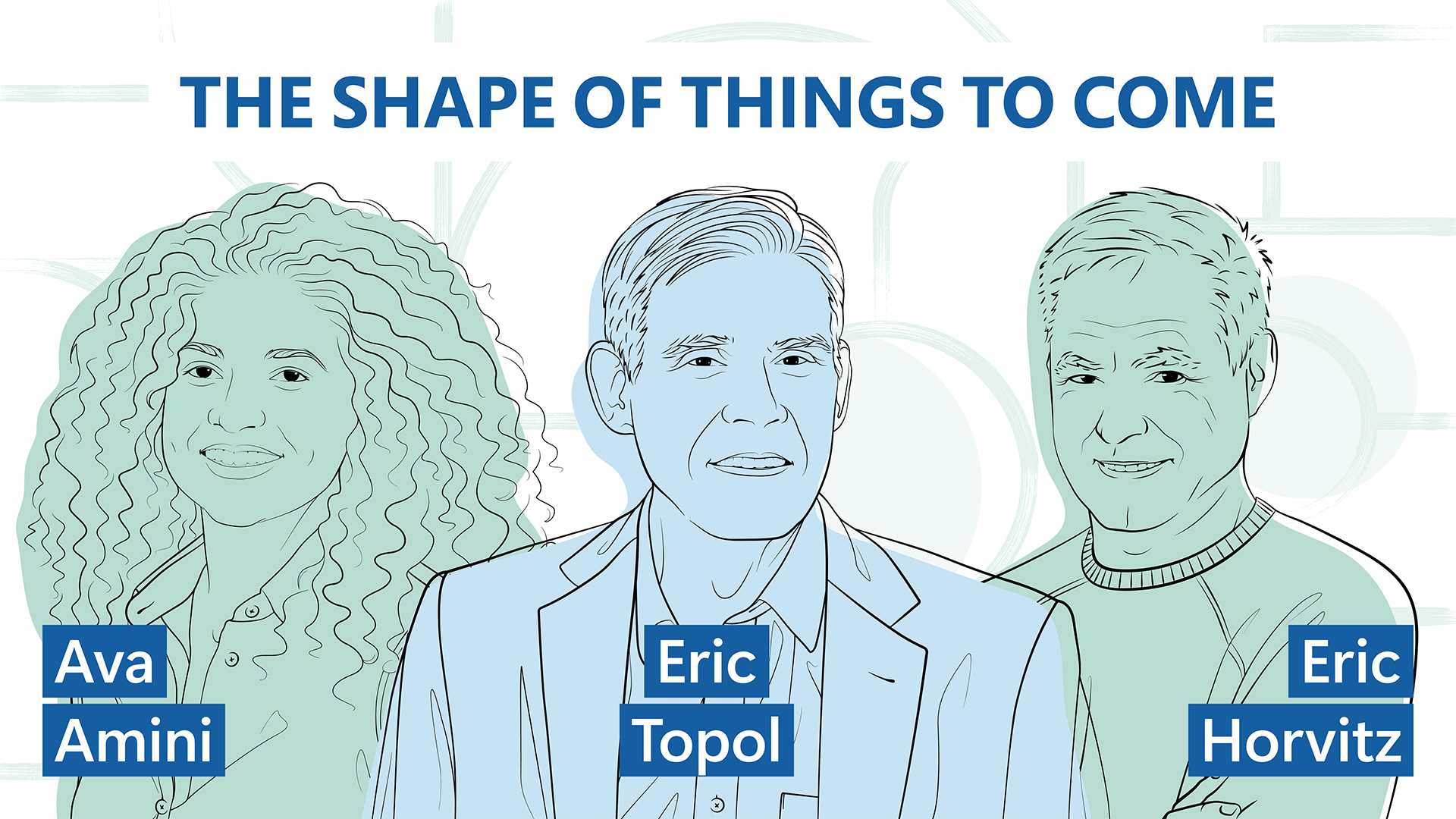
Can AI help build a healthier future?

What can AI enable in medicine, and how do we get there? Microsoft Research lead Doug Burger, Microsoft Principal Research Manager Ava Amini, Microsoft Chief Scientific Officer Eric Horvitz, and physician-scientist Eric Topol of Scripps Research explore these questions and more. The post Can AI help build a healthier future? appeared first on Microsoft Research.

We use cookies to run the site and, with your consent, for analytics and to show ads. See our Cookie Policy.