Skip to content

Defect‐Engineered N‐Doped ZnO as a Dual‐Functional Platform for PENG‐Driven Memristive Sensory Memory

Sep 2026 · Advanced Functional Materials · 0 citations · 75 references
Advanced Sensor and Energy Harvesting Materials Advanced Memory and Neural Computing

Abstract

Energy‐efficient computing is a critical challenge for artificial intelligence and edge applications. Although self‐powered memory systems that integrate sensing, energy harvesting, and storage are promising, they often suffer from high leakage currents, poor reproducibility, and material incompatibility. Here, we present a dual‐functional N‐doped ZnO (NZO) platform that electrically couples an interface‐type memristor with a piezoelectric nanogenerator (PENG), enabling self‐powered memory programming. Uniform N‐doping via low‐temperature atomic layer deposition passivates oxygen‐related defects, suppresses leakage currents, and stabilizes resistive switching. A thin TiO 2‐x interfacial layer acts as an oxygen reservoir and enables precise barrier engineering for reversible, low‐power multilevel operation. At the same time, the reduced carrier concentration in NZO enhances PENG performance through suppression of electrostatic screening effects. Density functional theory (DFT+U) calculations further predict N‐induced changes in elastic stiffness and compliance, suggesting a possible secondary contribution to the electromechanical response through modified strain accommodation. As a result, the rectified PENG output directly programs the memristor without an external bias. The coupled system exhibits stable multilevel storage, robust endurance, and synaptic plasticity. By co‐designing energy harvesting, sensing, and memory on a unified oxide platform, this work establishes a practical pathway toward energy‐autonomous neuromorphic computing and intelligent tactile memory systems.

View source

Similar papers

#computer vision Review Sep 2017

Agile Software Development Methods: Review and Analysis

This publication proposes a definition and a classification of agile software development approaches and analyses ten software development methods that can be characterized as being "agile" against the defined criterion.

P. Abrahamsson, O. Salo, Jussi Ronkainen et al. · 727 citations · ⚡54
#computer vision Jun 2008

The impact of agile practices on communication in software development

The study shows that agile practices improve both informal and formal communication, but indicates that, in larger development situations involving multiple external stakeholders, a mismatch of adequate communication mechanisms can sometimes even hinder the communication.

M. Pikkarainen, Jukka Haikara, O. Salo et al. · 401 citations · ⚡48
#machine learning Review Open access Oct 2014

Software development in startup companies: A systematic mapping study

The results indicate that software engineering work practices are chosen opportunistically, adapted and configured to provide value under the constrains imposed by the startup context.

Nicolò Paternoster, Carmine Giardino, M. Unterkalmsteiner et al. · 394 citations · ⚡54

Related blog posts

Microsoft Research Blog Sep 29, 2026

Introducing Quine: An AI research system designed for the complexity of biology

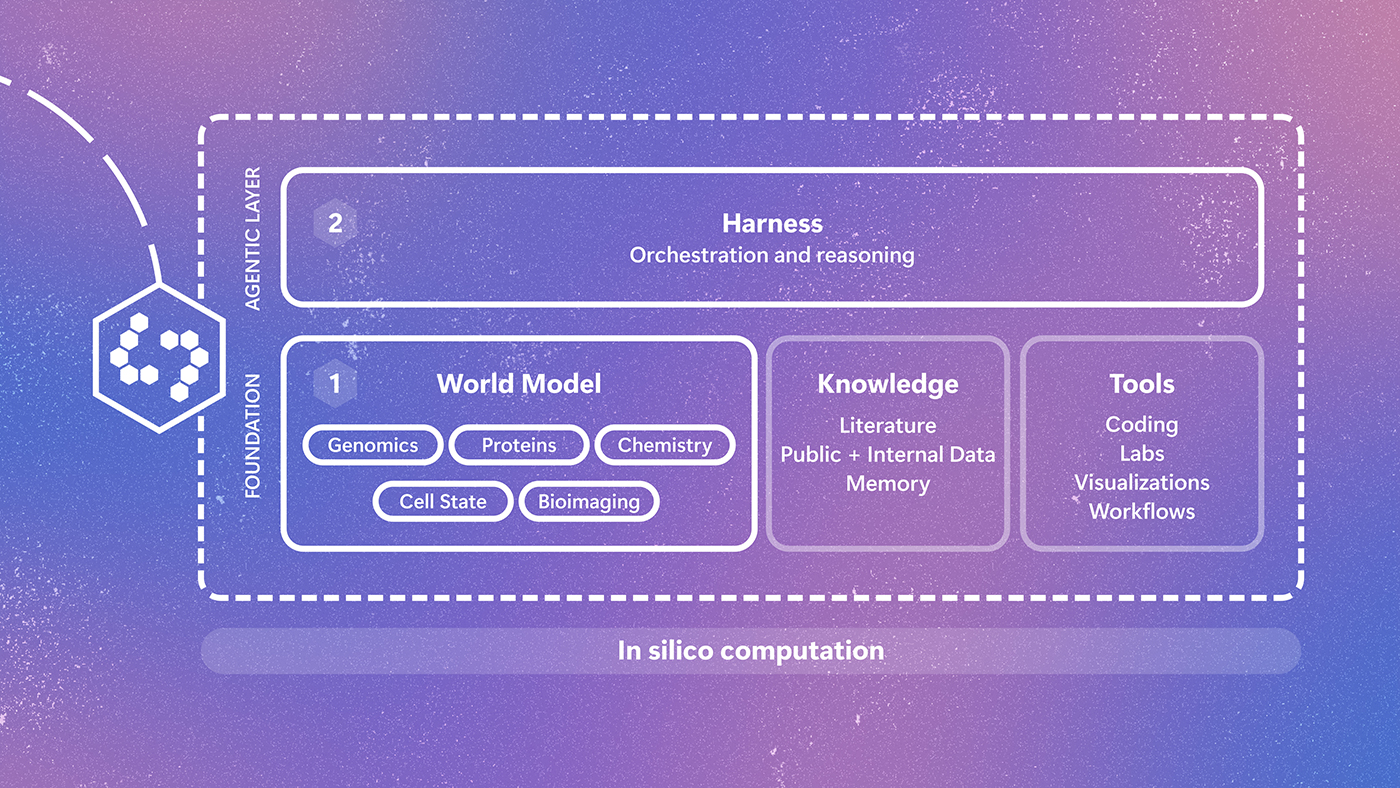
Biology doesn't operate in silos, and neither should the AI representation of it. Quine is an early-stage research effort to create a multimodal world model of biology. By connecting insights across biological scales and modalities, Quine helps scientists computationally search a space far larger than intuition allows and prioritize hypotheses before they reach the lab. Experimental results provide important feedback, helping researchers sharpen future research directions. The post Introducing Q…

We use cookies to run the site and, with your consent, for analytics and to show ads. See our Cookie Policy.