SpiKFAX is proposed, a second-order optimization method that formulates a computationally tractable, Kronecker-factored approximation of the Fisher information matrix specifically adapted to the structure of SNNs.
Abstract
Spiking Neural Networks (SNNs) offer an energy-efficient alternative to conventional neural networks by exploiting sparse, binary spikes, and event-driven computation. However, the training of SNNs remains challenging, as spiking activations create a sharp loss landscape that hinders training, and diagonal-curvature optimizers such as the Adam family may fail to capture this geometry. The extension of curvature-based optimization methods to SNNs is further complicated by the sparse, discrete, and temporally recurrent nature of their underlying dynamics. To address these limitations, we propose SpiKFAX, a second-order optimization method that formulates a computationally tractable, Kronecker-factored approximation of the Fisher information matrix specifically adapted to the structure of SNNs. Empirical evaluation across five architectures and seven datasets demonstrates that SpiKFAX consistently yields improvements in test accuracy and training stability relative to other popular optimizers.
This work proposes a noisy group neuron (NGN) model, which incorporates population-level synchronous resetting and neural stochasticity as fundamental computational mechanisms, and develops the NGN method as a framework that combines the NGN model with backpropagation learning based on mean-field dynamics.
Yajie Zhai, Yanmei Kang, Meng Li et al.· 0 citations
Spiking neural networks (SNNs) offer an energy-efficient alternative to conventional deep neural networks by exploiting sparse event-driven computation, but their training remains challenging because the non-differentiable spike function requires surrogate gradients whose fixed shape may be suboptimal across layers and...
Extensive experiments on static and neuromorphic benchmarks show that lower-bit BASC models match or outperform higher-bit baselines and retain this accuracy advantage after structured pruning, while further reducing model storage and synaptic operations.
Linliang Chen, Yan Zhong, Xin Liu et al.· 0 citations
Spiking neural networks (SNNs) offer an energy-efficient paradigm for time-series forecasting through spike-driven computation. However, recent SNN forecasters often pursue higher accuracy through increasingly complex attention mechanisms, or specialized neuronal dynamics, weakening the lightweight motivation of SNNs....
Bang Hu, Chang-Ze Lv, Ming-Jie Li et al.· 0 citations
It is demonstrated that TNA significantly enhances classification performance across various data sets and can be applied for reducing SNNs to ternary weight precision for inference, and suggests further exploration into the application of TNA on different network architectures and data sets.
Lucas Deckers, Benjamin Vandersmissen, Ing Tsang et al.· Neural Computation· 0 citations
This study identifies a critical vulnerability in SNNs on recently established bit-based codes: consistent performance degradation when temporal spike encoding orders are reversed, and measures the per-timestep class-mutual-information profile of six encodings directly and shows that the resulting concordance ordering...
N. T. Luu, Trung Duong Trung Luu, N. Pham et al.· Neuromorphic Computing and E...· 0 citations
Related blog posts
Microsoft Research Blog· microsoft.comAug 11, 2026
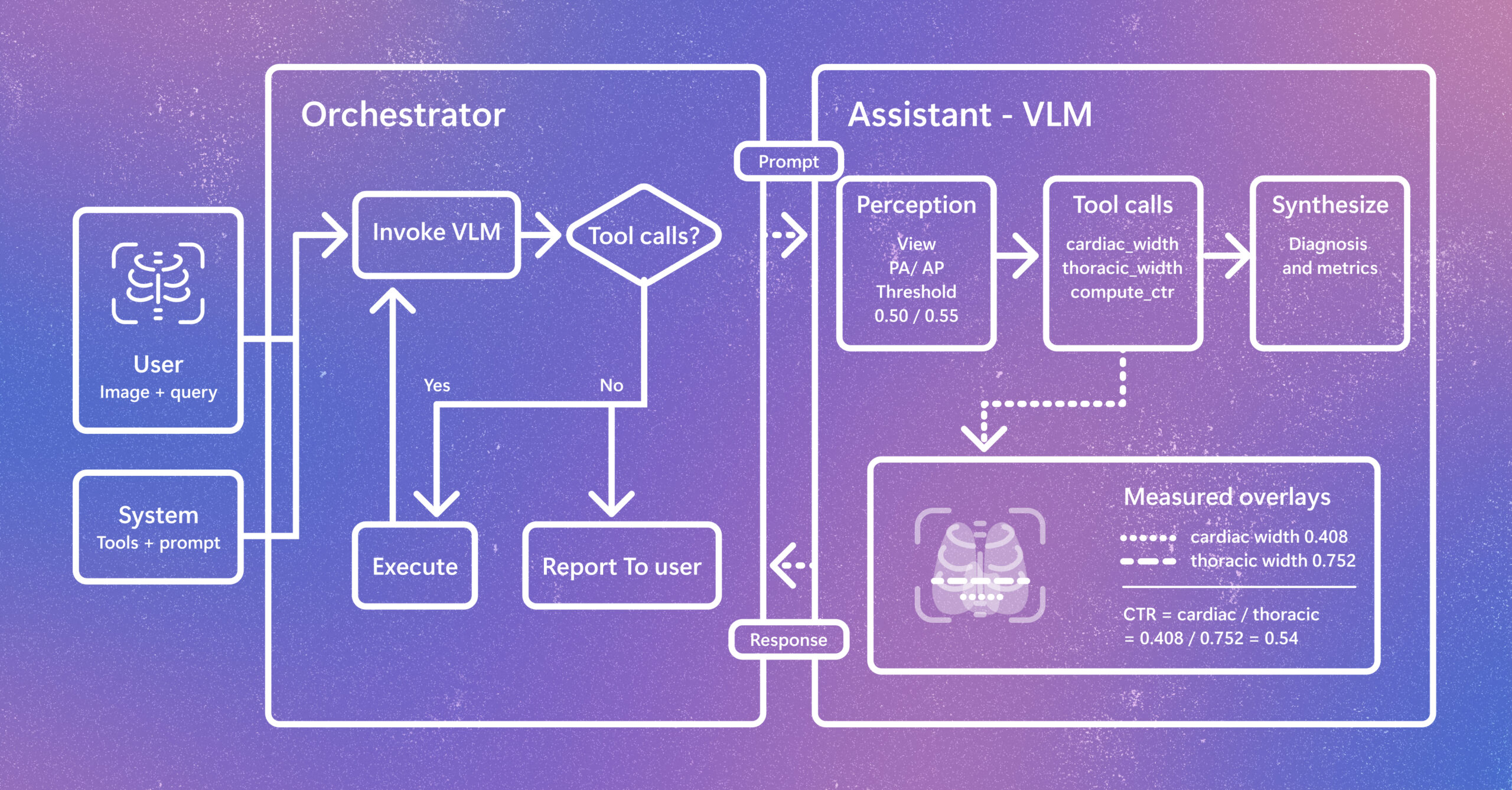
Radiology AI is evolving beyond report generation. CARE-X explores a unified approach that combines flexible reasoning, calibrated predictions, and measurement-based tools for chest X-ray interpretation. The post Introducing CARE-X: Towards Clinically Useful Radiology VLMs with Auxiliary Supervision, Reward-Aligned Learning, and Tool-Augmented Measurement appeared first on Microsoft Research.