This work addresses the challenge of performing distributed online convex optimization in resource-constrained systems, including IoT networks and wireless sensor networks, where communication resources are limited. We develop an edge-based event-triggered (EBET) distributed inexact gradient descent algorithm that departs from the conventional requirement of full state exchange at every iteration. In the proposed scheme, each communication link is equipped with an independent triggering rule; an agent forwards its current estimate to a neighbor only after the state deviation on that link surpasses a user-specified threshold, thereby eliminating redundant transmissions. The algorithm additionally tolerates bounded errors in the gradient evaluation, making it applicable to settings where exact gradients are either unavailable or too costly to compute. Through a Lyapunov-like analysis that couples the consensus update with the non-expansive projection operator, we show that the static regret of every agent grows at a sublinear rate of OT provided that the step size, gradient error bound, and triggering threshold are chosen appropriately. Simulation results on regularized linear regression and logistic regression tasks validate the theoretical findings, confirming that sublinear regret is attained with far fewer communication rounds than a fully connected baseline, thus achieving a favorable balance between solution quality and communication cost.

This publication proposes a definition and a classification of agile software development approaches and analyses ten software development methods that can be characterized as being "agile" against the defined criterion.
P. Abrahamsson, O. Salo, Jussi Ronkainen et al.· arXiv.org· 727 citations· ⚡54
The study shows that agile practices improve both informal and formal communication, but indicates that, in larger development situations involving multiple external stakeholders, a mismatch of adequate communication mechanisms can sometimes even hinder the communication.
M. Pikkarainen, Jukka Haikara, O. Salo et al.· Empirical Software Engineeri...· 401 citations· ⚡48
The results indicate that software engineering work practices are chosen opportunistically, adapted and configured to provide value under the constrains imposed by the startup context.
Nicolò Paternoster, Carmine Giardino, M. Unterkalmsteiner et al.· Information and Software Tec...· 394 citations· ⚡54
The perception of the impact of agile methods is predominantly positive, and several challenge areas were discovered, but based on this study, agile methods are here to stay.
M. Laanti, O. Salo, P. Abrahamsson· Information and Software Tec...· 260 citations· ⚡20
Related blog posts
MIT News · Artificial Intelligence· news.mit.eduOct 2, 2026
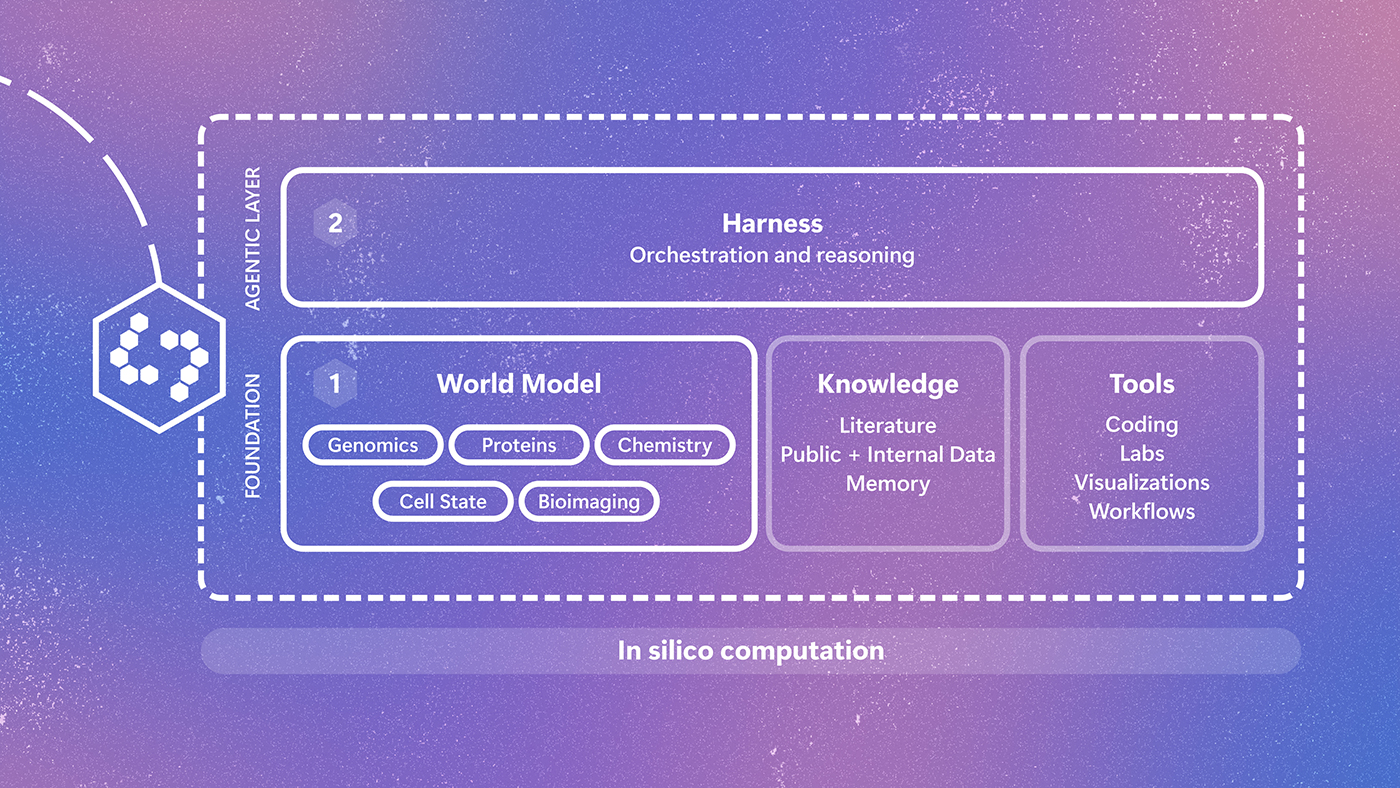
Biology doesn't operate in silos, and neither should the AI representation of it. Quine is an early-stage research effort to create a multimodal world model of biology. By connecting insights across biological scales and modalities, Quine helps scientists computationally search a space far larger than intuition allows and prioritize hypotheses before they reach the lab. Experimental results provide important feedback, helping researchers sharpen future research directions. The post Introducing Q…