A closer look at a broader set of terms that can express desirable results around visualization research, and untangle how these words are understood in the community in relation to other similar terms.
Abstract
A common expectation in visualization research is that outcomes recommend how researchers and practitioners take action or make design decisions. We often express these as"guidelines."Yet, the term"guideline"is both ambiguous and loosely defined, and what one researcher considers a guideline may be too broad, too loose, or too strict for another. We take a closer look at a broader set of terms that can express desirable results around visualization research, and untangle how these words are understood in the community in relation to other similar terms. We base our work on an exploratory study with experts, followed by a crowdsourcing study with a separate mapping phase (n=30) and rating phase (n=42) targeting input from the broader visualization community, and an analysis of the use of terminology in 3,877 IEEE VIS papers published from 1990 to 2024. Based on our findings, we call for more nuanced, precise discussions of research outcomes and their communication to the broader community, including practitioners and students.
Pedagogical visualizations are not neutral tools of communication: they shape what they seek to make understandable. On this premise, this article introduces the research tree as a pedagogical visualization of the relationship between central components of the theory of science, and examines how such representations ca...
Qualitative research is multiply multiple. Because of this, researchers must navigate many possibilities in designing, doing, and defending a qualitative study. While these navigations can be challenging for all qualitative inquirers, they may be especially so for graduate students. Guided by the difficult necessitie...
Carlson H. Coogler· Qualitative Inquiry· 0 citations
This study examines how news engineers and related technical stakeholders perceive and implement personalization and explainability in practice, and provides actionable and practical guidelines for news engineers and researchers on how to adopt explainability methods within a news personalization pipeline.
Jasmin Kareem, Siddharth Mehrotra, M. Willemsen et al.· Proceedings of the 20th ACM...· 0 citations
Usability and user experience (UX) evaluation frameworks are well established within human–computer interaction and human factors research, yet they are typically applied as general-purpose models that do not fully capture the specific cognitive and perceptual demands of open data visualization systems (ODVS), such as...
María Camila Samper Meza, Alexander Bustamante-Martínez, E. Galvis-Lista et al.· Informatics· 0 citations
These findings show that Vis designers actively use LLMs for both creative and technical aspects of the visualization process, and opens up opportunities for research combining LLM-mediated work with Vis tools that incorporate data visualization guidance, constraints, and best practices.
S. Spivak, Aditi Krishna, Mahsan Nourani et al.· IEEE Computer Graphics and A...· 0 citations
The increasing popularity of Large Language Models (LLMs) has sparked growing interest in their application across a wide range of tasks, including data visualization. This study presents a Systematic Literature Review (SLR) aimed at investigating how LLMs are exploited to create data visualizations, addressing the res...
Professor Paris Smaragdis develops computers with superhuman hearing for applications like speech recognition, music understanding, and environmental monitoring.
MIT News · Artificial Intelligence· news.mit.eduOct 23, 2026
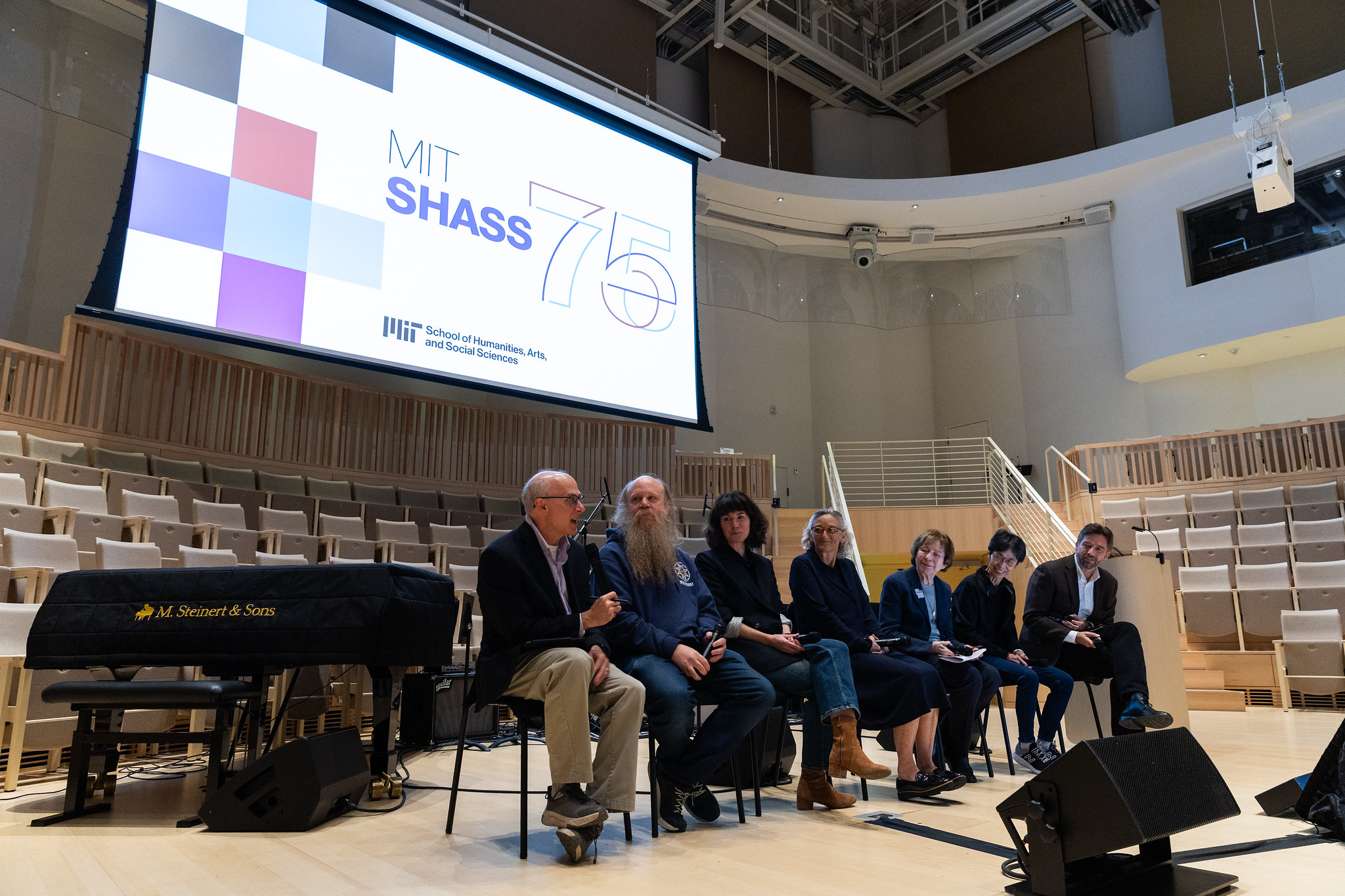
During the School of Humanities, Arts, and Social Sciences’ 75th Anniversary Symposium, President Sally Kornbluth said “MIT has never needed your particular insight and guidance more than we do now.”
MIT News · Artificial Intelligence· news.mit.eduOct 23, 2026
Assistant Professor Benjamin Lindquist studies how engineers deliberately injected randomness into early AI, giving rise to deep-learning models that sometimes hallucinate.
MIT News · Artificial Intelligence· news.mit.eduOct 22, 2026
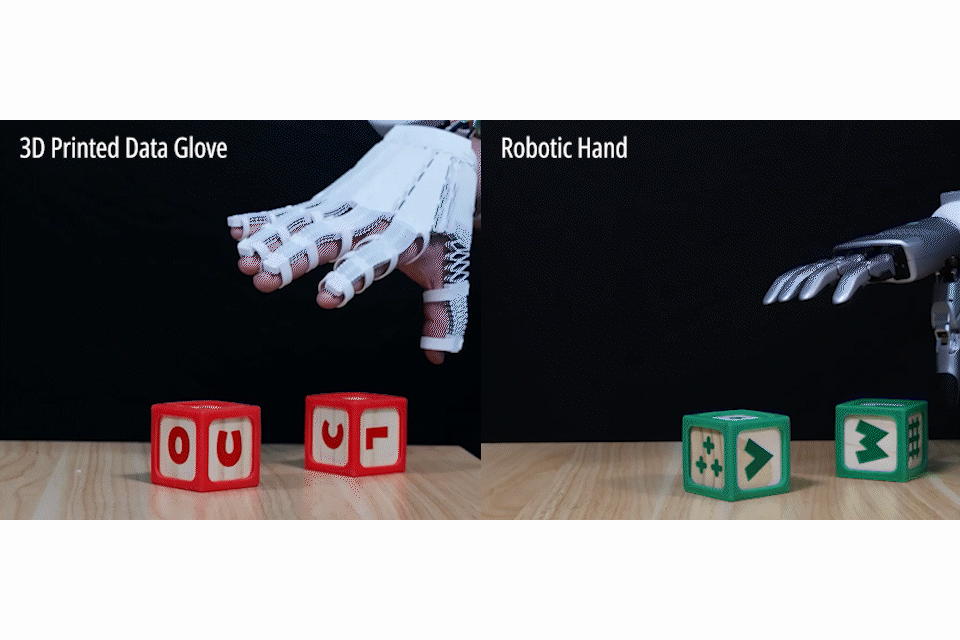
“X-Hinges” helps design and 3D print items like lamps and gloves with an interactive twist: automatically embedded sensors that perceive and adaptively respond to human contact.
We use cookies to run the site and, with your consent, for analytics and to show ads.
See our Cookie Policy.