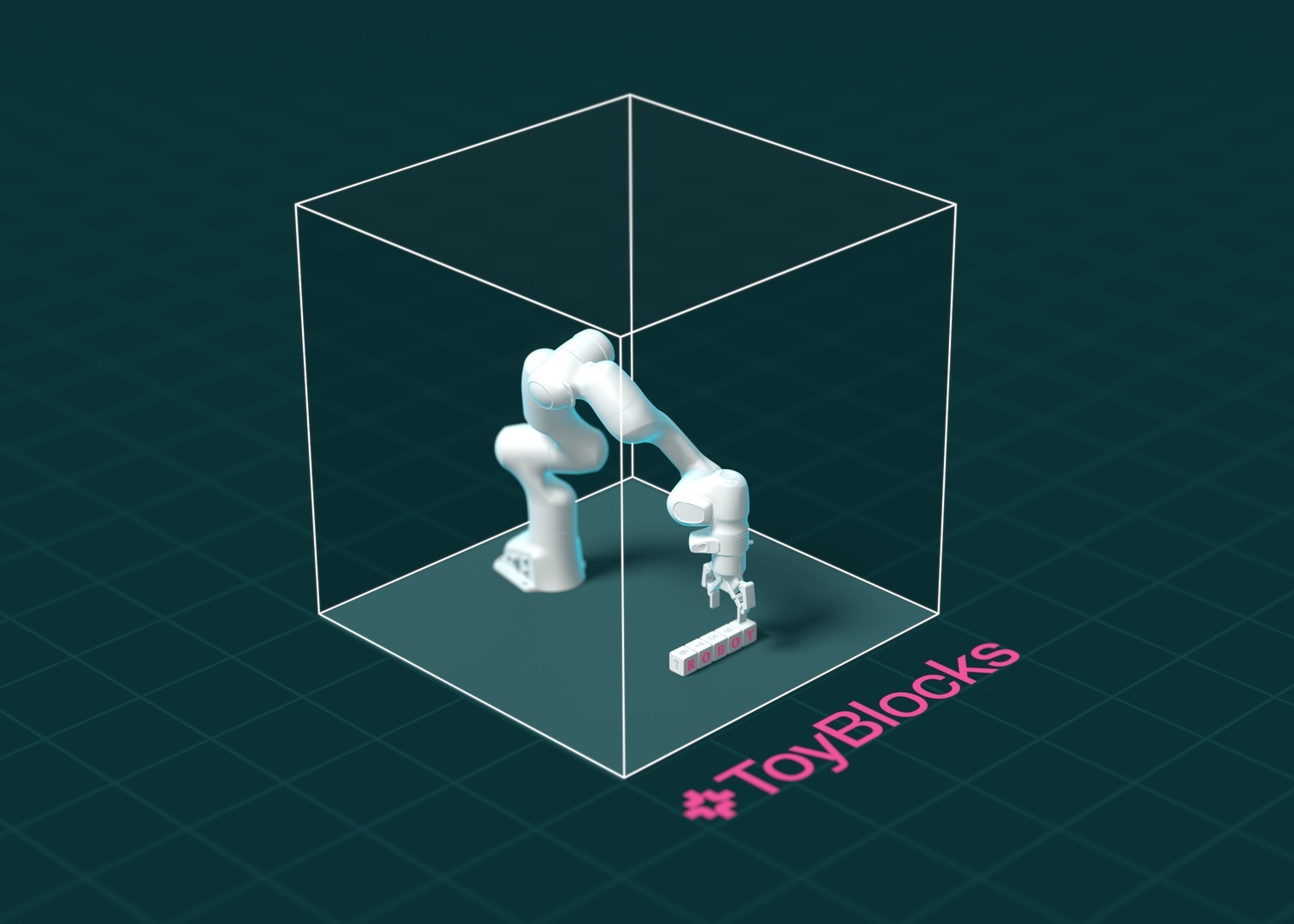
Safety to Competence (S2C), a two-stage RL framework that separates safety synthesis from competitive task learning, is proposed and it is proved that perfect filtering preserves policy non-exploitability when all players commit to safe maneuvers.
Abstract
Robots deployed for competitive tasks must outmaneuver their opponents without sacrificing safety. Existing approaches, including safe reinforcement learning (RL), train a single policy to achieve task success and avoid failures simultaneously. This coupling can complicate training and leave the learned policy exploitable by deliberate attacks. We propose Safety to Competence (S2C), a two-stage RL framework that separates safety synthesis from competitive task learning. We formulate competitive interactions as safety-critical Markov games and prove that perfect filtering preserves policy non-exploitability when all players commit to safe maneuvers. S2C learns a robust safety filter via adversarial RL, embeds it in the environment during task policy training, and retains the same filter at deployment. In simulated touchdown games, S2C outperforms eight safe RL baselines, achieving the highest win rate and Elo rating, and the lowest exploitability. Hardware stress tests against a human opponent confirm S2C's competence.

Safe reinforcement learning commonly places safety and task performance in the same policy objective, where they can introduce competing updates. Safety filters separate them at action execution, but classical designs require an analytic safety function and dynamics model, and standard minimal-intervention filters are...
Song-Yuan Zhang, Baljeet Singh, S. Kaingade et al.· 0 citations
A framework for learning control barrier functions (CBFs) using a novel generalized Bellman operator is developed, yielding a persistent safety set from which the agent can remain safe indefinitely, and a new reward maximization algorithm is proposed that effectively exploits the learned persistent safety set for rewar...
A. Choudhury, J. Brahmanage, Akshat Kumar et al.· Proceedings of the Thirty-Fi...· 0 citations
This work proposes residual reinforcement learning as an implicit safety-filtering mechanism for safe humanoid control and shows that the residual policy can act as an implicit safety filter.
Ge Qu, Tong Zhang, Bi-Ke Zhang et al.· 1 citation· ⚡1
Reinforcement learning in safety-critical domains requires maximizing task performance while strictly adhering to safety constraints. Existing safe reinforcement learning paradigms typically force a trade-off: they either require a priori knowledge to provide strict safety guarantees (e.g., safety filters), or they ena...
Nishanth Rao, Royina Karegoudra Jayanth, Benjamin Eysenbach et al.· 0 citations
Offline safe reinforcement learning aims to learn constraint-satisfying policies from pre-collected datasets without online interaction, which is critical for safety-critical applications such as autonomous driving. However, offline datasets collected from heterogeneous sources often contain spurious correlations betwe...
Zi-Qian Wang, Zhen Zhang· IEEE/ASME International Conf...· 0 citations
Model-based control can directly execute specified objectives, while learning can amortize such behaviors into reactive policies, making their combination a natural solution to multi-stage manipulation. We introduce Semantically UNified (SUN) Programs, typed executables that compile grounded relations into aligned opti...
Wei-Qi Wang, Zhi Li, Yuliang Lei et al.· 0 citations
Related blog posts
MIT News · Artificial Intelligence· news.mit.eduNov 9, 2026
Machine-learning networks can learn without detailed instructions from a designer. Those that do may offer insight into how the brain reorganizes itself during learning.
We use cookies to run the site and, with your consent, for analytics and to show ads.
See our Cookie Policy.