Skip to content

Benchmarking Active Spot Selection for Cost-Efficient Spatial Transcriptomics.

Sep 2026 · arXiv.org · 0 citations · 24 references
Computer Science Biology Medicine

Abstract

Spatial transcriptomics (ST) measures gene expression in tissue context, but dense capture grids can be costly and may repeatedly sample morphologically similar regions. Most active learning strategies were developed for categorical labels and independent samples. We conduct a retrospective pool-based benchmark of active learning versus uniform Random sampling for ST, where expression vectors are high-dimensional and continuous and candidates are spatially correlated. Using two fully profiled public ST cohorts, we mask candidate expression vectors and simulate multi-round selection with uncertainty-based Monte Carlo dropout (MC-dropout) and temporal output discrepancy (TOD), and diversity-based CoreSet and TypiClust-inspired selection. We compare 160 completed configurations at 5%, 10%, 30%, and 50% of the fold-wide training spot pool under patient-level cross-validation, with a separate full-label reference. Within each budget, strategies share the selection schedule, morphology-to-expression predictor, and optimization protocol. We assess mean per-gene within-slide Pearson correlation coefficient (PCC), expression-cluster agreement, and Moran's I fidelity. On HER2-positive breast cancer, pooled mean PCC differences from Random across the four active strategies were -0.0176, -0.0117, +0.0056, and +0.0057 at 5%, 10%, 30%, and 50%, respectively. On cutaneous squamous cell carcinoma (cSCC), three strategies were below Random at 5%, and all four were below Random at 10%. On HER2-positive breast cancer, CoreSet and MC-dropout had lower PCC but higher expression-cluster agreement than Random at the two smallest budgets; this pattern did not reproduce on cSCC. Under the reported fixed training horizons, the evaluated active strategies do not consistently improve on Random at small budgets, and rankings depend on the evaluation measure.

View source

Similar papers

#computer vision Review Sep 2017

Agile Software Development Methods: Review and Analysis

This publication proposes a definition and a classification of agile software development approaches and analyses ten software development methods that can be characterized as being "agile" against the defined criterion.

P. Abrahamsson, O. Salo, Jussi Ronkainen et al. · 727 citations · ⚡54
#computer vision Jun 2008

The impact of agile practices on communication in software development

The study shows that agile practices improve both informal and formal communication, but indicates that, in larger development situations involving multiple external stakeholders, a mismatch of adequate communication mechanisms can sometimes even hinder the communication.

M. Pikkarainen, Jukka Haikara, O. Salo et al. · 401 citations · ⚡48
#machine learning Review Open access Oct 2014

Software development in startup companies: A systematic mapping study

The results indicate that software engineering work practices are chosen opportunistically, adapted and configured to provide value under the constrains imposed by the startup context.

Nicolò Paternoster, Carmine Giardino, M. Unterkalmsteiner et al. · 394 citations · ⚡54

Diffusion models as plug-and-play priors

The possibility of inferring high-dimensional data inference in a model that consists of a prior and an auxiliary differentiable constraint given some additional information is considered, thereby allowing a range of potential applications in adapting models to new domains and tasks.

Alexandros Graikos, Esmeralda S. Whitammer, N. Jojic et al. · 316 citations · ⚡15

Trajectory Balance: Improved Credit Assignment in GFlowNets

It is proved that any global minimizer of the trajectory balance objective can define a policy that samples exactly from the target distribution, and empirically demonstrate the benefits of the trajectories balance objective for GFlowNet convergence, diversity of generated samples, and robustness to long action sequenc...

Esmeralda S. Whitammer, Moksh Jain, Emmanuel Bengio et al. · 302 citations · ⚡60

Related blog posts

Microsoft Research Blog Aug 11, 2026

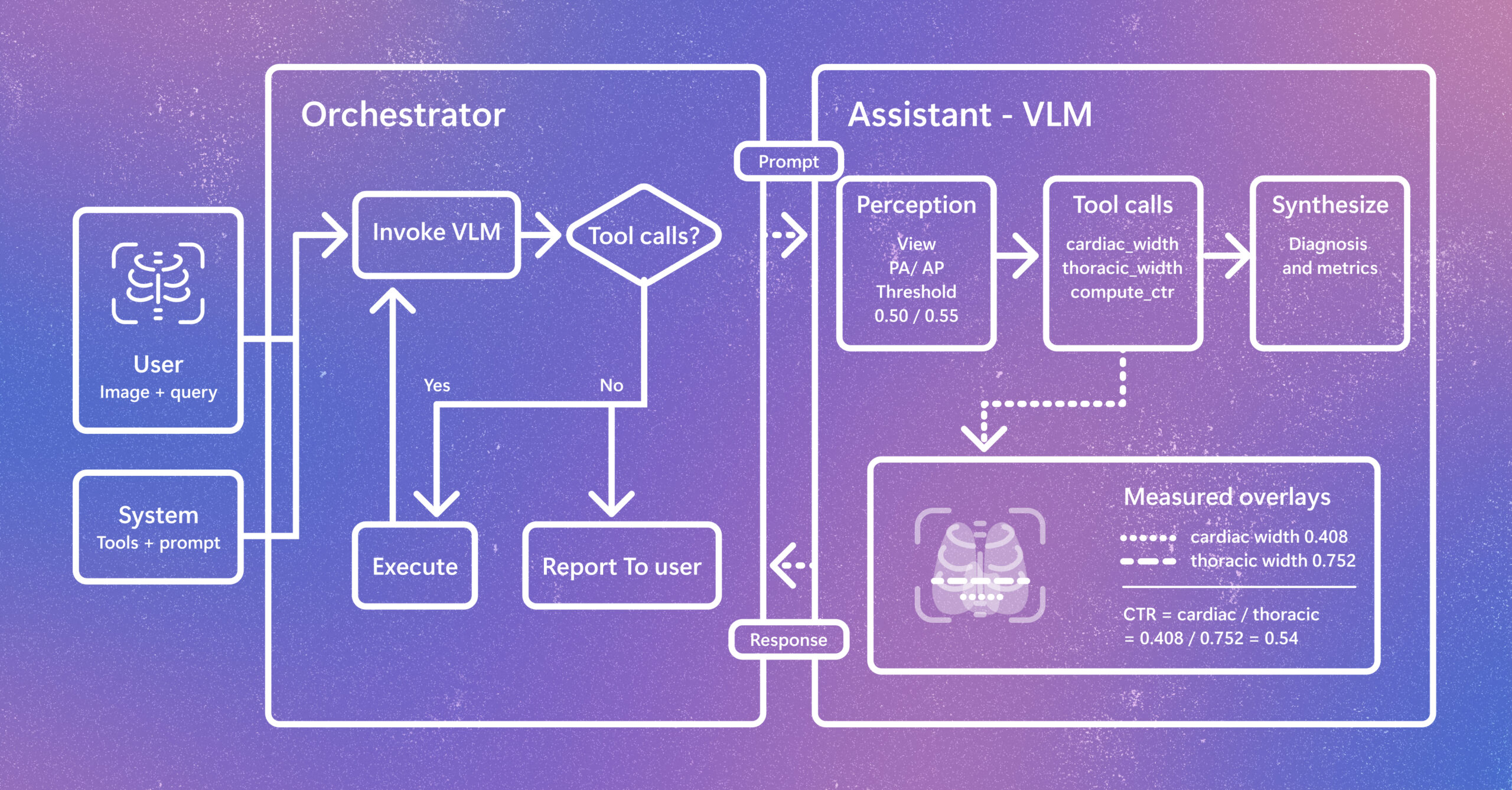
Introducing CARE-X: Towards Clinically Useful Radiology VLMs with Auxiliary Supervision, Reward-Aligned Learning, and Tool-Augmented Measurement

Radiology AI is evolving beyond report generation. CARE-X explores a unified approach that combines flexible reasoning, calibrated predictions, and measurement-based tools for chest X-ray interpretation. The post Introducing CARE-X: Towards Clinically Useful Radiology VLMs with Auxiliary Supervision, Reward-Aligned Learning, and Tool-Augmented Measurement appeared first on Microsoft Research.

MIT News · Artificial Intelligence Oct 7, 2026

Discovering the value of humanistic inquiry

Students in MIT’s Concourse program delve deeply into the human condition, debate challenging questions, and learn to develop judgment about issues that can’t be quantified.

We use cookies to run the site and, with your consent, for analytics and to show ads. See our Cookie Policy.
