Experiments show that the proposed SCoGL variants improve graph recovery and enhance downstream tasks such as graph signal denoising when signal observations are scarce.
Abstract
Learning a sparse graph from scarce data is practically important but challenging. Motivated by the desirable combination of local sparsity and strong global connectivity exhibited by expander-like graphs, we propose spectral connectivity-regularized graph learning (SCoGL), a framework that incorporates a family of Laplacian spectral priors to explicitly promote global connectivity. Specifically, SCoGL augments a combinatorial-Laplacian-constrained graphical lasso (GLASSO) objective over a target adjacency matrix $\mathbf{W}$ with a general connectivity prior computed from Laplacian eigenvalues. We derive gradients for several representative connectivity priors and develop a projected gradient descent (PGD) algorithm with Armijo backtracking to efficiently optimize $\mathbf{W}$. Experiments show that the proposed SCoGL variants improve graph recovery and enhance downstream tasks such as graph signal denoising when signal observations are scarce.
Structured Connection Graph Learning (SCGL), a block-coordinate algorithm that combines closed-form updates, manifold projections, and spectral constraints, and converges to stationary points of the resulting nonconvex problem, is developed.
Leonardo Di Nino, Gabriele D’Acunto, Sergio Barbarossa et al.· 0 citations
Inferring network topology from noisy node observations is a central problem in graph signal processing. In this paper, we consider Laplacian-constrained graph estimation for Gaussian Markov random fields, focusing on the underdetermined regime in which the number of samples is smaller than the number of graph nodes. E...
Christoffer Kjellson, C. Altafini, Emma Tegling· IEEE Signal Processing Lette...· 0 citations
We propose a method for restoring noisy and incomplete multivariate signals by learning multifold graphs. Spatial relationships among channels can be utilized to recover missing values and suppress noise. However, these relationships can vary across frequency components and observation windows while retaining common co...
A novel interpretation of sfGOT through the lens of the Hilbert-Schmidt Independence Criterion is provided, showing that minimizing the sfGOT distance between two graphs is equivalent to maximizing statistical dependence between the spectral embedding of their nodes.
We study the problem of learning directed acyclic graphs (DAGs) with nonnegative edge weights from observational data. We propose the Nonnegative and Concomitant (NoCo) DAG estimator, which jointly recovers the weighted graph structure and the exogenous noise variances in the linear structural equation model for the ob...
Madeline Navarro, Gonzalo Mateos, Samuel Rey· 0 citations
VisAdj is a new framework for topology-aware adjacency prediction that introduces an attention-sparse neighbor sampler to adaptively select a high-recall set of candidate node pairs and performs joint edge inference using a line-graph transformer that treats candidate edges as tokens and explicitly models dependencies...
Jia-Hao Xie, Guangmo Tong· 0 citations
Related blog posts
MIT News · Artificial Intelligence· news.mit.eduOct 2, 2026
Martin Trust Center Managing Director Bill Aulet introduces Dear Dreamer, a free platform for middle and high school students who want to learn about entrepreneurship.
Microsoft Research Blog· microsoft.comSep 30, 2026
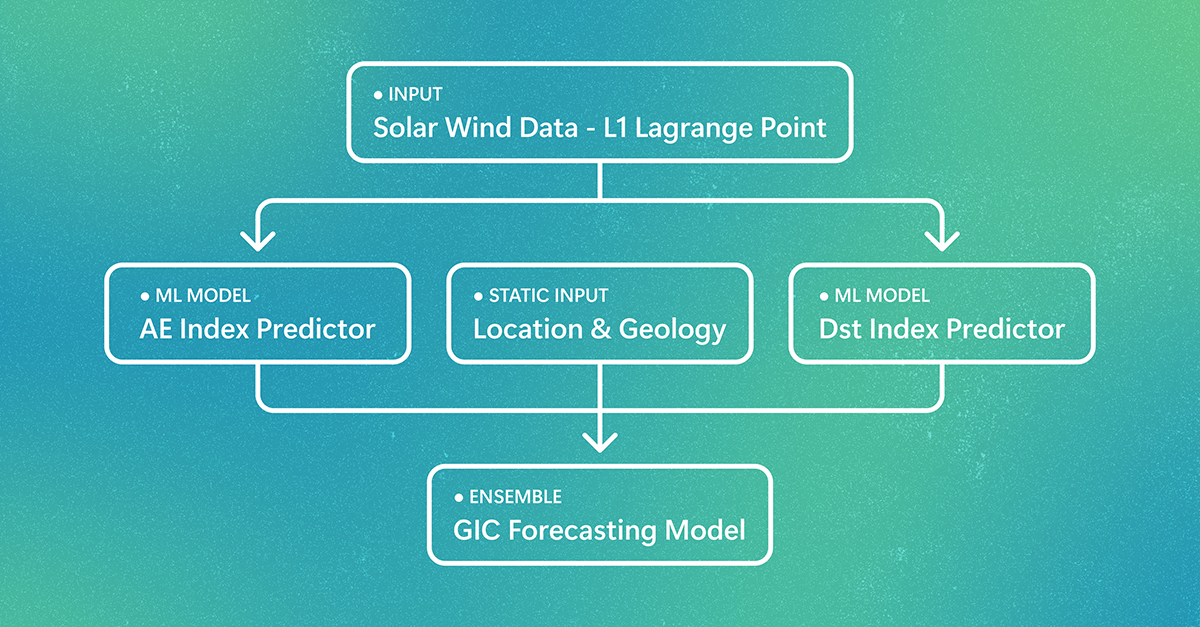
Extreme space-weather events can damage power systems on Earth and degrade GPS accuracy and satellite operations. A new machine learning system can predict where damage is likely to occur 30-60 minutes before a storm arrives. The post Forecasting space weather risks on power grids appeared first on Microsoft Research.
We use cookies to run the site and, with your consent, for analytics and to show ads.
See our Cookie Policy.