Oct 2026· Comput. Networks· Vol 288, pp. 112652· 0 citations· 39 references
Computer Science
TL;DR
Simulation results confirm that integrating EE with edge computing significantly improves the trade-off between inference accuracy and latency, achieving up to 212% improvement in the average task completion ratio compared to edge computing systems without EE, under the considered simulation settings.

Abstract
Early Exiting (EE) is an emerging paradigm in deep learning that equips Deep Neural Networks (DNNs) with intermediate classifiers, enabling a trade-off between inference accuracy and latency. In this work, we investigate the integration of EE mechanisms into edge computing architectures, focusing on a representative use case involving task execution in resource-constrained computing and communications environments for connected and automated vehicles (CAVs). We develop a detailed system model that captures the complex interplay among time-varying system components, including wireless channel coherence and the dynamic availability of computational and communication resources. Building on this model, we formulate a joint optimization problem encompassing task offloading, resource allocation, and early exit selection. We demonstrate how EE enhances system adaptability under stringent constraints, such as limited bandwidth, computing capacity, or delay requirements. To tackle the complexity of the proposed optimization, we adopt a novel solution approach based on the distributional Soft Actor-Critic (SAC) Deep Reinforcement Learning (DRL) algorithm, which quantifies the uncertainty of the learned policy. Simulation results confirm that integrating EE with edge computing significantly improves the trade-off between inference accuracy and latency, achieving up to 212% improvement in the average task completion ratio compared to edge computing systems without EE, under the considered simulation settings.
Results indicate that combining meta-initialization, nonlinear constraint shaping, and topology-aware action masking improves stationary optimization and disturbance recovery within the controlled simulator.
—Mobile Edge Computing (MEC) is a technology that enables mobile devices to transfer computationally demanding tasks to nearby servers. MEC significantly lowers the local processing load by allowing a variety of complicated mobile devices tasks to be transferred to the network system’s edge so that they can be executed...
S. Dash, Jibitesh Mishra, S. Dash et al.· Journal of Advances in Infor...· 0 citations
This work proposes MARA, which predicts future loss trajectories with conditional flow matching and coordinates compute nodes through a cooperative multi-agent autoregressive policy and reduces remaining-resource prediction error relative to weighted least squares.
Han-Ye Zhao, Mu-Ning Wen, Yong Yu et al.· 0 citations
JATO is presented, a framework to jointly tackle the problems of adaptive task offloading and transmission optimization using Deep Reinforcement Learning, and offers a mono-faceted solution, learning a policy to simultaneously determine the best offloading target and the transmission quality.
G. Purnama, Irma Amelia Dewi, A. Langi et al.· Journal of ICT Research and...· 0 citations
An online Deep Reinforcement Learning (DRL) based adaptive partition method to dynamically determine optimal partitioning decision so as to jointly accelerate DNN inference and mitigate energy consumption is developed.
Shu-Bin Zhang, Junrong Ma, Kai-Kai Chi et al.· ACM transactions on sensor n...· 0 citations
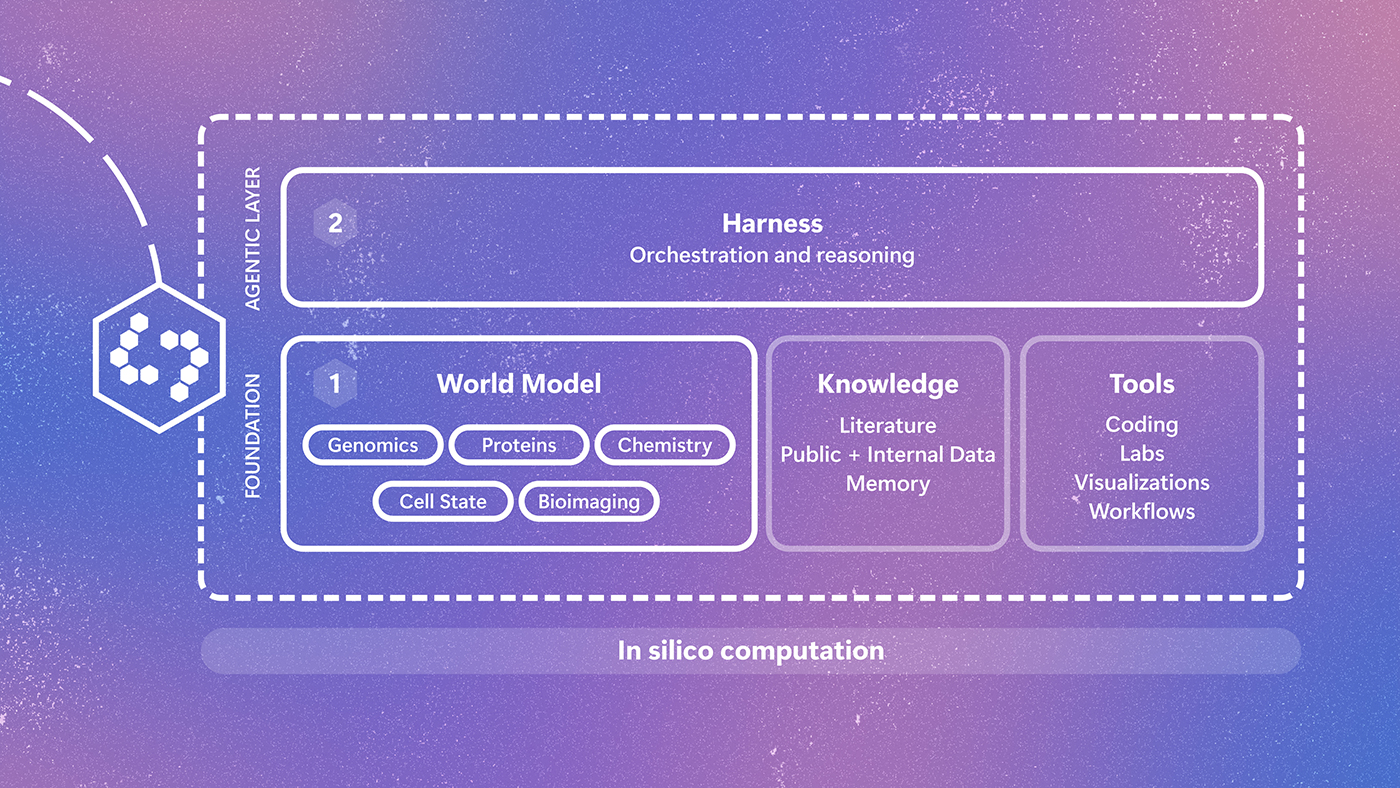
Biology doesn't operate in silos, and neither should the AI representation of it. Quine is an early-stage research effort to create a multimodal world model of biology. By connecting insights across biological scales and modalities, Quine helps scientists computationally search a space far larger than intuition allows and prioritize hypotheses before they reach the lab. Experimental results provide important feedback, helping researchers sharpen future research directions. The post Introducing Q…