This work characterize translation-invariant (TI) calibrators and construct TI counterparts of shift-sensitive methods and introduces more expressive class-conditional affine calibrators that preserve decisions under argmax- and order-preservation constraints.
Abstract
Reliable confidence estimates are essential in semantic segmentation, yet modern models often remain miscalibrated. We investigate two overlooked issues in post-hoc calibration. First, adding a constant to all logits leaves softmax probabilities unchanged, but several standard calibrators depend on this arbitrary offset. In segmentation, this offset can vary across pixels or voxels, introducing spatially varying representation dependence. We characterize translation-invariant (TI) calibrators and construct TI counterparts of shift-sensitive methods. Second, calibrating with cross-entropy can degrade segmentation quality due to mismatched training and calibration objectives and limited calibration data. We investigate decision-preserving calibration under argmax- and order-preservation constraints. Since these constraints restrict affine softmax calibrators to temperature scaling, we introduce more expressive class-conditional affine calibrators that preserve decisions. Across natural-image and medical segmentation benchmarks, including corruption-based covariate shift, TI variants generally improve calibration, while decision-preserving variants prevent segmentation degradation by construction and retain strong calibration performance. Our findings provide practical design principles for post-hoc calibration in semantic segmentation.

It is found that Llama 3 delivers comparable quality to leading language models such as GPT-4 on a plethora of tasks, and performs competitively with the state-of-the-art on image, video, and speech recognition tasks.
This paper investigates developing real-world perception for active agents, proposes Gibson Environment for this purpose, and showcases a set of perceptual tasks learned therein.
F. Xia, Amir Zamir, Zhi-Yang He et al.· 2018 IEEE/CVF Conference on...· 1,069 citations· ⚡112
This publication proposes a definition and a classification of agile software development approaches and analyses ten software development methods that can be characterized as being "agile" against the defined criterion.
P. Abrahamsson, O. Salo, Jussi Ronkainen et al.· arXiv.org· 727 citations· ⚡54
The study shows that agile practices improve both informal and formal communication, but indicates that, in larger development situations involving multiple external stakeholders, a mismatch of adequate communication mechanisms can sometimes even hinder the communication.
M. Pikkarainen, Jukka Haikara, O. Salo et al.· Empirical Software Engineeri...· 401 citations· ⚡48
The results indicate that software engineering work practices are chosen opportunistically, adapted and configured to provide value under the constrains imposed by the startup context.
Nicolò Paternoster, Carmine Giardino, M. Unterkalmsteiner et al.· Information and Software Tec...· 394 citations· ⚡54
Related blog posts
MIT News · Artificial Intelligence· news.mit.eduOct 28, 2026
Professor Paris Smaragdis develops computers with superhuman hearing for applications like speech recognition, music understanding, and environmental monitoring.
Exploring how generative AI could make machine vision more accessible to businesses. The post GenEye in a Box: Making Machine Vision Something You Can Just Ask For appeared first on GPT-Lab.
Microsoft Research Blog· microsoft.comAug 11, 2026
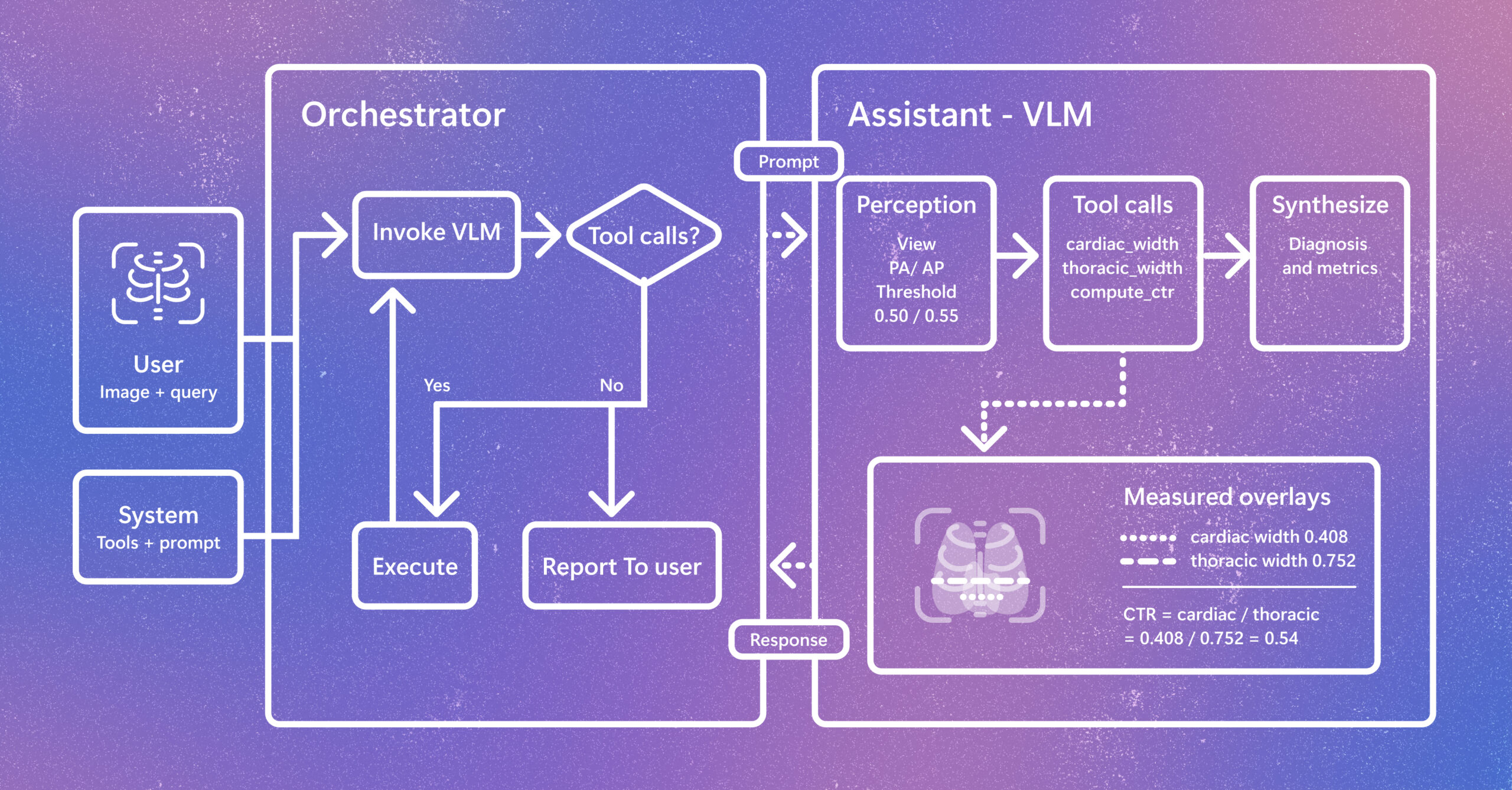
Radiology AI is evolving beyond report generation. CARE-X explores a unified approach that combines flexible reasoning, calibrated predictions, and measurement-based tools for chest X-ray interpretation. The post Introducing CARE-X: Towards Clinically Useful Radiology VLMs with Auxiliary Supervision, Reward-Aligned Learning, and Tool-Augmented Measurement appeared first on Microsoft Research.