Skip to content

Faithful Faithfulness Evaluations: Challenges&Pitfalls Learned from a Breast MRI Case Study

Sep 2026 · 0 citations · 22 references
Computer Science Engineering

Abstract

Saliency maps are widely used to explain deep learning predictions in medical imaging, yet visually plausible explanations do not necessarily reflect a model's true decision process and may therefore mislead clinicians. We investigate this problem using a Vision Transformer-based breast MRI classifier trained on the ODELIA Breast MRI Challenge dataset and evaluate multiple saliency methods, including Last-layer Attention, Attention Rollout, Grad-SAM, Gradient Attention Rollout, GMAR, Grad-CAM, and HiResCAM. Our study highlights two often-overlooked challenges in perturbation-based faithfulness evaluation. First, method rankings depend strongly on the perturbation strategy, varying across intensity-based perturbations and transformer-based attention masking. Second, benchmarking saliency methods requires distinguishing between class-specific and class-agnostic explanations. To enable fair comparisons, we introduce non-class-specific variants of gradient-based methods and evaluate both settings separately. Across protocols, Grad-CAM and Gradient Attention Rollout consistently emerged as the strongest class-specific methods, although their relative ranking depended on the evaluation design. These findings expose important limitations of current saliency-based explainability approaches and highlight the need for more robust and standardized evaluation frameworks for trustworthy clinical AI systems.


View source

Similar papers

#computer vision Review Sep 2017

Agile Software Development Methods: Review and Analysis

This publication proposes a definition and a classification of agile software development approaches and analyses ten software development methods that can be characterized as being "agile" against the defined criterion.

P. Abrahamsson, O. Salo, Jussi Ronkainen et al. · 727 citations · ⚡54
#computer vision Jun 2008

The impact of agile practices on communication in software development

The study shows that agile practices improve both informal and formal communication, but indicates that, in larger development situations involving multiple external stakeholders, a mismatch of adequate communication mechanisms can sometimes even hinder the communication.

M. Pikkarainen, Jukka Haikara, O. Salo et al. · 401 citations · ⚡48
#machine learning Review Open access Oct 2014

Software development in startup companies: A systematic mapping study

The results indicate that software engineering work practices are chosen opportunistically, adapted and configured to provide value under the constrains imposed by the startup context.

Nicolò Paternoster, Carmine Giardino, M. Unterkalmsteiner et al. · 394 citations · ⚡54

Diffusion models as plug-and-play priors

The possibility of inferring high-dimensional data inference in a model that consists of a prior and an auxiliary differentiable constraint given some additional information is considered, thereby allowing a range of potential applications in adapting models to new domains and tasks.

Alexandros Graikos, Esmeralda S. Whitammer, N. Jojic et al. · 316 citations · ⚡15

Trajectory Balance: Improved Credit Assignment in GFlowNets

It is proved that any global minimizer of the trajectory balance objective can define a policy that samples exactly from the target distribution, and empirically demonstrate the benefits of the trajectories balance objective for GFlowNet convergence, diversity of generated samples, and robustness to long action sequenc...

Esmeralda S. Whitammer, Moksh Jain, Emmanuel Bengio et al. · 302 citations · ⚡60

Related blog posts

Microsoft Research Blog Oct 6, 2026

What AI gets wrong and what failure teaches us

Jennifer Neville did not want to go into computer science—but that’s exactly where she landed. Neville discusses the starts and stops that led to her professional sweet spot and her work identifying “surprising failures” making it hard for AI to handle complexity.  The post What AI gets wrong and what failure teaches us appeared first on Microsoft Research.

Microsoft Research Blog Aug 11, 2026

Introducing CARE-X: Towards Clinically Useful Radiology VLMs with Auxiliary Supervision, Reward-Aligned Learning, and Tool-Augmented Measurement

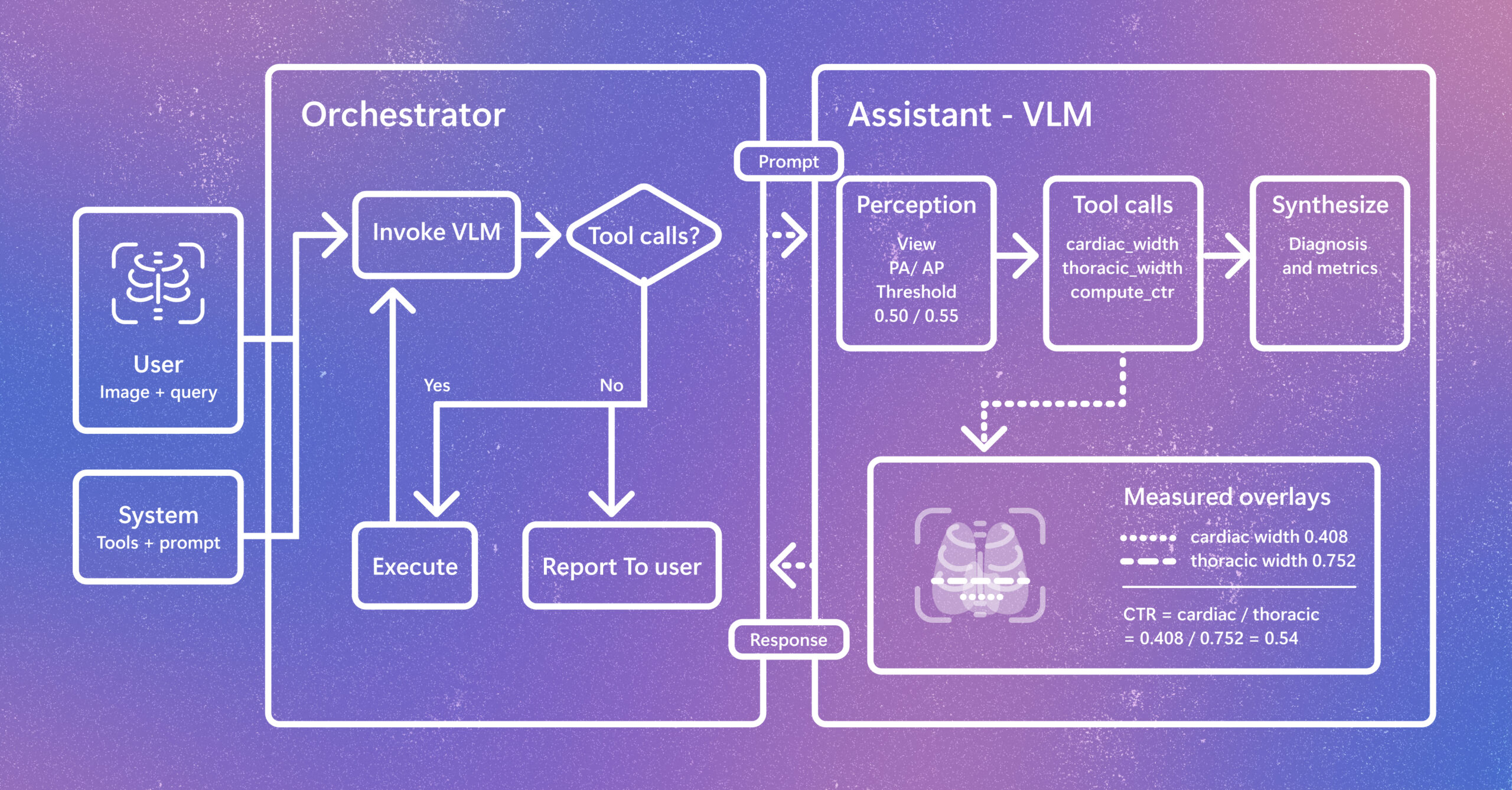
Radiology AI is evolving beyond report generation. CARE-X explores a unified approach that combines flexible reasoning, calibrated predictions, and measurement-based tools for chest X-ray interpretation. The post Introducing CARE-X: Towards Clinically Useful Radiology VLMs with Auxiliary Supervision, Reward-Aligned Learning, and Tool-Augmented Measurement appeared first on Microsoft Research.

We use cookies to run the site and, with your consent, for analytics and to show ads. See our Cookie Policy.