Skip to content

CODA: Depth-Aligned Scene Completion and Object Decomposition from a Single RGB-D Image

Sep 2026 · 0 citations · 57 references
Computer Science

Abstract

Robots operating safely in cluttered everyday environments often need to infer scene geometry from partial observations. Methods that detect objects in 2D and reconstruct them independently struggle in such scenes: a missed object is never reconstructed, a merged detection can fuse two objects, and separately reconstructed meshes may overlap or fail to touch their supporting surfaces. We introduce CODA (Complete Once, Decompose Afterward), a generative model that instead reconstructs the complete scene geometry from a single unsegmented RGB-D image, then separates the surface into the surrounding environment and movable objects. Still, generated scene geometry can drift from the observed partial point cloud. To reduce this drift, CODA uses two explicit 3D grounding mechanisms to keep reconstructed geometry consistent with observed surfaces while completing unseen regions. Experiments on HomebrewedDB and our custom cluttered-scene dataset show more accurate reconstructions and a higher fraction of objects remaining in place under simulated gravity than both object-first and scene-first baselines.

View source

Similar papers

#computer vision Review Sep 2017

Agile Software Development Methods: Review and Analysis

This publication proposes a definition and a classification of agile software development approaches and analyses ten software development methods that can be characterized as being "agile" against the defined criterion.

P. Abrahamsson, O. Salo, Jussi Ronkainen et al. · 727 citations · ⚡54
#computer vision Jun 2008

The impact of agile practices on communication in software development

The study shows that agile practices improve both informal and formal communication, but indicates that, in larger development situations involving multiple external stakeholders, a mismatch of adequate communication mechanisms can sometimes even hinder the communication.

M. Pikkarainen, Jukka Haikara, O. Salo et al. · 401 citations · ⚡48
#machine learning Review Open access Oct 2014

Software development in startup companies: A systematic mapping study

The results indicate that software engineering work practices are chosen opportunistically, adapted and configured to provide value under the constrains imposed by the startup context.

Nicolò Paternoster, Carmine Giardino, M. Unterkalmsteiner et al. · 394 citations · ⚡54

Diffusion models as plug-and-play priors

The possibility of inferring high-dimensional data inference in a model that consists of a prior and an auxiliary differentiable constraint given some additional information is considered, thereby allowing a range of potential applications in adapting models to new domains and tasks.

Alexandros Graikos, Esmeralda S. Whitammer, N. Jojic et al. · 316 citations · ⚡15

Related blog posts

Microsoft Research Blog Aug 11, 2026

Introducing CARE-X: Towards Clinically Useful Radiology VLMs with Auxiliary Supervision, Reward-Aligned Learning, and Tool-Augmented Measurement

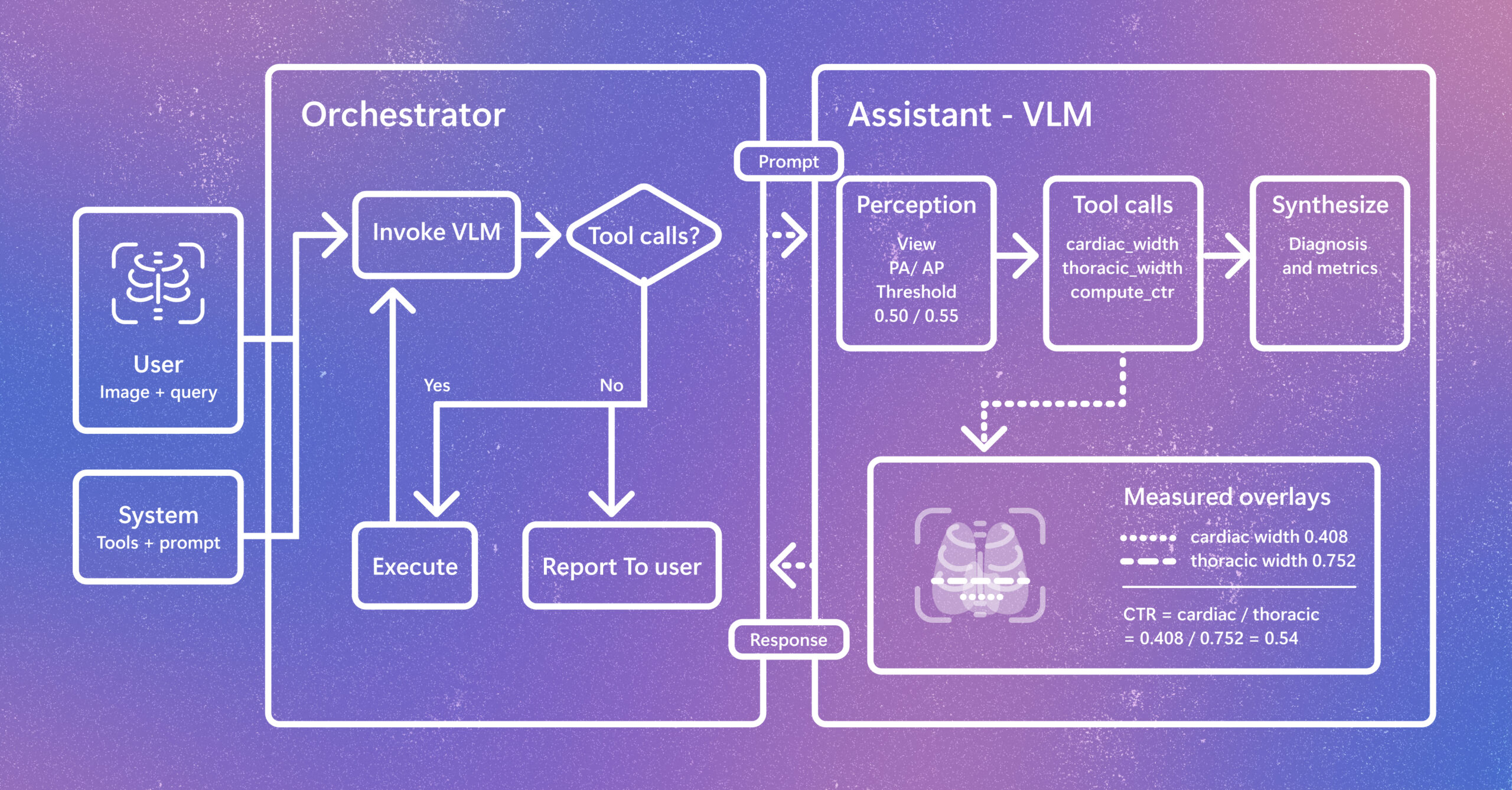
Radiology AI is evolving beyond report generation. CARE-X explores a unified approach that combines flexible reasoning, calibrated predictions, and measurement-based tools for chest X-ray interpretation. The post Introducing CARE-X: Towards Clinically Useful Radiology VLMs with Auxiliary Supervision, Reward-Aligned Learning, and Tool-Augmented Measurement appeared first on Microsoft Research.

We use cookies to run the site and, with your consent, for analytics and to show ads. See our Cookie Policy.