Human demonstrations offer a scalable way to collect manipulation data, but their contacts may be unstable or infeasible when transferred to a robot hand. Collecting demonstrations directly on the target robot avoids this mismatch but substantially increases the cost of data collection. To address this trade-off, we present Touch2Robot, a framework that lets humans collect demonstrations while seeing how the target robot hand would contact the object. We capture human hand motion, tactile-glove measurements, and object motion during human manipulation. These recordings guide object-specific RL policies to reproduce the demonstrated object motion while favoring contacts consistent with the recorded human touch. We distill the learned behaviors into a unified real-time retargeter that maps incoming human observations and object geometry to robot hand configurations. During collection, the predicted robot configuration is synchronized with the tracked object pose in simulation to reconstruct robot-object contacts, which are visualized to help the demonstrator adapt subsequent interactions to the target hand. Across four real-world tasks, Touch2Robot improves average real-robot replay completion from 37.9% to 72.1% over visual-only feedback, while reducing the collection time per replay-successful demonstration from 58.6s to 18.2s. Reconstructed target-hand contacts achieve 44.2% F1 against real-robot tactile measurements, and policies trained on Touch2Robot demonstrations improve downstream Diffusion Policy performance by 29.1 percentage points over visual-only feedback. These results show that bringing robot touch into the human demonstration loop improves both the quality and efficiency of scalable dexterous data collection. Project webpage: https://Touch2Robot.github.io/.

GAOKAO-Bench is introduced, an intuitive benchmark that employs questions from the Chinese GAOKAO examination as test samples, including both subjective and objective questions that contribute a robust evaluation benchmark for future large language models and offers valuable insights into the advantages and limitations...
Xiaotian Zhang, Chun-yan Li, Yi Zong et al.· arXiv.org· 216 citations· ⚡17
This work investigates the possibilities of using LLMs in a resume screening setting via a document retrieval framework that simulates job candidate selection and finds that the MTEs are biased, significantly favoring White-associated names in 85% of cases and female-associated names in only 11.1% of cases.
This paper presents a comprehensive overview of the Ultralytics YOLO family, emphasizing architectural evolution, benchmarking, deployment, and emerging directions from YOLOv5 through YOLO27, and examines detection, segmentation, depth, classification, pose, oriented detection, tracking, export, quantization, and deplo...
A novel threat is unveiled in which attackers steer the RAG system's response by injecting malicious passages into its knowledge base, enabling the attacker to steer the response without altering the user input or modifying the RAG weights.
Jiaqi Xue, Meng Zheng, Yebowen Hu et al.· arXiv.org· 109 citations· ⚡8
This work revisits schema linking when using the latest generation of large language models (LLMs) and finds empirically that newer models are adept at utilizing relevant schema elements during generation even in the presence of large numbers of irrelevant ones.
Karime Maamari, Fadhil Abubaker, Daniel Jaroslawicz et al.· arXiv.org· 109 citations· ⚡19
Empirically, PRISM reduces the end-to-end time for data selection and model tuning to just 30% of conventional pipelines, and achieves this efficiency while simultaneously enhancing performance, surpassing models fine-tuned on the full dataset across eight multimodal and three language understanding benchmarks.
Jinhe Bi, Yifan Wang, Danqi Yan et al.· arXiv.org· 73 citations· ⚡4
Related blog posts
MIT News · Artificial Intelligence· news.mit.eduJul 30, 2026
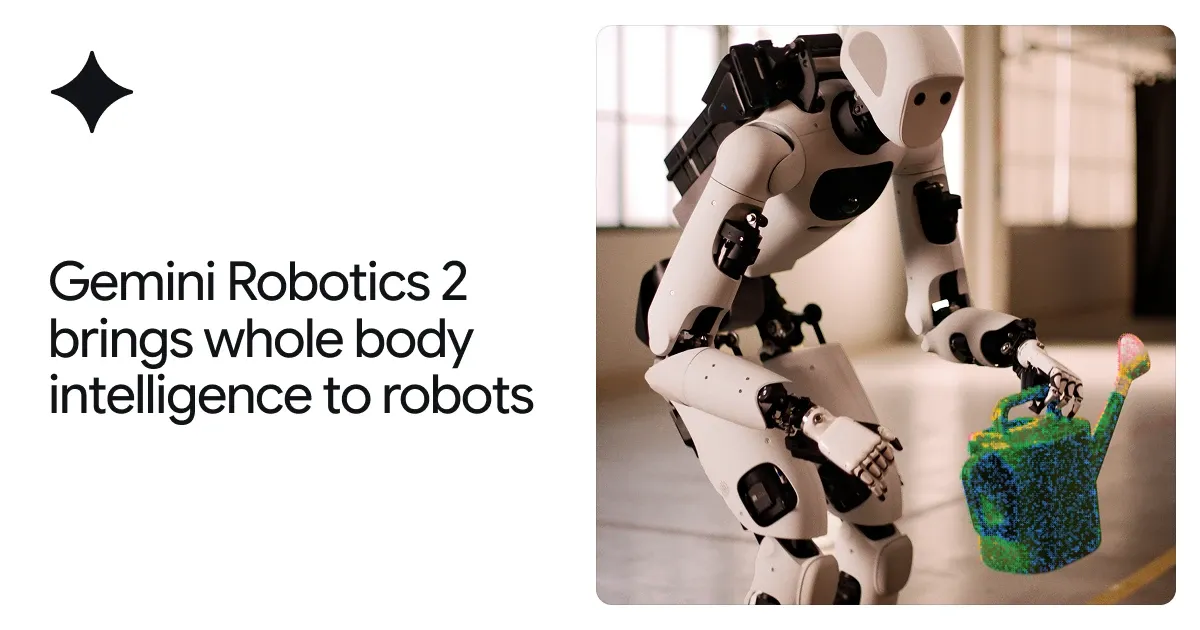
From feet to fingertips — we are teaching robots intelligent whole-body control, fine dexterity, and teamwork to complete a broad range of complex tasks.
With $2.1 million funding from Google.org, the open-source Public Transit Intelligence Hub will unify public transit monitoring, operations, and passenger communication.
We use cookies to run the site and, with your consent, for analytics and to show ads.
See our Cookie Policy.