The results show that explicit particle dynamics are a promising low-dimensional interface for robot video prediction, while robust language grounding and appearance delivery remain the principal open challenges.
Abstract
Predicting robot videos requires both precise motion reasoning and preservation of high-frequency appearance, yet monolithic pixel models entangle these objectives and often conceal their progress behind a strong last-frame baseline. We present AcrossVAM1.0, a lightweight, text-assisted video action model that factorizes future prediction into object-centric motion and dense appearance. A frozen SAM3-DLP codec decomposes four context frames into semantic particles for the robot, arm, and gripper, together with a background latent. A 0.28M-parameter spatio-temporal Transformer aligns particle identities, rolls their states forward, and is modulated by a frozen OpenCLIP instruction embedding through FiLM. A causal dual-stream decoder combines particle-rendered motion with appearance encoded exclusively from the last observed frame; a residual refiner and learned delivery mask produce five future frames without access to future appearance. On our VRS benchmark constructed from diverse real-robot trajectories, particle dynamics reduce trajectory error by 21.0\% over persistence. Across three delivery-mask seeds, AcrossVAM1.0 improves future-frame PSNR/SSIM from 19.97/0.796 to 20.573/0.8004, while raw particle generation improves motion-region PSNR from 11.89 to 13.23. The delivered model does not yet beat persistence in LPIPS, and correct-versus- shuffled language changes trajectory error by only 2.8--3.1%. We report these limitations alongside oracle, negative-control, multi-seed, and per-robot analyses. The results show that explicit particle dynamics are a promising low-dimensional interface for robot video prediction, while robust language grounding and appearance delivery remain the principal open challenges.
GAOKAO-Bench is introduced, an intuitive benchmark that employs questions from the Chinese GAOKAO examination as test samples, including both subjective and objective questions that contribute a robust evaluation benchmark for future large language models and offers valuable insights into the advantages and limitations of such models.
Xiaotian Zhang, Chun-yan Li, Yi Zong et al.· arXiv.org· 216 citations· ⚡17
This work investigates the possibilities of using LLMs in a resume screening setting via a document retrieval framework that simulates job candidate selection and finds that the MTEs are biased, significantly favoring White-associated names in 85% of cases and female-associated names in only 11.1% of cases.
Empirically, PRISM reduces the end-to-end time for data selection and model tuning to just 30% of conventional pipelines, and achieves this efficiency while simultaneously enhancing performance, surpassing models fine-tuned on the full dataset across eight multimodal and three language understanding benchmarks.
Jinhe Bi, Yifan Wang, Danqi Yan et al.· arXiv.org· 73 citations· ⚡4
The method, ECCOLA, is presented, which aims at making the high-level AI ethics principles more practical, making it possible for developers to more easily implement them in practice.
Ville Vakkuri, Kai-Kristian Kemell, P. Abrahamsson· EUROMICRO Conference on Soft...· 64 citations· ⚡6
This paper designs Markov decision processes (MDPs) for different combinatorial problems and proposes to train conditional GFlowNets to sample from the solution space and demonstrates that GFlowNet policies can efficiently find high-quality solutions.
Dinghuai Zhang, H. Dai, Esmeralda S. Whitammer et al.· Advances in Neural Informati...· 59 citations· ⚡8
An empirical study on the current state of practice in artificial intelligence ethics is conducted by means of a multiple case study of five case companies, which indicates a gap between research and practice in the area.
Ville Vakkuri, Kai-Kristian Kemell, Joni Kultanen et al.· arXiv.org· 56 citations· ⚡6
Related blog posts
MIT News · Artificial Intelligence· news.mit.eduJul 30, 2026
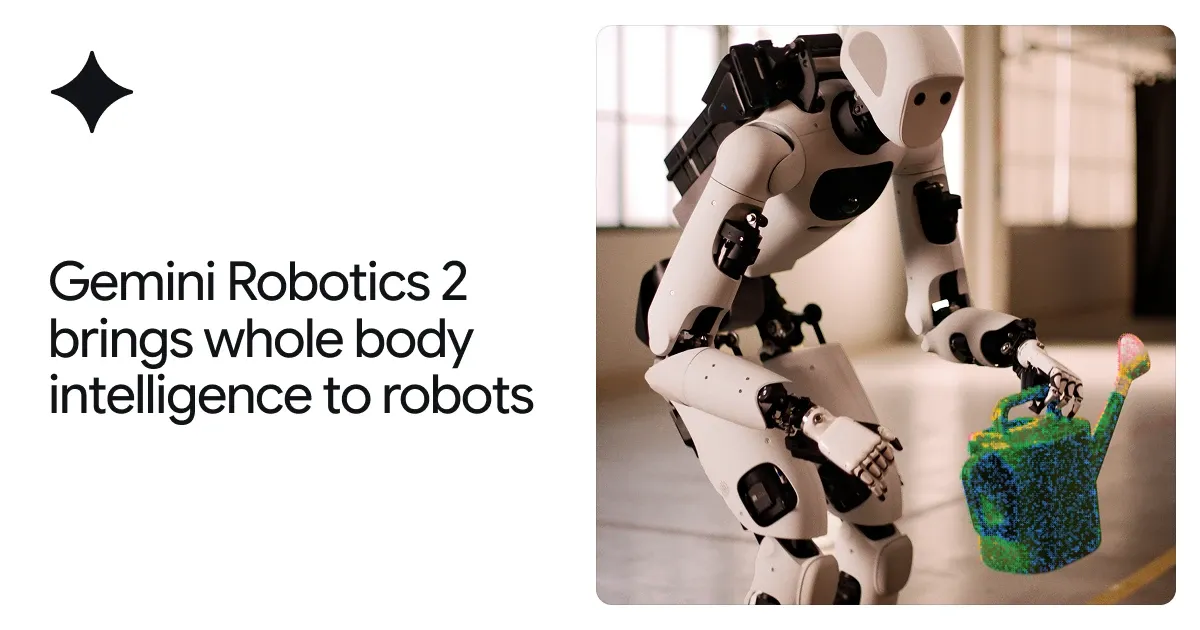
From feet to fingertips — we are teaching robots intelligent whole-body control, fine dexterity, and teamwork to complete a broad range of complex tasks.