Skip to content

GUIDE: Designer-in-the-loop Authoring of Conformant Generative User Interfaces

Sep 2026 · 0 citations · 106 references
Computer Science

TL;DR

GUIDE (GenUI Development Environment), a system that lets designers continuously inspect and refine GenUI behavior as they create and edit interfaces through prompt optimization and a novel adaptive conformance scoring model, is introduced.

Abstract

Generative User Interfaces (GenUIs) enable applications to generate interfaces on demand from user needs and context. Like conventional UIs, they must still reflect designers'intent and conform to requirements such as brand identity. Unlike conventional UIs, designers cannot directly specify or see every interface a GenUI may produce, making design intent harder to enforce. We introduce GUIDE (GenUI Development Environment), a system that lets designers continuously inspect and refine GenUI behavior as they create and edit interfaces. GUIDE uses designers'modifications and interactions to adapt GenUIs through prompt optimization and a novel adaptive conformance scoring model. We validate GUIDE's scoring model and system. The scoring model matched or outperformed proprietary LLM baselines on held-out comparisons of real and synthetic application screens. In a study with 12 UI/UX practitioners, participants found GUIDE effective and usable and significantly preferred aligned outputs over a strong baseline using exemplars and a model-generated design.md.

View source

Similar papers

Review

Grounding Persona-Driven Usability Simulation in Established Standards

A persona-driven, multi-agent workflow in which User-Agents execute Perceive–Decide–Act loops on rendered prototypes while a Supervisor-Agent verifies trace integrity and maps evidenced failures to established standards (ISO 9241-110 and Nielsen’s heuristics).

Oussama Touir, Farah Barika Ktata, M. Soui · 0 citations
Review Aug 2026

“I don’t want to engineer prompts, I want to engineer products”: 3D CAD Designers’ Views on Futuristic GenAI Concepts

Despite skepticism surrounding the integration of Generative AI (GenAI) into creative domains, its potential to transform Computer-Aided Design (CAD) workflows remains largely underexplored. In this study, we investigate how professional 3D CAD designers envision and evaluate GenAI-supported design processes. Using a “...

Emily Kuang, J. Vermeulen, George W. Fitzmaurice et al. · 0 citations

Look Before You Prompt, and After: Scaffolding Human-AI Collaboration in Software Tutorial Creation

This work designed a tool called dBlocks with the following features: blocks to scope content, a context manager to edit context, and inline execution to verify code, and shows how human-centered design can guide the development of LLM-integrated tools.

Avinash Bhat, Vy Bui, Jin L. C. Guo · 0 citations
#human-computer interacti... Preprint Sep 2026

Elicitive User Interfaces: Designing How Users Shape Generative Interfaces

Generative user interfaces (GenUI) promise personalized interfaces to a user's tasks and needs. However, user needs are often implicit---difficult for systems to infer and users to articulate, making it hard for users to arrive at their ideal interface. We propose Elicitive User Interfaces, a design approach to GenUI t...

Eunhye Kim, Bryan Min, Hai-Jun Xia et al. · 0 citations
Review Open access 2026

A Practical View on Procedural Generation: Benefits, Capabilities, and Usability

This review synthesizes the characteristics, benefits and drawbacks of various procedural generation methods, helping developers choose the most appropriate technique based on a particular use case.

Robert Andrei Caragicu, Anca Morar, A. Moldoveanu et al. · 0 citations

Related blog posts

Microsoft Research Blog Nov 16, 2026

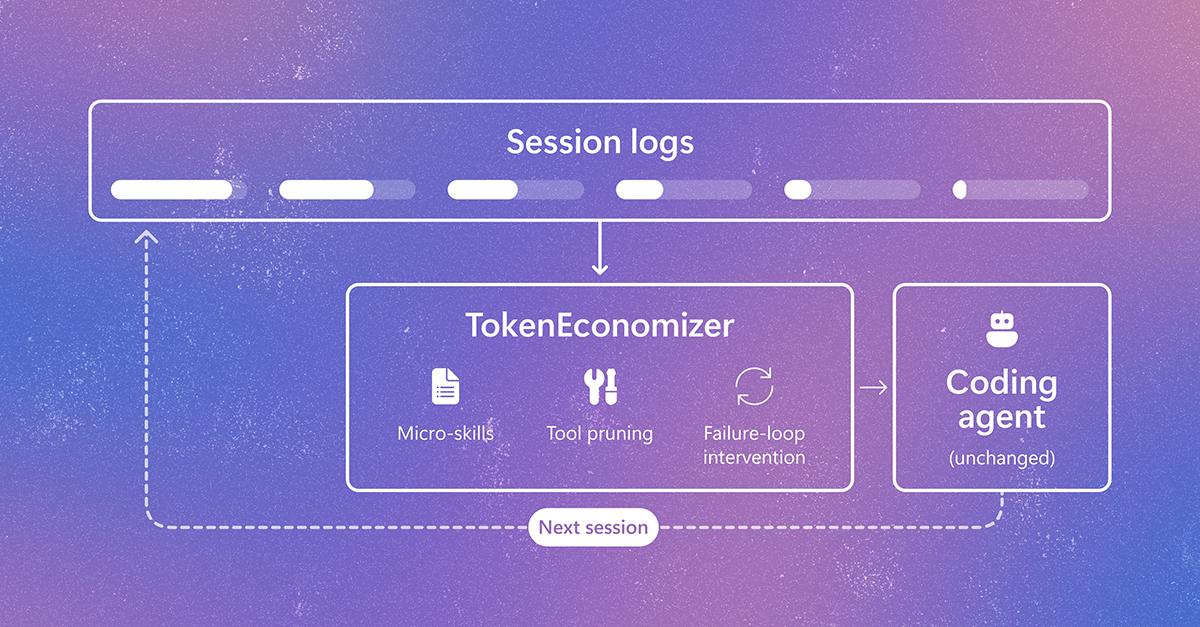
TokenEconomizer: Learning from Experience to Make AI Coding Agents More Efficient

AI coding agents are increasingly help developers fix bugs and build features largely on their own, but every interaction with their models consumes tokens. In each session, an agent sends instructions, tool descriptions, and session history to its model. Most efforts to reduce this cost focus on individual tasks. Yet developers return to the same […] The post TokenEconomizer: Learning from Experience to Make AI Coding Agents More Efficient appeared first on Microsoft Research.

MIT News · Artificial Intelligence Nov 13, 2026

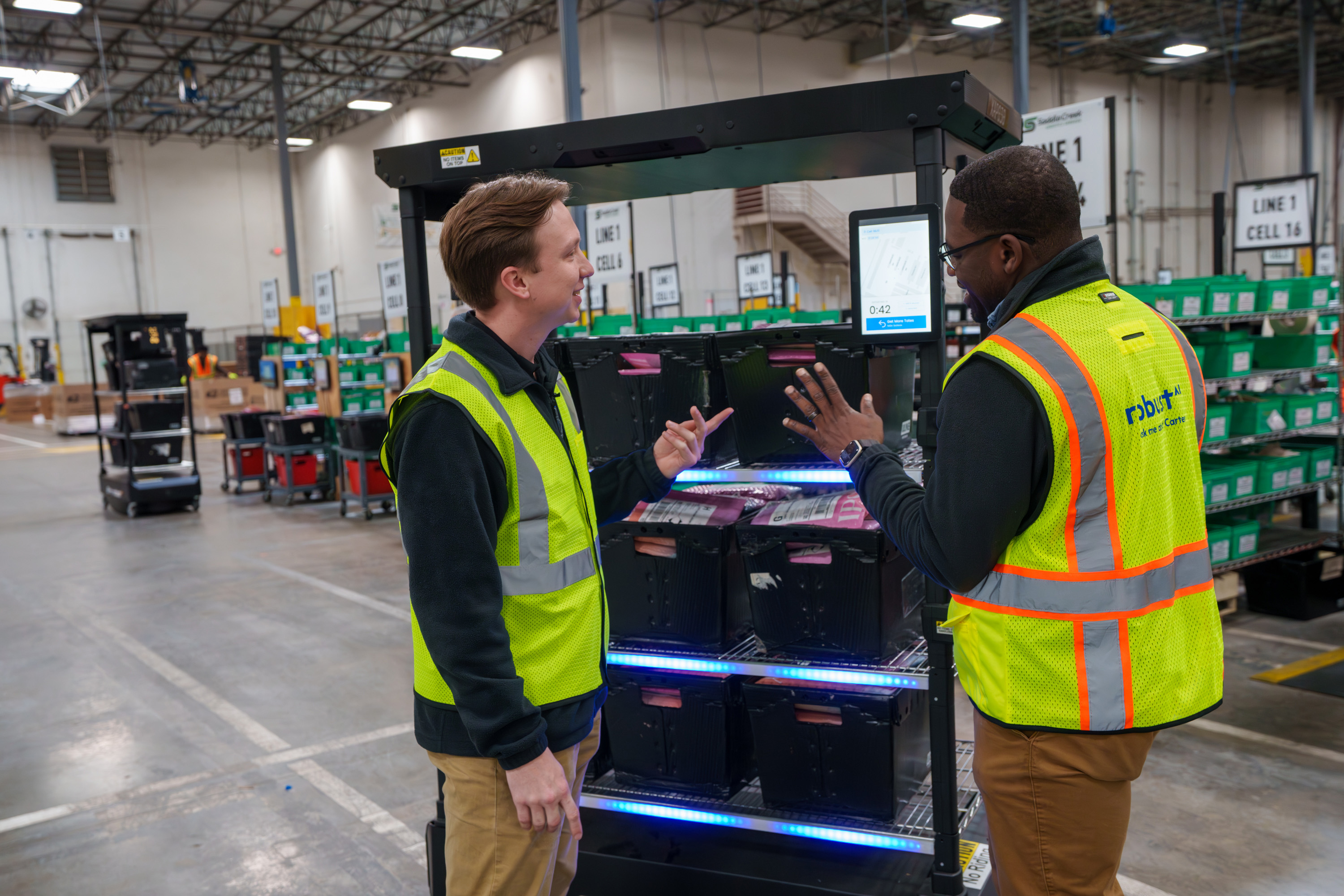
Helping robots fit into the human workplace

Founded by Anthony Jules ’92, SM ’92 and Professor Emeritus Rodney Brooks, Robust AI’s robots are designed to collaborate with humans in factories and warehouses.

We use cookies to run the site and, with your consent, for analytics and to show ads. See our Cookie Policy.