It is proved that a deterministic order rule on $\mathbb R$ beats chance for every pair of distinct Borel probability measures and that no rule works for every distinct pair of distributions and every unknown unbalanced class prior.
Abstract
We study a minimal classification problem: Given independent labeled observations $X\sim P$ and $Z\sim Q$ from two unknown distributions $P,Q$, and given an independent target $Y$ drawn with equal probability from $P$ or $Q$, can one classify $Y$ strictly better than chance whenever $P\neq Q$? The one-nearest-neighbor rule succeeds for every pair of multivariate Gaussian distributions with distinct means and a common positive-definite covariance matrix but can perform strictly worse than chance even for smooth densities on the real line. We construct a fixed randomized kernel rule whose expected accuracy is exactly $1/2+\operatorname{MMD}_k^2(P,Q)/4$, and obtain characteristic kernels on countably generated measurable spaces from countable families of measurable binary questions. We also prove that a deterministic order rule on $\mathbb R$ beats chance for every pair of distinct Borel probability measures. A measurable encoding then gives a deterministic distribution-free rule which beats chance on every countably generated measurable space, in particular every separable metric space. Finally, we show that no rule works for every distinct pair of distributions and every unknown unbalanced class prior; under adaptive target-class selection, every rule other than a fair coin is strictly worse than chance for some finitely supported pair.
It is found that Llama 3 delivers comparable quality to leading language models such as GPT-4 on a plethora of tasks, and performs competitively with the state-of-the-art on image, video, and speech recognition tasks.
This paper investigates developing real-world perception for active agents, proposes Gibson Environment for this purpose, and showcases a set of perceptual tasks learned therein.
F. Xia, Amir Zamir, Zhi-Yang He et al.· 2018 IEEE/CVF Conference on...· 1,069 citations· ⚡112
This publication proposes a definition and a classification of agile software development approaches and analyses ten software development methods that can be characterized as being "agile" against the defined criterion.
P. Abrahamsson, O. Salo, Jussi Ronkainen et al.· arXiv.org· 727 citations· ⚡54
The study shows that agile practices improve both informal and formal communication, but indicates that, in larger development situations involving multiple external stakeholders, a mismatch of adequate communication mechanisms can sometimes even hinder the communication.
M. Pikkarainen, Jukka Haikara, O. Salo et al.· Empirical Software Engineeri...· 401 citations· ⚡48
The results indicate that software engineering work practices are chosen opportunistically, adapted and configured to provide value under the constrains imposed by the startup context.
Nicolò Paternoster, Carmine Giardino, M. Unterkalmsteiner et al.· Information and Software Tec...· 394 citations· ⚡54
Related blog posts
MIT News · Artificial Intelligence· news.mit.eduNov 6, 2026
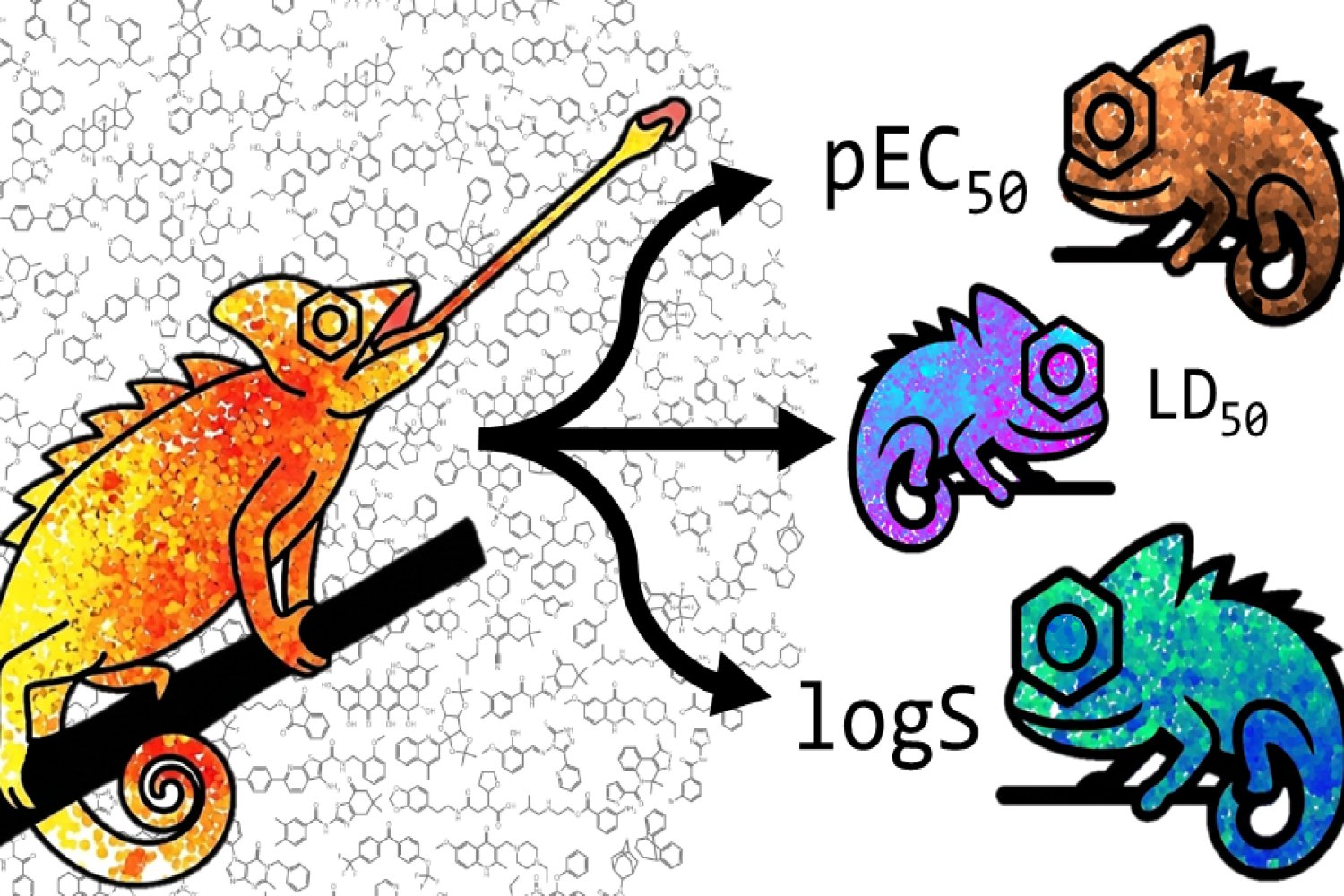
A machine-learning approach called CheMeleon provides a practical way to develop new drugs or other molecules with much less detailed, expensive experimentation.
Learn how Google DeepMind and GovTech Singapore uses lightweight on-device Gemma models to intercept conversational scams in private chats with zero cloud data egress.