Results show that endpoint correction improves the quality-latency trade-off of frozen flow-matching policies, and supports correction as an effective alternative to additional integration.
Abstract
Vision-language-action (VLA) policies based on flow matching generate action chunks through repeated evaluations of an action expert. Increasing the number of integration steps raises inference cost, but does not necessarily improve closed-loop success. We propose Coda, which reallocates part of this integration budget to a single learned endpoint correction. A frozen policy first completes a few-step noise-to-action trajectory; a lightweight Transformer then predicts a demonstration-supervised residual using the candidate action, source noise, and shared observation-prefix cache. Only the corrector is trained. On 50 RoboTwin Easy tasks, five-step Coda improves success from 71.64% to 74.68% over the matched five-step baseline, while reducing forward latency by 30.2% relative to the default ten-step policy. A two-step configuration achieves 71.88% success with a 2.12$\times$ speedup. An independent 13-task control shows a 5.69-percentage-point gain at nearly equal latency, supporting correction as an effective alternative to additional integration. The same design also improves frozen official SmolVLA, raising two-step success from 60.8% to 69.4%. These results show that endpoint correction improves the quality-latency trade-off of frozen flow-matching policies.
IMLE-VLA is introduced, which replaces the iterative action head with a single-step conditional generator trained via conditional Implicit Maximum Likelihood Estimation (cIMLE), and promotes multimodal action coverage, avoiding the mode collapse of naive regression heads while eliminating multi-step sampling entirely.
Kian Hosseinkhani, Qin-He Peng, George Shramko et al.· arXiv.org· 2 citations
Every valid trajectory can teach what physically happened, while the actor is deployed only under the condition associated with relatively better actions, in \method, a direct world-action policy that combines outcome-agnostic predictive learning with outcome-aware policy improvement.
Bo-Tong Zhao, Fangjie Yu, Tim Yu et al.· 0 citations
This paper proposes TaskAnchor, a lightweight adapter that grounds task state by injecting execution context into the VLA's native input space, and real-robot experiments further validate reliable multi-stage execution.
Heng-Yan Liu, Wen-Lve Zhou, Bo Yue et al.· arXiv.org· 0 citations
This work proposes a framework that exposes backbone depth V, action expert depth A, and denoising steps $D$ as three jointly configurable compute axes in a VLA, and introduces a KV Cache synthesis mechanism that manages the missing keys and values of the skipped backbone layers, allowing the action expert to exit deep...
Riccardo Andrea Izzo, Rimvydas Rubavicius, Gianluca Bardaro et al.· arXiv.org· 0 citations
A vision-language-action (VLA) policy with a flow-matching action expert generates each action chunk (a short command sequence) by integrating a learned velocity field; once its weights are fixed, the success or failure of an earlier rollout cannot change the chunk generated now. Concurrent test-time methods give a fro...
The results suggest that dense to MoE adaptation with dynamic expert deactivation is a practical direction for reducing active VLA model size without severe performance loss.
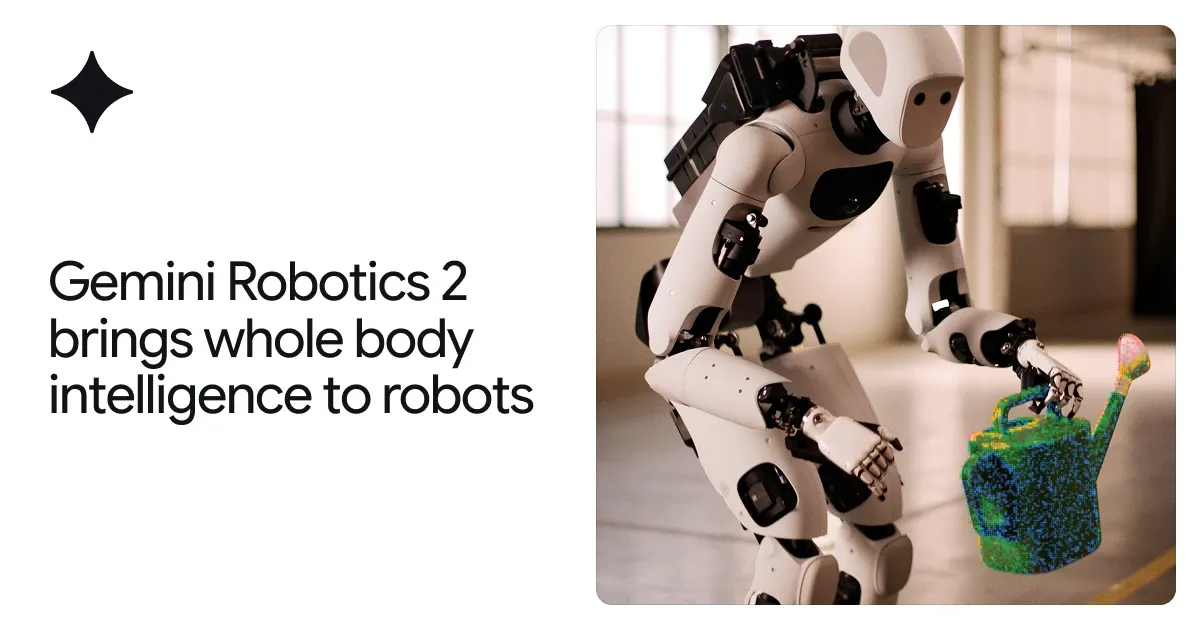
From feet to fingertips — we are teaching robots intelligent whole-body control, fine dexterity, and teamwork to complete a broad range of complex tasks.