Skip to content

Risk-Aware Occupancy for Safety-Oriented End-to-End Autonomous Driving

Sep 2026 · 0 citations · 46 references
Computer Science

TL;DR

ROIDrive, an instance-centric end-to-end framework with a dedicated risk-aware occupancy branch, and RiskOcc4D-nuScenes, a benchmark derived from nuScenes and Occ3D-nuScenes with four automated annotation pipelines for multi-dimensional risk supervision are contributed.

Abstract

Conventional end-to-end driving systems model the environment with sparse objects and lane elements. While efficient, this paradigm discards planning-critical information in crowded and occluded scenarios, particularly for unstructured obstacles, ambiguous free space, and complex interactions. We propose risk-aware occupancy, a dense BEV representation that explicitly fuses geometric occupancy, map-derived traffic constraints, and future dynamic-agent occupancy as complementary risk signals. Built upon this representation, we develop ROIDrive, an instance-centric end-to-end framework with a dedicated risk-aware occupancy branch. The predicted occupancy is tokenized via sliding-window sampling and injected into planning queries via cross-attention, while temporal query consistency mitigates unreliable flickering queries. We also contribute RiskOcc4D-nuScenes, a benchmark derived from nuScenes and Occ3D-nuScenes with four automated annotation pipelines for multi-dimensional risk supervision. Experiments on representative occupancy architectures verify the learnability and transferability of our representation. Integrated with GenAD, it reduces collision rates by 35.0% (UniAD metric) and 52.9% (ST-P3 metric), confirming the efficacy of the proposed representation modality.


View source

Similar papers

Preprint Aug 2026

UnsDrive: Towards Robust End-to-End Autonomous Driving in Unstructured Scenes

End-to-end planning has shown strong promise for autonomous driving, but most existing methods are designed for structured urban roads and generalize poorly to unstructured mining environments. In such settings, weak road structure, terrain-induced occlusions, degraded visibility, and large unobserved regions make safe...

Nan-Xin Zeng, Rui-Qi Song, Xiangyu Guo et al. · 0 citations
#artificial intelligence Preprint Sep 2026

Driving on Registers, Reasoning on Risk: Risk-Aware Occupancy for Register-Based End-to-End Autonomous Driving

Multimodal trajectory prediction improves behavioral coverage in end-to-end autonomous driving, but existing methods remain limited by sparse scene representations. Incomplete evidence leads to low-quality candidate generation and unreliable ranking among geometrically similar trajectories. On a register-based baseline...

Jia-Xing Chen, Heng-Duo Zou, Yu-Kai Qin et al. · 0 citations
#artificial intelligence Preprint Sep 2026

Risk-Aware World Modeling with Flow-Guided Occupancy Evolution for Selective Trajectory Planning in Automated Driving

RiskWorld, a risk-aware world modeling framework for shared occupancy forecasting and selective trajectory replacement, is introduced and within-setting ablations show that RiskWorld achieves lower collision rates than the current-state rescoring baseline, while forecast reuse enables additional candidates to be evalua...

Rong-Xiang Zeng, Lin-Sen Cai, Jia-Fu Zhang et al. · 0 citations
Preprint Sep 2026

V2X-WAM: A Cooperative World Action Model for End-to-End Autonomous Driving

Vehicle-infrastructure cooperation can complement onboard sensing with broader and more informative observations of the traffic environment, providing valuable support for end-to-end autonomous driving. However, existing cooperative driving methods mainly exploit roadside information to enhance the representation of th...

Jun-Wei You, Wei-Zhe Tang, Can Wang et al. · 0 citations
Preprint Sep 2026

Data-Driven Risk Fields for Safer End-to-End Autonomous Driving

Safety is a fundamental requirement for autonomous driving, yet existing end-to-end driving models still lack explicit risk-aware learning capacities. Existing rule-based risk models provide interpretable safety priors, yet their absolute risk scores depend on handcrafted functions, coefficients, and thresholds. Learni...

Yuan-Xin Tian, Zhi-Yuan Liu, Jin-Hao Li et al. · 0 citations
Preprint Sep 2026

WZPlanner: Safe End-to-End Path Planning for Autonomous Driving in Work Zones

This work introduces WAVE (Work-zone-focused AV data generation in Virtual and rEal Environments), a semi-automated pipeline for creating the dataset, and BoundaryFormer (BF), a transformer-based model that jointly predicts lane and work zone boundary polynomials and driving trajectories.

Nishad Sahu, Chang-Zhong Qian, Guang-Zhou Cai et al. · 0 citations

Related blog posts

MIT News · Artificial Intelligence Sep 29, 2026

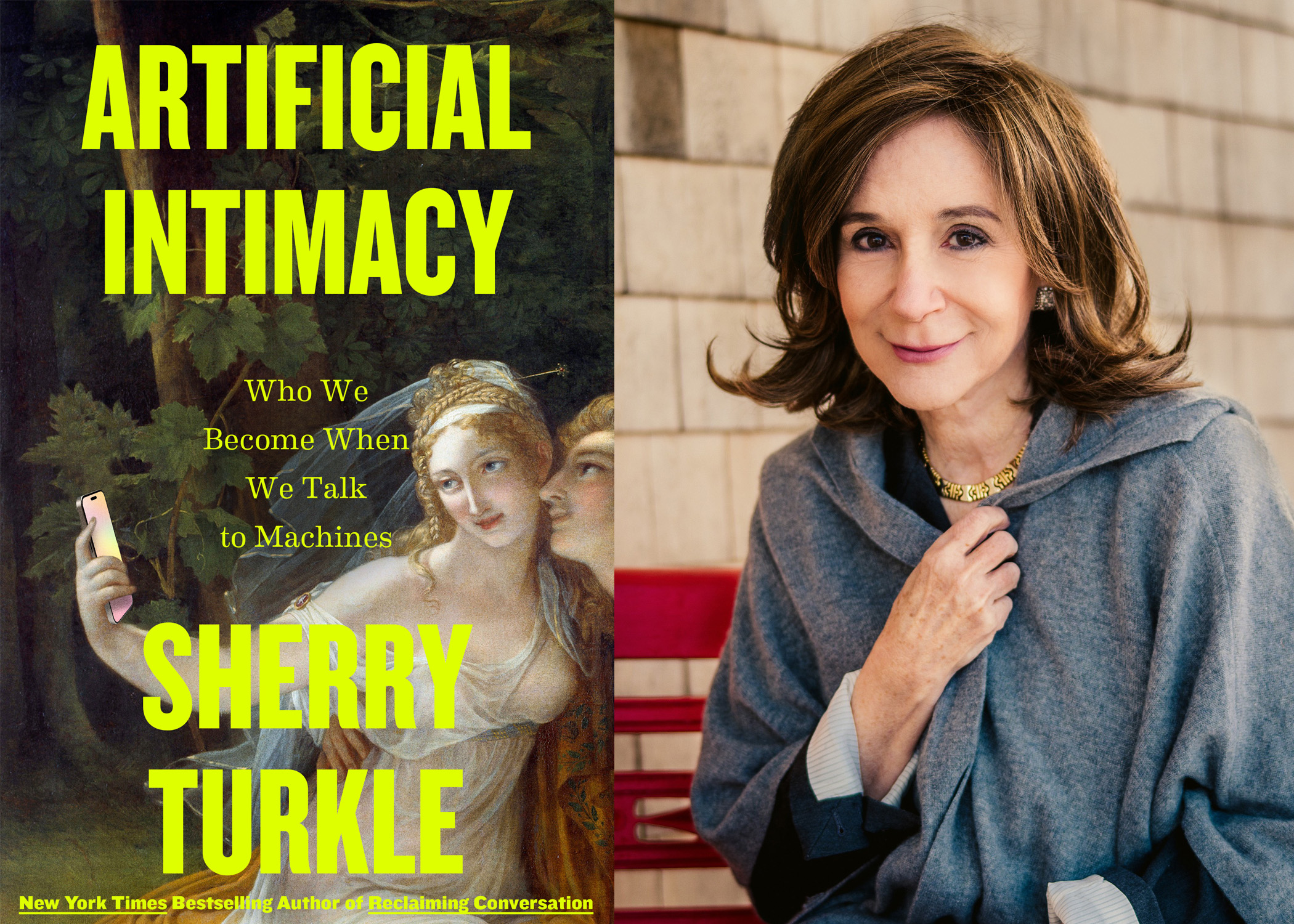
Who we become when we talk to machines

Professor Sherry Turkle’s new book, “Artificial Intimacy,” offers a withering critique of chatbots and the antisocial dynamics she believes they encourage.

We use cookies to run the site and, with your consent, for analytics and to show ads. See our Cookie Policy.