A physics-informed self-distillation framework built upon the DINOv3 architecture utilizing a ConvNeXt-v2-Tiny backbone to maximize data efficiency and enforces view-invariance, and proposes a dense, hierarchical feature fusion strategy across all four network stages to preserve fine-grained sediment details alongside deep semantic abstractions.
Abstract
Automated perception in side-scan sonar (SSS) imagery is severely hindered by physical acoustic artifacts, resulting in representations that inextricably mix intrinsic seabed reflectivity with transient viewing geometries. Existing self-supervised learning (SSL) frameworks rely on augmentations designed for natural images, failing to account for acoustic degradation and explicitly enforce view-invariance. To address this gap, we introduce a physics-informed self-distillation framework built upon the DINOv3 architecture utilizing a ConvNeXt-v2-Tiny backbone to maximize data efficiency. The proposed methodology enforces view-invariance through two primary mechanisms: physically motivated augmentations that simulate speckle noise, range-dependent attenuation, and radiometric miscalibration; and a Hilbert-Schmidt Independence Criterion (HSIC) penalty that explicitly decouples learned dense patch features from physical viewing parameters. Furthermore, we propose a dense, hierarchical feature fusion strategy across all four network stages to preserve fine-grained sediment details alongside deep semantic abstractions. Extensive evaluation demonstrates that the framework natively groups complex benthic topographies into stable, noise-free semantic clusters without relying on manual annotations. During supervised downstream tasks on the S3Seg dataset, the fused representations exhibited exceptional data efficiency, achieving 96% of its absolute peak performance using only 10% of the available annotated data, ultimately reaching a mean Intersection over Union (mIoU) of 71.4% and an overall accuracy of 86.5%.

This method utilizes Structure-from-Motion to reconstruct a dense 3D seafloor mesh, acting as a geometric anchor between the visual and acoustic domains, and applies an inverse Lambertian model and a dual-Gaussian weighting function to isolate the intrinsic seabed reflectivity.
SGPDFuse is proposed, which bridges this gap by mapping inputs into a physics-disentangled structural representation via a Semantic-Physical Parametric Bridge (SPPB) built on pretrained vision foundation models, utilizing the Intrinsic-Variation principle to decouple invariant scene attributes from transient environmen...
Hao-Zheng Wei, Cheng-Jun Jiang, Yu-Tong Guo et al.· 0 citations
FiLM-GPNet is proposed, a geometry-conditioned network for wrapped-phase restoration that explicitly adapts to acquisition differences using Feature-wise Linear Modulation (FiLM) and a 7D per-pair geometry descriptor, supporting geometry-conditioned restoration as an effective alternative to fixed classical filtering a...
Getnet Demil, Muhammad Farhan Humayun, Tomi Westerlund et al.· 0 citations
Learning from scientific measurements often requires aligning modalities with different spatial support and resolution. Subsurface characterization is an extreme dense-sparse problem in which 3D seismic provides volumetric but indirect measurements and well logs provide high-resolution 1D measurements at sparse borehol...
M. Gajula, Keyla Gonzalez, Ben Lasscock et al.· 0 citations
Vernata is introduced, consisting of three extensions: sparse view augmentation to improve robustness against varying point densities, a memory bank mechanism to stabilize resource-constrained training, and cross-modal distillation utilizing dense, high-resolution 2D image features to enable fine-grained semantic guida...
Oliver Lemke, Alexander Liniger, Abel Gawel et al.· 0 citations
Marine seismic imaging is affected by limited acquisition aperture, nonuniform illumination, and complex features such as seafloor structures and low-velocity gas clouds. These factors can produce blurred reflectors, amplitude imbalance, and migration artifacts in conventional reverse-time migration (RTM). Point-spread...
Zi-Dong Zhao, Hao-Ran Ren, Yu-Xiang Wu et al.· Journal of Marine Science an...· 0 citations
Related blog posts
MIT News · Artificial Intelligence· news.mit.eduOct 28, 2026
Professor Paris Smaragdis develops computers with superhuman hearing for applications like speech recognition, music understanding, and environmental monitoring.
Exploring how generative AI could make machine vision more accessible to businesses. The post GenEye in a Box: Making Machine Vision Something You Can Just Ask For appeared first on GPT-Lab.
Microsoft Research Blog· microsoft.comAug 11, 2026
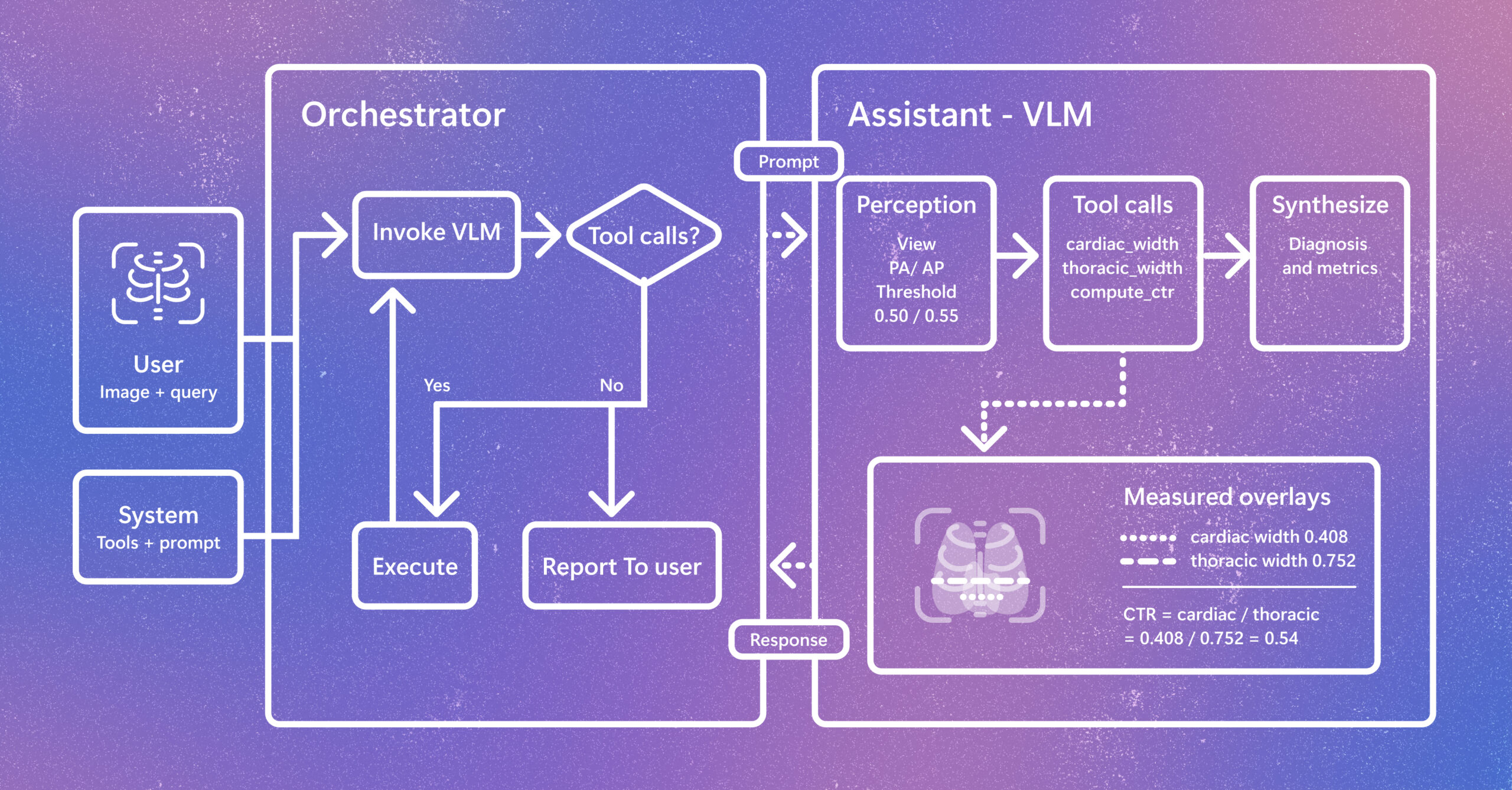
Radiology AI is evolving beyond report generation. CARE-X explores a unified approach that combines flexible reasoning, calibrated predictions, and measurement-based tools for chest X-ray interpretation. The post Introducing CARE-X: Towards Clinically Useful Radiology VLMs with Auxiliary Supervision, Reward-Aligned Learning, and Tool-Augmented Measurement appeared first on Microsoft Research.