Sep 2026· International Journal of Artificial Intelligence and Agent Systems· Vol 1· 0 citations· 25 references
Privacy-Preserving Technologies in Data
TL;DR
A federated learning framework with data locality for healthcare diagnostics that enables multiple hospitals to jointly train accurate models while keeping patient data within institutional boundaries is introduced.
Abstract
Healthcare institutions produce enormous quantities of medical data daily. However, regulations such as HIPAA, GDPR, and DPDPA create strict barriers to sharing patient information for collaborative artificial intelligence development. This forces individual hospitals to develop models using only their local data, producing systems that fail to generalize across diverse populations. We introduce a federated learning framework with data locality for healthcare diagnostics that enables multiple hospitals to jointly train accurate models while keeping patient data within institutional boundaries. From an information security perspective, the system follows a coordinator-client architecture using the Flower framework with a FastAPI backend and a Next.js frontend, facilitating distributed training under data locality. Medical imaging remains entirely within local hospital infrastructure while encrypted parameter updates traverse secure channels. The system implements Federated Averaging, Federated Optimization, Federated Matched Averaging, and our novel Performance-Adaptive Weighted Aggregation algorithm. Our approach demonstrates the feasibility of collaborative training under data locality in limited experiments; a direct comparison with centralized training was not performed.
One of the biggest challenges in implementing AI in healthcare is the fragmentation of data across hospitals, as well as privacy regulations. Federated learning tackles these challenges by allowing models to be collaboratively built, while patient data is kept at its source. The survey focuses on two primary medical fi...
Bhaskar Adepu, T. Archana· International Conference Com...· 0 citations
The proposed FSSL framework provides a scalable foundation for privacy-conscious collaborative clinical AI while keeping patient data within the originating healthcare institution and is intended to support, rather than replace, professional clinical decision-making.
A. V, S. Swathi, G. Sharmila et al.· International journal of com...· 0 citations
The digitization of healthcare has yielded unprecedented volumes of heterogeneous medical imaging data distributed across geographically dispersed hospitals, diagnostic centers, and clinical research institutions. Conventional centralized deep learning approaches require raw patient data to be aggregated on a single se...
Sanjay Kumar· Natural Resources for Human...· 0 citations
This work demonstrates that strong privacy protection and state-of-the-art prediction performance are not mutually exclusive, thereby offering a practical and scalable solution for collaborative healthcare analytics.
Lukesh Thakur· Journal of Machine Learning...· 0 citations
Martin Trust Center Managing Director Bill Aulet introduces Dear Dreamer, a free platform for middle and high school students who want to learn about entrepreneurship.
Microsoft Research Blog· microsoft.comSep 30, 2026
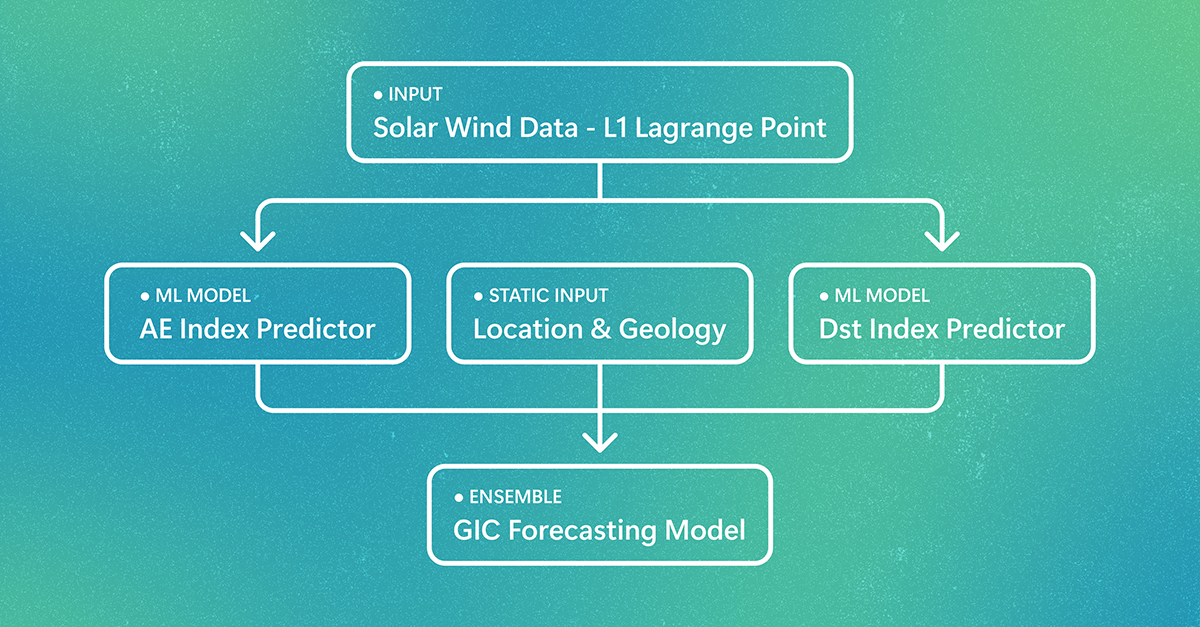
Extreme space-weather events can damage power systems on Earth and degrade GPS accuracy and satellite operations. A new machine learning system can predict where damage is likely to occur 30-60 minutes before a storm arrives. The post Forecasting space weather risks on power grids appeared first on Microsoft Research.
We use cookies to run the site and, with your consent, for analytics and to show ads.
See our Cookie Policy.