Skip to content

The Anchor-and-Expand Principle: Timing Strategic Decoupling in Technology Ecosystems

Sep 2026 · IARJSET · Vol 13

Abstract

Technology ecosystems often reward whichever firm first controls a tightly held physical or infrastructural asset -the "anchor" -because that control reduces uncertainty, sets de facto standards, and buys market access for a higher-margin software, service, or workflow layer -the "expansion."Existing strategy research explains much of why this pattern works, drawing on transaction cost economics, complementary-assets theory, the resource-based view, platform strategy, and dominant-design theory.What it says less about is timing: exactly when an anchor's protective value starts to fade, and when a firm should decouple from it. This paper develops the Anchor-and-Expand (A-E) Principle and introducesAnchor Half-Life (t½) as a way of describing how long an anchor provides real strategic cover before imitation, standardization, or commoditization erodes it.The framework rests on four linked elements -Anchor Asset (A), Expansion Layer (E), Diffusion Threshold (D) and Anchor Half-Life (t½) -and three propositions concerning anchor value under architectural uncertainty, the "coupling trap" created by staying attached to an anchor too long and the compression of anchor advantage as technology cycles accelerate.Six historical cases -mainframes, personal computing, mobile platforms, cloud infrastructure, softwaredefined computing and edge AI -illustrate the framework and its limits.The analysis suggests anchor ownership is most valuable during periods of high uncertainty, but that durable value increasingly comes from making the expansion layer portable across many anchors before diffusion and commoditization take hold.The paper is conceptual rather than empirical: its t½ estimates are directional and illustrative, and the IndoAI case is offered as an application of the framework rather than as independent empirical validation.It closes with a research agenda for measuring t½, gauging diffusion thresholds, and testing the framework across industries.

Read PDF

Similar papers

#computer vision Review Sep 2017

Agile Software Development Methods: Review and Analysis

This publication proposes a definition and a classification of agile software development approaches and analyses ten software development methods that can be characterized as being "agile" against the defined criterion.

P. Abrahamsson, O. Salo, Jussi Ronkainen et al. · 727 citations · ⚡54
#computer vision Jun 2008

The impact of agile practices on communication in software development

The study shows that agile practices improve both informal and formal communication, but indicates that, in larger development situations involving multiple external stakeholders, a mismatch of adequate communication mechanisms can sometimes even hinder the communication.

M. Pikkarainen, Jukka Haikara, O. Salo et al. · 401 citations · ⚡48
#machine learning Review Open access Oct 2014

Software development in startup companies: A systematic mapping study

The results indicate that software engineering work practices are chosen opportunistically, adapted and configured to provide value under the constrains imposed by the startup context.

Nicolò Paternoster, Carmine Giardino, M. Unterkalmsteiner et al. · 394 citations · ⚡54

Related blog posts

GPT-Lab Sep 17, 2026

Beyond Prompt Engineering: The Role of Tacit Knowledge in Software Engineering

AI is making software generation faster, but speed does not remove the need for expertise. As more work is delegated to AI, tacit knowledge may become one of the most important human advantages in software engineering. The post Beyond Prompt Engineering: The Role of Tacit Knowledge in Software Engineering appeared first on GPT-Lab.

Microsoft Research Blog Jul 30, 2026

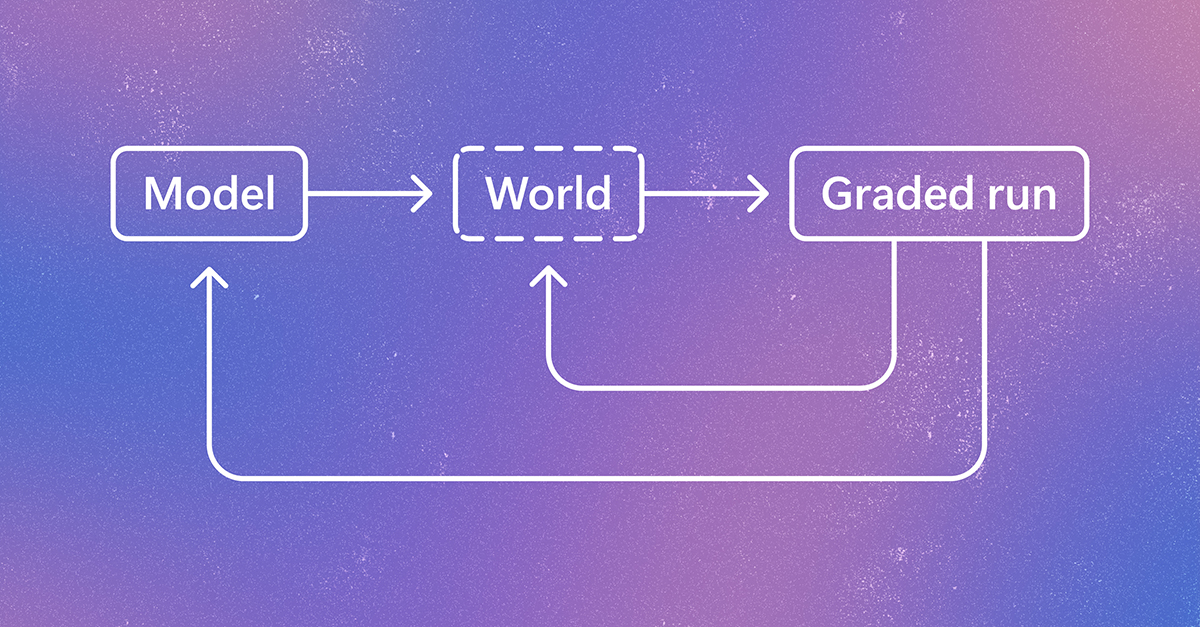
Echoverse: Deep, evolving environments for computer-use agents

Computer-use AI agents struggle with multi-step workflows like email and customer support. Echoverse trains agents in realistic environments rather than simply providing more training tasks, helping them improve as the tasks, tests, and environments evolve. The post Echoverse: Deep, evolving environments for computer-use agents appeared first on Microsoft Research.

We use cookies to run the site and, with your consent, for analytics and to show ads. See our Cookie Policy.