Autonomous underwater vehicles (AUVs) operating beyond reliable communications must recover from failures without human intervention. We investigate an architecture in which conventional deterministic layered control autonomy manages normal operations, while an invokable large language model (LLM) serves as a diagnostic and recovery planner when onboard anomaly detection identifies performance outside expected limits. Because language models are stochastic, rigorous evaluation requires ensemble testing rather than individual demonstrations. We present a closed-loop simulation architecture that couples real-time C vehicle software with a higher-level orchestration layer for physics-based fault injection, structured prompting, language-model interaction, mission file generation, validation, execution, and LLM-judge scoring. The framework, which we call SPAR (Simulation Platform for AUV Recovery), supports evaluation across fault realizations, prompt structures, reasoning models, and mission conditions. We vary these for a mass-shift fault over 480 SPAR trials, evaluating a frontier model and three off-the-shelf locally deployable LLMs. Model choice dominates diagnosis: the frontier model places the CG-shift mechanism in its top three hypotheses in 85-90% of trials, versus 60-78% for the best local model. Reasoning analysis indicates that local-model success is associated with following the complete diagnostic procedure, whereas weaker models often commit prematurely to elevator failure even though the actuator tracks its command. Diagnosis and operational decision performance do not appear to be coupled in this dataset. The contributions are an architecture extending unanticipated-fault recovery from detection to mitigation and an ensemble methodology for evaluating LLM-assisted mission management on low-power AUVs.

This publication proposes a definition and a classification of agile software development approaches and analyses ten software development methods that can be characterized as being "agile" against the defined criterion.
P. Abrahamsson, O. Salo, Jussi Ronkainen et al.· arXiv.org· 727 citations· ⚡54
The study shows that agile practices improve both informal and formal communication, but indicates that, in larger development situations involving multiple external stakeholders, a mismatch of adequate communication mechanisms can sometimes even hinder the communication.
M. Pikkarainen, Jukka Haikara, O. Salo et al.· Empirical Software Engineeri...· 401 citations· ⚡48
The results indicate that software engineering work practices are chosen opportunistically, adapted and configured to provide value under the constrains imposed by the startup context.
Nicolò Paternoster, Carmine Giardino, M. Unterkalmsteiner et al.· Information and Software Tec...· 394 citations· ⚡54
The results show that the embedded industry has been able to apply agile methods in its development processes and that the appreciation of the agile methods and their individual practices appears to increase once adopted and applied in practice.
O. Salo, P. Abrahamsson· IET Software· 238 citations· ⚡9
Consequences of happiness and unhappiness that are beneficial and detrimental for developers' mental well-being, the software development process, and the produced artifacts are found.
D. Graziotin, Fabian Fagerholm, Xiaofeng Wang et al.· Journal of Systems and Softw...· 236 citations· ⚡13
The Mobile-D approach is briefly outlined here and the experiences gained from four case studies are discussed, which helped develop an agile development approach for mobile application development.
P. Abrahamsson, Antti Hanhineva, H. Hulkko et al.· Conference on Object-Oriente...· 225 citations· ⚡18
Related blog posts
MIT News · Artificial Intelligence· news.mit.eduJul 30, 2026
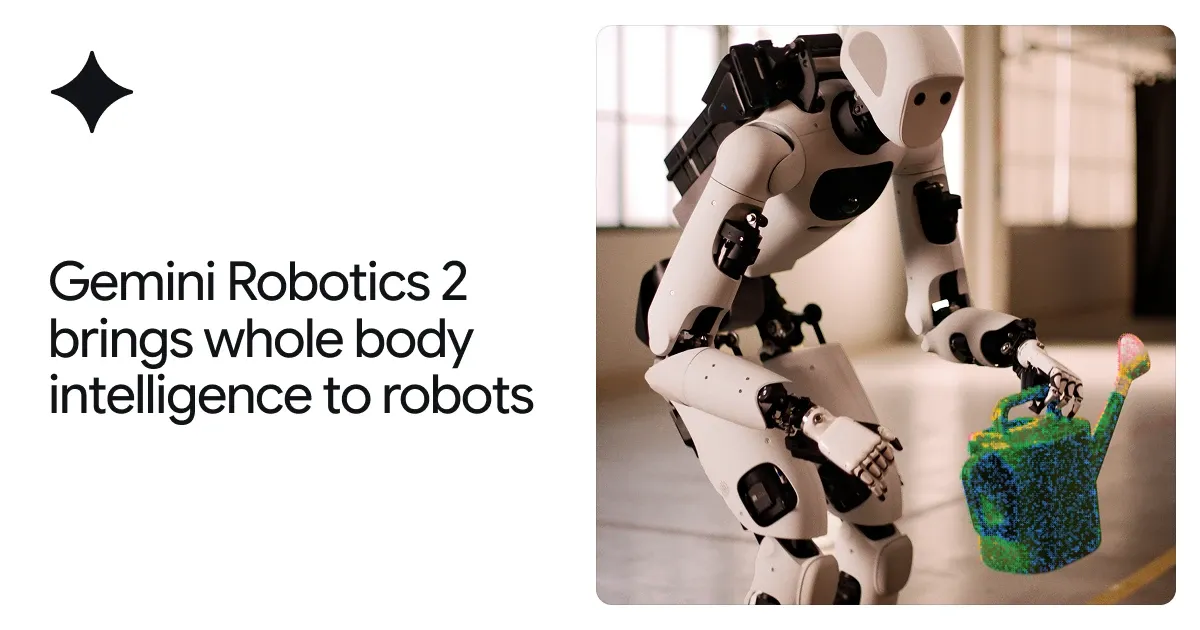
From feet to fingertips — we are teaching robots intelligent whole-body control, fine dexterity, and teamwork to complete a broad range of complex tasks.
Writing as a participant and researcher, PhD student JS Tan SM ’22 has co-authored a new book about the rise of tech worker protests and the employer backlash that followed.
We use cookies to run the site and, with your consent, for analytics and to show ads.
See our Cookie Policy.