HALTER, a Harness for Autonomous Long-horizon Task Evaluation and Reset, which restores the scene by planning over a library of learned atomic reset skills, so demonstration cost scales with the size of that library rather than with the number of terminal states.
Abstract
Robot manipulation policies are improving quickly, and real-robot evaluation remains the standard evidence for that progress. It still relies on a human to reset the scene between rollouts, which consumes operator time and leaves the initial state distribution unspecified, so results reproduce poorly. A recent system, AutoEval, automates both reset and scoring, but only for single-step tasks, because a long-horizon rollout can terminate in combinatorially many configurations that no single learned reset policy covers. We present HALTER, a Harness for Autonomous Long-horizon Task Evaluation and Reset, which restores the scene by planning over a library of learned atomic reset skills, so demonstration cost scales with the size of that library rather than with the number of terminal states. HALTER builds a spatial scene graph online from point clouds and vision foundation models, and an LLM reasons over this graph to score the rollout, plan the reset, and verify that the reset succeeded, without collecting labeled success images for any task. On four long-horizon tasks on a Franka arm, HALTER restores the scene in 76% of episodes, against 52% for AutoEval and 65% for a motion-planning reset, and it estimates the completed-skill fraction correctly in 90% of episodes, against 76%. Its reset-verification verdict is correct in 91% of episodes, compared with 78% for AutoEval. It also cuts the operator time of an evaluation campaign by 72% relative to manual reset. We further measure compositional generalization on three held-out tasks, where HALTER resets 74.7% of episodes against 1.3% for a per-task reset policy, and we ablate the scene representation and the graph update rate.

Robots must often continue a task after a target moves, the viewpoint shifts, or an obstacle appears, even though their earlier observations and committed actions reflect the previous scene. Many simulation robustness benchmarks fix external conditions at reset, leaving this temporal challenge underexamined. We introdu...
Yun-Bei Zhang, Zi-Jian Jin, Yuan-Zhe Liu et al.· 0 citations
Robot-policy benchmarks increasingly cover diverse tasks and preset out-of-distribution conditions, but typically evaluate complete trajectories from predefined initial states. These evaluations often focus on the initialized scene and the final outcome, while paying less attention to the dynamic interaction process. D...
Yang Li, Chen Zhao, Zhuo-Ran Wang et al.· 0 citations
Improvements show that an explicit graph world model harness can substantially improve the reliability and efficiency of long-horizon embodied planning across compact and frontier hosted LLM capabilities.
Rui-Yang Wang, Hao-Lun Hsu, S. Mehta et al.· 0 citations
Large language models (LLMs) are now the default cognitive core of embodied household agents, yet the plans they emit are rarely checked against a grounded model of the environment before execution, and the task-success they report is often measured on benchmarks so saturated that no method can be separated from anothe...
T. Bui, Jongsul Moon, Youngouk Kim et al.· 0 citations
Foundation-model policies for robotic manipulation are advancing rapidly on task success, but rigorous evaluation of whether they succeed safely is still lacking. We introduce ManiGuard, a specification-grounded framework for evaluating and improving the safety of foundation-model manipulation, comprising the ManiGuard...
Yi Peng, Philip Wang, Simon Sinong Zhan et al.· 2 citations· ⚡1
Hierarchical planning frameworks combine skills from multiple robot control policies for long-horizon task execution, where determining when to terminate the current skill and advance to the next subtask is essential. Existing approaches often rely on pre-designed completion signal checkers that are hard to obtain in r...
Jinbang Huang, Yuan Hu, Zhi-Yuan Li et al.· 0 citations
Related blog posts
MIT News · Artificial Intelligence· news.mit.eduJul 30, 2026
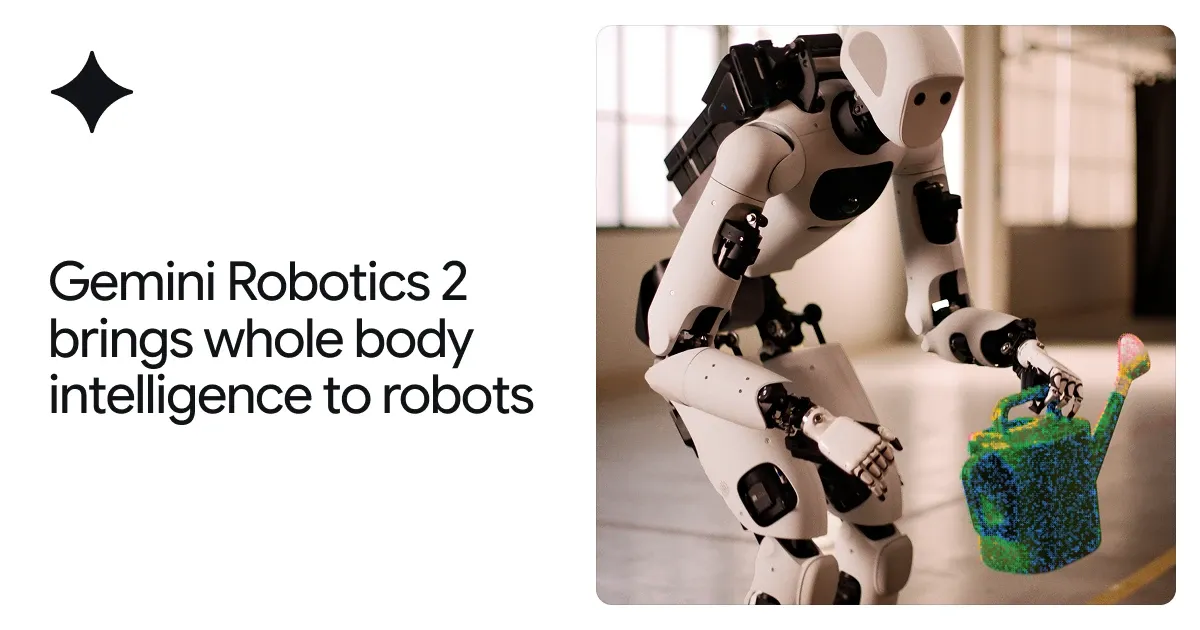
From feet to fingertips — we are teaching robots intelligent whole-body control, fine dexterity, and teamwork to complete a broad range of complex tasks.
With $2.1 million funding from Google.org, the open-source Public Transit Intelligence Hub will unify public transit monitoring, operations, and passenger communication.
We use cookies to run the site and, with your consent, for analytics and to show ads.
See our Cookie Policy.