Industrial IoT environments increasingly deploy autonomous mobile robots for tasks such as material handling, product assembly, or infrastructure inspection. In such deployments, collaborative perception enables robots to share LiDAR observations and collectively construct a richer model of their environment than an individual agent could produce alone. However, industrial environments are dynamic spaces where robot positions shift continuously, network bandwidth fluctuates, and the marginal contribution of robots to perception quality varies at runtime. Existing collaborative perception approaches are designed for static participation assumptions and cannot adapt to these dynamics without sacrificing either detection precision or communication efficiency. This paper presents CoAdapt, an adaptive collaborative perception framework for IIoT robotic swarms in which a Large Language Model (LLM) serves as a runtime fusion controller, jointly deciding which robots participate in the fusion process and which fusion algorithm to apply based on the current spatial configuration and network state. The LLM reasons over structured natural language descriptions of the scene derived from raw LiDAR point clouds, requiring no taskspecific training and generalizing to unseen swarm topologies. Evaluated on the OPV2V benchmark across 25 scenarios, our approach achieves a 38% reduction in communication cost while maintaining detection precision comparable to static baseline approaches.
GAOKAO-Bench is introduced, an intuitive benchmark that employs questions from the Chinese GAOKAO examination as test samples, including both subjective and objective questions that contribute a robust evaluation benchmark for future large language models and offers valuable insights into the advantages and limitations...
Xiaotian Zhang, Chun-yan Li, Yi Zong et al.· arXiv.org· 216 citations· ⚡17
This work investigates the possibilities of using LLMs in a resume screening setting via a document retrieval framework that simulates job candidate selection and finds that the MTEs are biased, significantly favoring White-associated names in 85% of cases and female-associated names in only 11.1% of cases.
Empirically, PRISM reduces the end-to-end time for data selection and model tuning to just 30% of conventional pipelines, and achieves this efficiency while simultaneously enhancing performance, surpassing models fine-tuned on the full dataset across eight multimodal and three language understanding benchmarks.
Jinhe Bi, Yifan Wang, Danqi Yan et al.· arXiv.org· 73 citations· ⚡4
This paper proposes adaptive sampling with approximate expected futures (ASAp), a decoding algorithm that guarantees the output to be grammatical while provably producing outputs that match the conditional probability of the LLM's distribution conditioned on the given grammar constraint.
Kanghee Park, Jiayu Wang, Taylor Berg-Kirkpatrick et al.· Neural Information Processin...· 70 citations· ⚡5
The method, ECCOLA, is presented, which aims at making the high-level AI ethics principles more practical, making it possible for developers to more easily implement them in practice.
Ville Vakkuri, Kai-Kristian Kemell, P. Abrahamsson· EUROMICRO Conference on Soft...· 64 citations· ⚡6
This paper designs Markov decision processes (MDPs) for different combinatorial problems and proposes to train conditional GFlowNets to sample from the solution space and demonstrates that GFlowNet policies can efficiently find high-quality solutions.
Dinghuai Zhang, H. Dai, Esmeralda S. Whitammer et al.· Advances in Neural Informati...· 59 citations· ⚡8
Related blog posts
MIT News · Artificial Intelligence· news.mit.eduJul 30, 2026
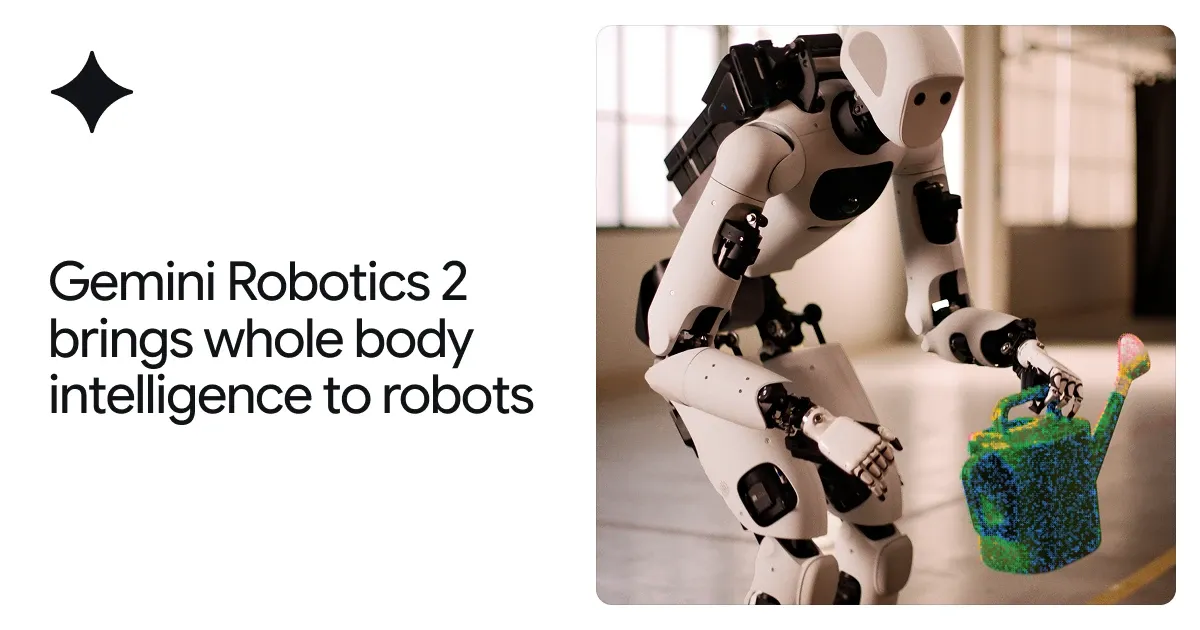
From feet to fingertips — we are teaching robots intelligent whole-body control, fine dexterity, and teamwork to complete a broad range of complex tasks.
With $2.1 million funding from Google.org, the open-source Public Transit Intelligence Hub will unify public transit monitoring, operations, and passenger communication.
We use cookies to run the site and, with your consent, for analytics and to show ads.
See our Cookie Policy.