Skip to content

Improving Inference Efficiency in Deep Neural Networks

Sep 2026 · Purdue
Advanced Neural Network Applications

Abstract

The increasing complexity of modern deep neural networks (DNNs), particularly Transformer architectures such as large language models (LLMs) and diffusion models, has made inference efficiency a central challenge across edge and datacenter platforms. The two regimes, however, impose sharply different constraints. At the edge, limited memory capacity, energy budgets, and compute resources conflict with the need for low latency under small batch sizes. In datacenters, efficiency is driven primarily by throughput and cost at scale. This thesis develops techniques to improve inference efficiency in both regimes through techniques ranging from advanced quantization and model compression to optimizing non-linear Softmax operations and batched mixture-of-expert model inference.First, we focus on quantizing diffusion models to enable visual content generation at the edge. We show that aggressive post-training quantization degrades diffusion model quality, with heterogeneous quantization offering a pathway to better trade-offs among model size, compute requirements, and quality. We propose HNMQ, a new approach to heterogeneous quantization that follows a fine-grained structured N:M pattern in which N of every M weights are kept at a lower precision. This enables hardware-friendly sub-4-bit configurations that match the quality of content generated by 4-bit models with improved latency and energy.Second, we address activation-side inefficiency in quantized LLM inference, where activations often remain at a higher precision than weights. SPARQLe decomposes higher-precision activations into dense low-order and sparse high-order components, enabling accurate execution on narrow hardware datapaths while reducing computation and data movement.Third, we analyze pruning in ultra-low-precision DNNs and show that conventional sparsity-based model compression degrades because of indexing overheads and reduced attainable sparsity. Seprox instead exploits value repetition induced by low-precision representations, improving compression efficiency while reducing inference energy and latency.Fourth, we examine Softmax, a major bottleneck in the attention computation of Transformer models: it limits parallelism and maps poorly to NPUs. Softprox is a post-fine-tuning framework that reduces Softmax complexity through attention reuse, neural network approximation, and statistical replacement of the maximum operation, enabling inference speedups on commodity hardware without retraining.Finally, we address the sublinear throughput scaling of batched MoE inference, which arises because different tokens in a batch select different experts, growing the set of expert weights that must be fetched per batch. TokenMix is a training-free technique that mixes token representations within the router network to encourage coordinated expert selection, thereby increasing expert reuse across a batch and improving throughput.Collectively, these techniques provide an effective pathway to improving the efficiency of AI inference.

View source

Similar papers

#computer vision Review Sep 2017

Agile Software Development Methods: Review and Analysis

This publication proposes a definition and a classification of agile software development approaches and analyses ten software development methods that can be characterized as being "agile" against the defined criterion.

P. Abrahamsson, O. Salo, Jussi Ronkainen et al. · 727 citations · ⚡54
#small language model Dataset Open access Oct 2026

Socratic guiding questions in synthetic arithmetic data: matched LoRA runs (revision v2)

Supporting data, adapters, predictions and code for the article *Low-Cost LoRA Fine-Tuning of Small Language Models for Multi-Step Arithmetic Reasoning* by Jake O'Grady, Asena Isik Gürhan, Chee Fong Ting and Effirul Ramlan (University of Galway). We generated 20,000 GSM8K-derived arithmetic problems with step-by-step s...

O'Grady, Jake, Gürhan, Asena Isik, Chee, Fong Ting et al. · 465 citations
#computer vision Jun 2008

The impact of agile practices on communication in software development

The study shows that agile practices improve both informal and formal communication, but indicates that, in larger development situations involving multiple external stakeholders, a mismatch of adequate communication mechanisms can sometimes even hinder the communication.

M. Pikkarainen, Jukka Haikara, O. Salo et al. · 401 citations · ⚡48
#machine learning Review Open access Oct 2014

Software development in startup companies: A systematic mapping study

The results indicate that software engineering work practices are chosen opportunistically, adapted and configured to provide value under the constrains imposed by the startup context.

Nicolò Paternoster, Carmine Giardino, M. Unterkalmsteiner et al. · 394 citations · ⚡54

Related blog posts

Microsoft Research Blog Sep 29, 2026

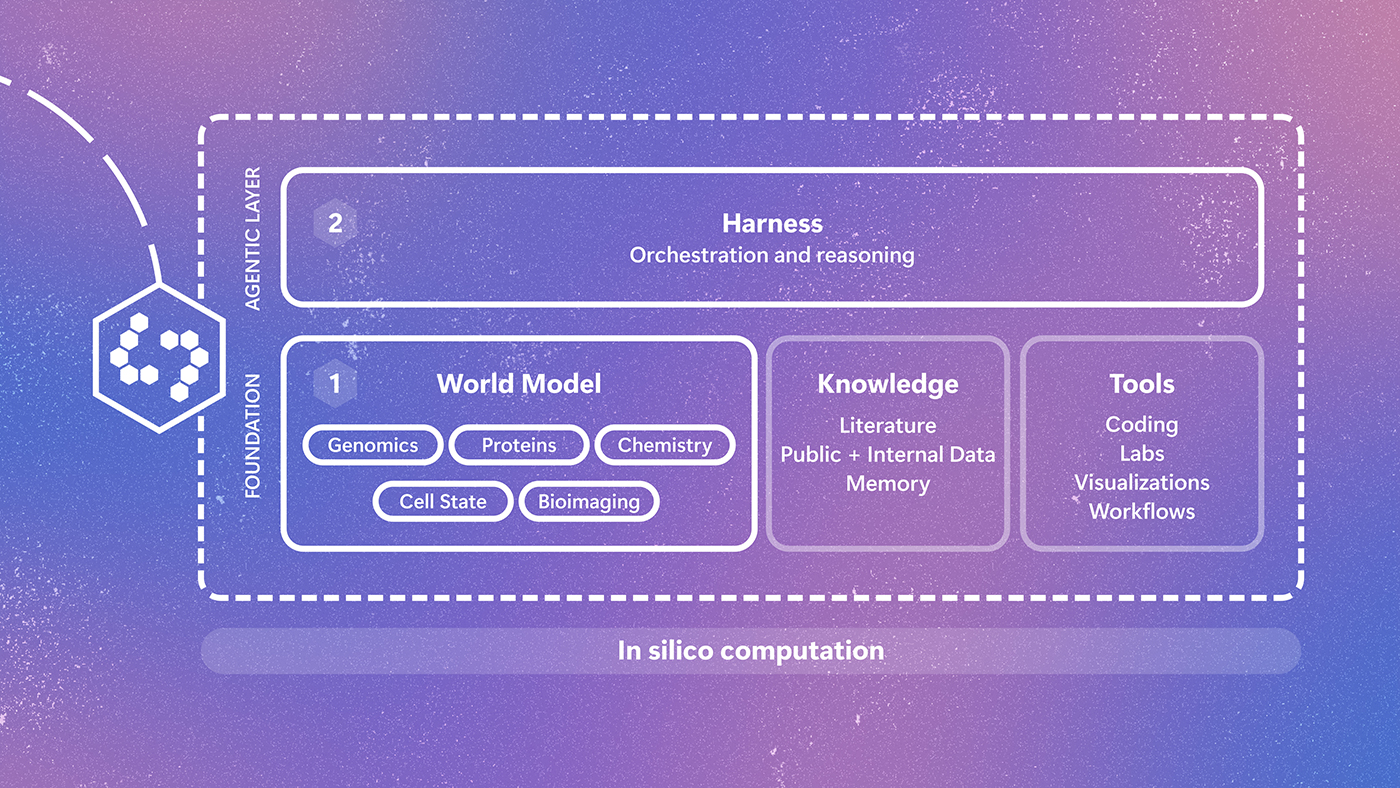
Introducing Quine: An AI research system designed for the complexity of biology

Biology doesn't operate in silos, and neither should the AI representation of it. Quine is an early-stage research effort to create a multimodal world model of biology. By connecting insights across biological scales and modalities, Quine helps scientists computationally search a space far larger than intuition allows and prioritize hypotheses before they reach the lab. Experimental results provide important feedback, helping researchers sharpen future research directions. The post Introducing Q…

Microsoft Research Blog Aug 31, 2026

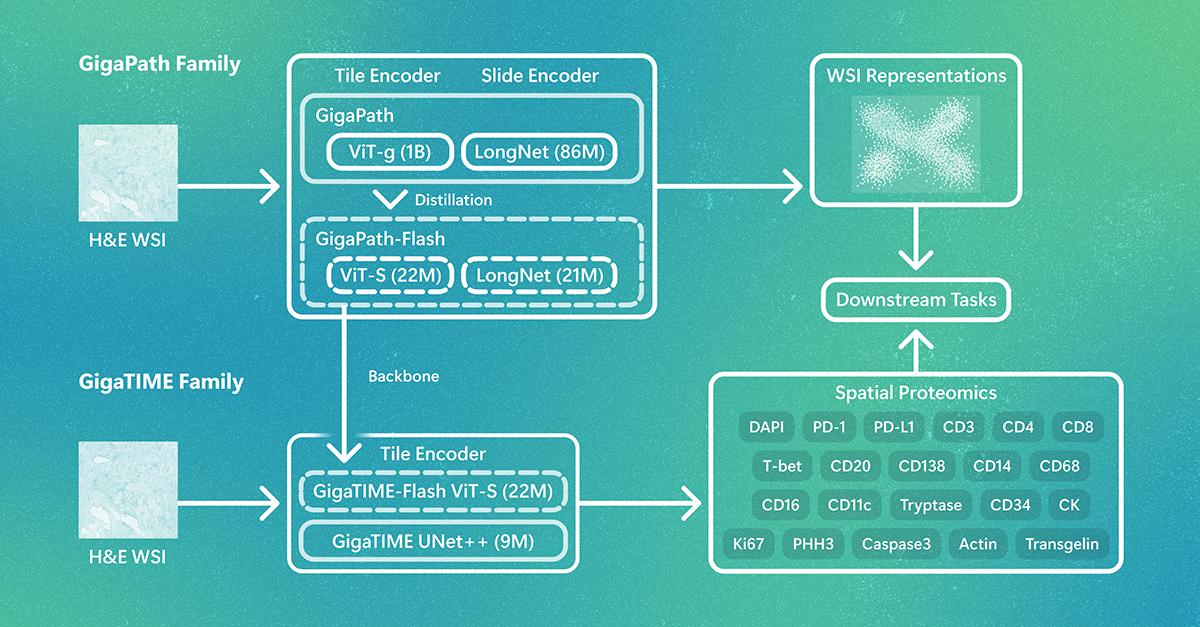
GigaPath-Flash and GigaTIME-Flash: Toward population-scale discovery with efficient pathology foundation models

What if pathology foundation models could do more with less? GigaPath-Flash and GigaTIME-Flash cut computational demands while maintaining strong performance, opening the door to larger studies and broader exploration. The post GigaPath-Flash and GigaTIME-Flash: Toward population-scale discovery with efficient pathology foundation models appeared first on Microsoft Research.

We use cookies to run the site and, with your consent, for analytics and to show ads. See our Cookie Policy.