Sep 2026· Italian National Conference on Sensors· 0 citations· 11 references
Network Security and Intrusion Detection
Abstract
Closed-set evaluation is the most common method in Internet of Things (IoT) sensor network botnet attack detection research. In this setting, classifiers are tested only on attack families encountered during training. As a result, they often fail to detect genuinely new (zero-day) malware in real-world environments. This study evaluates a calibrated two-tier detection pipeline combining an XGBoost gradient-boosted tree classifier for known-class prediction with a Monte Carlo (MC) dropout multilayer perceptron (MLP) as an independent uncertainty estimator, under conditions closer to real deployment than most prior evaluations. The uncertainty model is used to flag unfamiliar traffic that may represent zero-day traffic. The classifier is trained and calibrated on the Bot-IoT dataset and evaluated for zero-day generalization on N-BaIoT, which contains the previously unseen Mirai and BASHLITE malware families. During data preparation, a severe train/test duplication problem was identified. Around 97% of a naive split was found to be duplicates and was removed before splitting. The base classifier achieved 99.4% accuracy in known-class detection. However, the confidence scores were negatively correlated with zero-day traffic, producing an area under the receiver operating characteristic curve (AUROC) of 0.32. This indicates the overconfident misclassification of unseen attacks. The proposed uncertainty gate improved zero-day discrimination to an AUROC of 0.66, with catch rates reaching 13.75% for Mirai. An explainable AI analysis using Shapley Additive Explanations (SHAP) linked this gap to packet size statistics. To evaluate practical feasibility, the complete framework was deployed on an embedded Raspberry Pi Compute Module 5 (CM5) edge device. The full uncertainty-gated pipeline achieved mean inference latency of 15.03 ms per sample. Overall, these findings demonstrate that uncertainty-aware gating can improve zero-day robustness over conventional closed-set classification in resource-constrained IoT sensing environments.
This publication proposes a definition and a classification of agile software development approaches and analyses ten software development methods that can be characterized as being "agile" against the defined criterion.
P. Abrahamsson, O. Salo, Jussi Ronkainen et al.· arXiv.org· 727 citations· ⚡54
The study shows that agile practices improve both informal and formal communication, but indicates that, in larger development situations involving multiple external stakeholders, a mismatch of adequate communication mechanisms can sometimes even hinder the communication.
M. Pikkarainen, Jukka Haikara, O. Salo et al.· Empirical Software Engineeri...· 401 citations· ⚡48
The results indicate that software engineering work practices are chosen opportunistically, adapted and configured to provide value under the constrains imposed by the startup context.
Nicolò Paternoster, Carmine Giardino, M. Unterkalmsteiner et al.· Information and Software Tec...· 394 citations· ⚡54
The perception of the impact of agile methods is predominantly positive, and several challenge areas were discovered, but based on this study, agile methods are here to stay.
M. Laanti, O. Salo, P. Abrahamsson· Information and Software Tec...· 260 citations· ⚡20
Related blog posts
MIT News · Artificial Intelligence· news.mit.eduOct 8, 2026
Jennifer Neville did not want to go into computer science—but that’s exactly where she landed. Neville discusses the starts and stops that led to her professional sweet spot and her work identifying “surprising failures” making it hard for AI to handle complexity. The post What AI gets wrong and what failure teaches us appeared first on Microsoft Research.
Microsoft Research Blog· microsoft.comSep 29, 2026
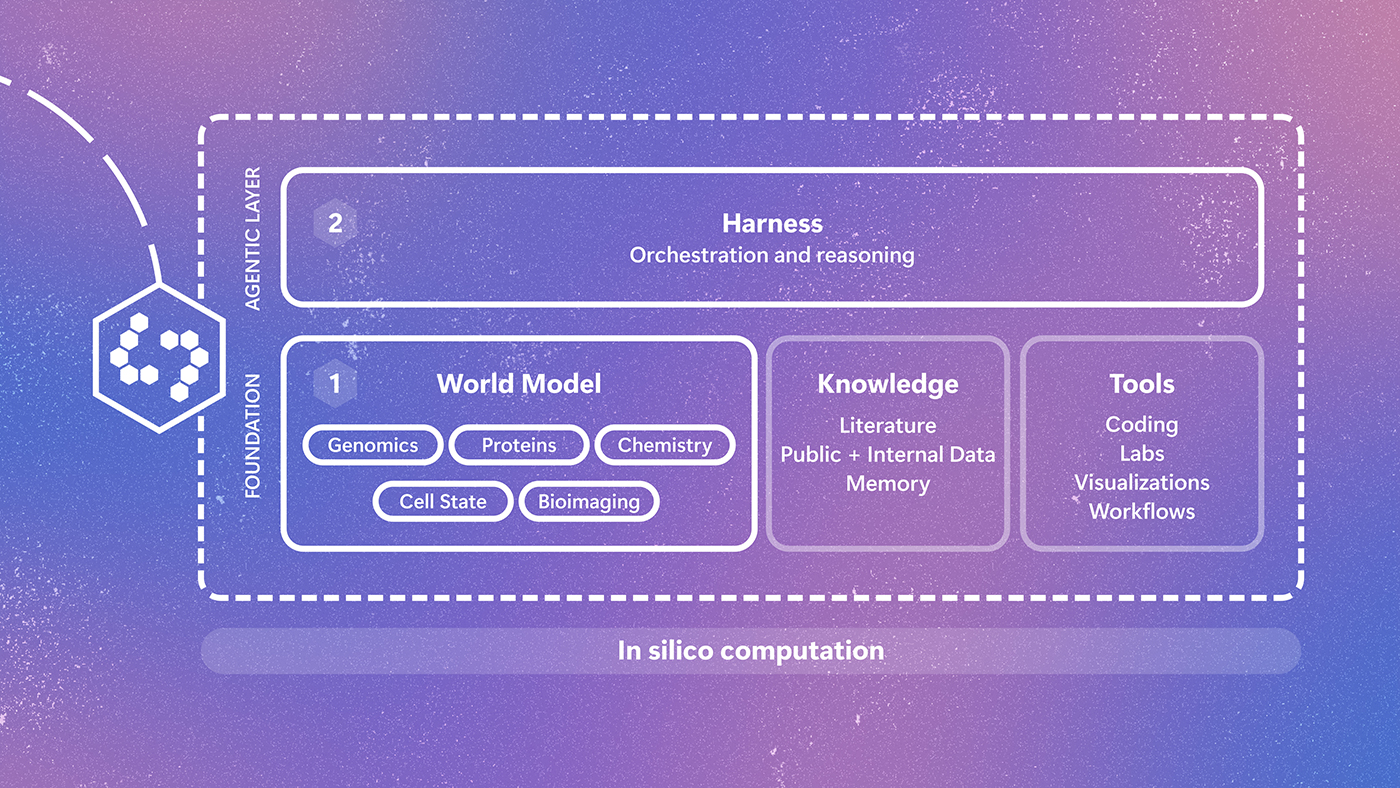
Biology doesn't operate in silos, and neither should the AI representation of it. Quine is an early-stage research effort to create a multimodal world model of biology. By connecting insights across biological scales and modalities, Quine helps scientists computationally search a space far larger than intuition allows and prioritize hypotheses before they reach the lab. Experimental results provide important feedback, helping researchers sharpen future research directions. The post Introducing Q…
We use cookies to run the site and, with your consent, for analytics and to show ads.
See our Cookie Policy.