Skip to content
#generative ai Open access

From Golem to GLLM

Sep 2026 · Technophany, A Journal for Philosophy and Technology · 0 citations

TL;DR

It is argued that the AI alignment problem cannot be reduced to engineering challenges but requires what I term "magical alignment" - a ritual architecture that recognises AI development as participation in cosmotechnical processes demanding ethical preparation, relational responsibility, and planetary awareness.
Abstract

This article explores the symbolic entanglements between Jewish mystical traditions and the contemporary rise of generative artificial intelligence. Taking the Golem - a mythical anthropoid animated through sacred language - as a guiding figure, I examine how current developments in Large Language Models (LLMs) revive long-standing theological concerns about animacy, speech, and the limits of human control. The Golem offers a hermeneutic tool for understanding LLMs as language-animated entities whose operations are mytho-technical as much as they are computational. Crucially, LLMs have crossed what Jewish mysticism held as the ultimate threshold: the capacity for speech that distinguished divine creation from human artifice. Drawing on Kabbalistic cosmology, I argue that the AI alignment problem cannot be reduced to engineering challenges but requires what I term "magical alignment" - a ritual architecture that recognises AI development as participation in cosmotechnical processes demanding ethical preparation, relational responsibility, and planetary awareness.
Read PDF

Similar papers

Aug 2026

Seeking the Witch of Endor: Ghostbots and the Presence of Absence in Jewish Thought

ABSTRACT:The longing to speak to the beloved beyond death is humanity’s oldest yearning. I describe a modern phenomenon, the ghostbot, an artificial intelligence reconstruction of a human person, “created” by using text and images left behind after a person has died. Often this data is generated by a willing participan...

Laurie S. Zoloth · 0 citations
Open access Aug 2026

Mobilisation of memory

The paper analyses Slovenian picturebooks intended for children up to ten years of age, representing the partisan movement. The analysis focuses on the construction of cultural memory and identity. Early partisan picturebooks drew on folklore texts by employing anonymous protagonists, the motifs of struggle against ove...

Barbara Zorman · 0 citations
Book Open access Sep 2026

Deciphering the Hidden Meaning

This study examines the relationship between language and liberation in early Advaita Vedānta, focusing on Śaṅkara (early eighth century ce) as a key figure. Challenging modern portrayals of Śaṅkara as a mystic, the work presents him as a “theologian of liberation” who argued that the liberation from embodiment as th...

Aleksandar Uskokov · 0 citations
Sep 2026

The Zeyger

This article examines the presence of the clock in Ḥasidic stories and the spiritual meanings attributed to it. The mechanical clock—a relatively recent innovation—became a recurring motif in Ḥasidic tales. Drawing on be-khol derakhekha da‘ehu [in all your ways, know Him], Ḥasidic masters found in the clock more...

Reut Brosh · 0 citations
Open access Aug 2026

Navigating Between the Scylla and Charybdis of Hype and Fear: Decolonizing ELT Materials Through Generative Artificial Intelligence

Despite calls from critical applied linguists to decolonize ELT materials that reproduce colonial ideologies, teachers working under neoliberal constraints and attendant time pressures often have to deliver textbook content as is rather than revising it. This study explores to what extent a state‐of‐the‐art large lan...

Steven Yeung, J. Gray · 0 citations

Related blog posts

Microsoft Research Blog Nov 16, 2026

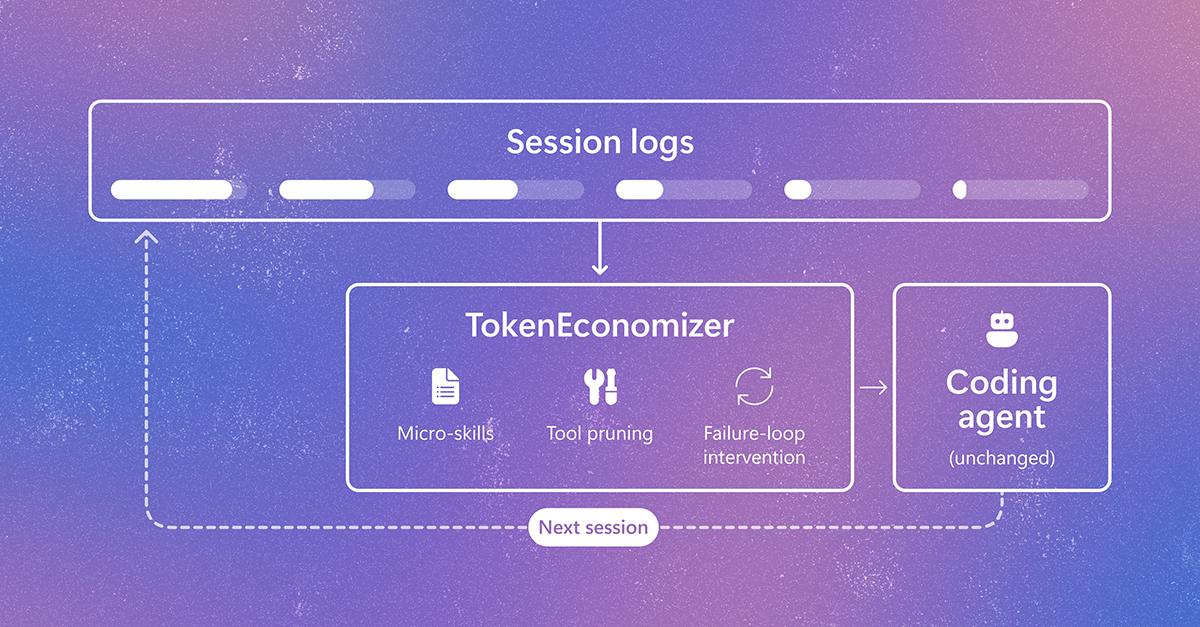
TokenEconomizer: Learning from Experience to Make AI Coding Agents More Efficient

AI coding agents are increasingly help developers fix bugs and build features largely on their own, but every interaction with their models consumes tokens. In each session, an agent sends instructions, tool descriptions, and session history to its model. Most efforts to reduce this cost focus on individual tasks. Yet developers return to the same […] The post TokenEconomizer: Learning from Experience to Make AI Coding Agents More Efficient appeared first on Microsoft Research.

GPT-Lab Nov 13, 2026

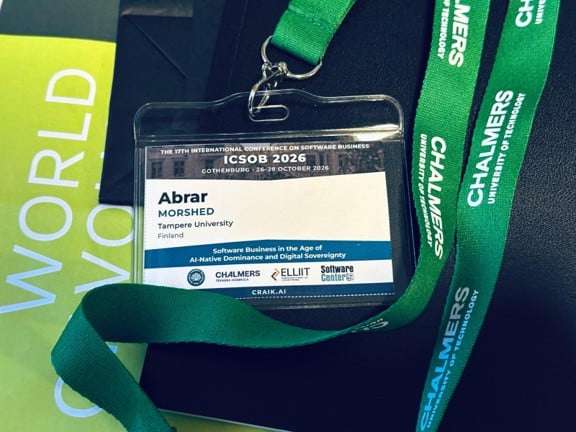
TenderIntell at ICSOB 2026: Three Days in Gothenburg

At ICSOB 2026 in Gothenburg, we presented TenderIntell, our work on multi-agent support for tendering. This post looks back at the conference, the idea behind a panel of three AI reviewers who score each proposal independently, and why evaluating agents reliably is the question we keep coming back to. The post TenderIntell at ICSOB 2026: Three Days in Gothenburg appeared first on GPT-Lab.

MIT News · Artificial Intelligence Nov 13, 2026

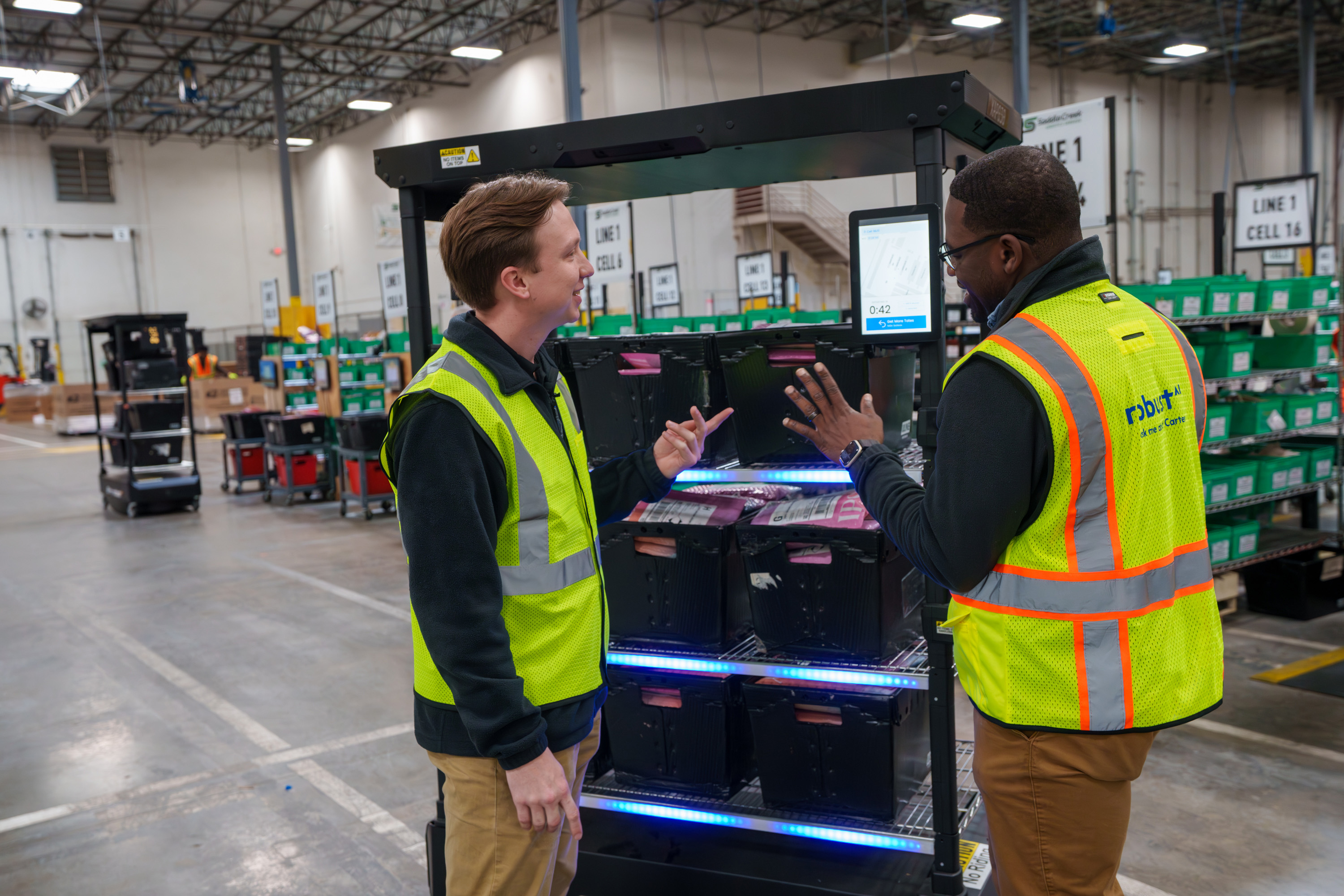
Helping robots fit into the human workplace

Founded by Anthony Jules ’92, SM ’92 and Professor Emeritus Rodney Brooks, Robust AI’s robots are designed to collaborate with humans in factories and warehouses.

We use cookies to run the site and, with your consent, for analytics and to show ads. See our Cookie Policy.