Peer stories have been shown to boost self-efficacy in older adults'health behavior change. Despite their effectiveness, peer stories are difficult to deploy in health promotion at scale given the difficulty of matching the diverse health concerns and coping styles of heterogeneous older populations. Large language models (LLMs) have been shown to generate authentic narratives, yet how personalization and narrative affective style, such as humor, jointly shape older adults'responses remains unknown. We developed a theory-driven system that generates first-person peer health narratives varying in personalization and humor through a three-stage LLM pipeline grounded in self-efficacy mechanisms. Thirty-one older adults were invited to participate in a within-subjects lab study. Results showed that personalization increased perceived relatability and relevance of peer stories, especially for older adults with lower humor preference. These findings position individual differences in affective styles as a second dimension in designing personalization for LLM-assisted health communication.
Autobiographical remembering supports identity, well-being, and social connection in later life, yet voice-based memory technologies largely rely on isolated prompts. We designed and built MeBo, a fully functional relational voice-based memory companion, through participatory design with 11 older adults. Their accounts...
Hasibur Rahman, Mahsa Nasri, M. Vaidya et al.· 0 citations
It is found that PST is shaped by identity development and demographic factors, and the proposed Human-AI Self-Talk (HAIST) framework is proposed to guide the design of non-clinical AI companions to support learning and self-sufficiency.
Ann-Kareen Gedeus, N. Wagener, Ying-Xuan Li et al.· Proceedings of the 14th Nord...· 0 citations
STOrying Racism to Empower Youth (STOREY) is a pilot intervention to promote the racial literacy development of Asian American emerging adults. STOREY harnesses the power of digital storytelling mediums (racism-related stories) and critical group dialogue to guide the exploration and promotion of Asian American college...
B. Keum, Ankhi G. Thakurta, Cathy Zhu et al.· Journal of counseling and ps...· 0 citations
Background Short-video platforms have become important sources of autism-related information, intervention guidance, and emotional support for parents of children with autism. However, algorithmic recommendations, selective presentation, and heterogeneous content may also heighten anxiety and complicate caregiving deci...
Zijing Cun, Yu-Tong Ye· Frontiers in Psychology· 0 citations
Findings suggest that virtual agent persona styles do not fundamentally alter the psychological acceptance mechanism but can influence the strength of critical affective pathways.
Qi Wu, Shi-Zhu Lu, Yu-Qi Yan et al.· Frontiers in Psychology· 0 citations
OBJECTIVES
Positive social connections are key ingredients for healthy aging. We studied older adults' shared agreement on loving experiences and individual differences in their decisions-making to unlock critical information about how this developmental group connects socially.
METHODS
To explore shared agreement on...
Lindy Williams, Saina Salamati, Saida Heshmati et al.· The journals of gerontology....· 1 citation
Related blog posts
Microsoft Research Blog· microsoft.comNov 16, 2026
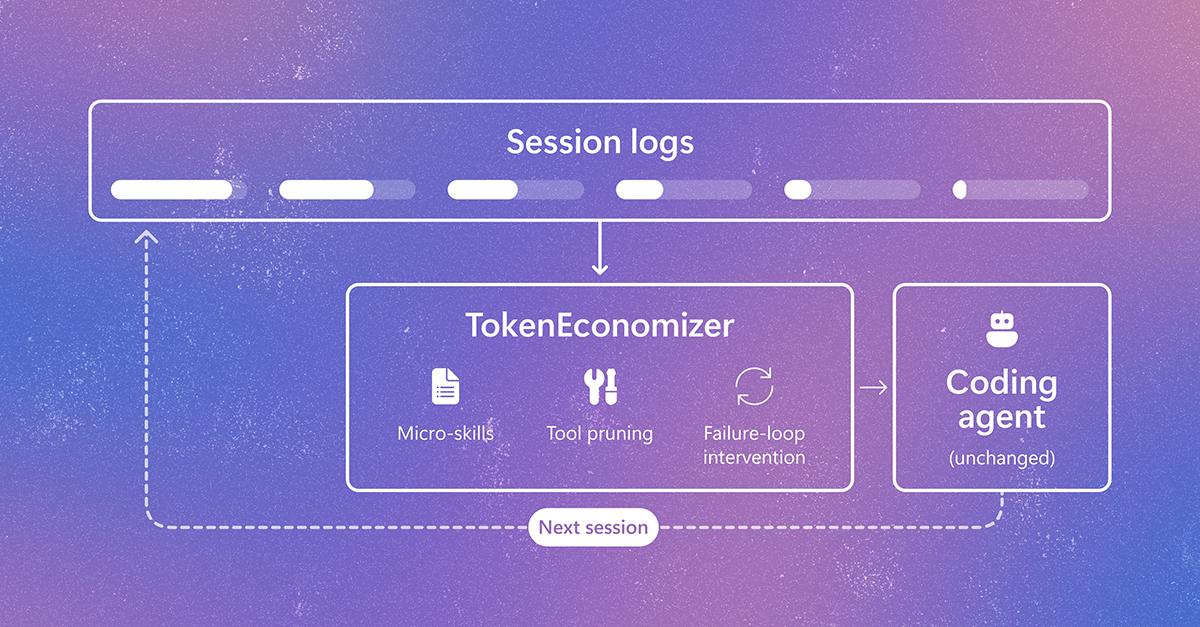
AI coding agents are increasingly help developers fix bugs and build features largely on their own, but every interaction with their models consumes tokens. In each session, an agent sends instructions, tool descriptions, and session history to its model. Most efforts to reduce this cost focus on individual tasks. Yet developers return to the same […] The post TokenEconomizer: Learning from Experience to Make AI Coding Agents More Efficient appeared first on Microsoft Research.
MIT News · Artificial Intelligence· news.mit.eduNov 13, 2026
Founded by Anthony Jules ’92, SM ’92 and Professor Emeritus Rodney Brooks, Robust AI’s robots are designed to collaborate with humans in factories and warehouses.
MIT News · Artificial Intelligence· news.mit.eduNov 12, 2026
MIT scientists developed a training method to generate models that simulate the effects of human activities on climate much more quickly than other approaches.
We use cookies to run the site and, with your consent, for analytics and to show ads.
See our Cookie Policy.