Skip to content

Measuring Annotation Efficiency for Handwritten Devanagari Recognition: Sample-Complexity Curves for Four Pretraining Regimes

Sep 2026 · 0 citations · 22 references
Computer Science

Abstract

To train handwritten text recognition systems we need word images and their corresponding transcriptions, and these transcriptions are produced manually. For a script that can be read by only a small number of specialists, this manual transcription is a limitation, because the trained models are supposed to save the time of those same specialists. A relevant question therefore arises: how many transcriptions are needed before a recogniser becomes useful, and how much of that cost can pretraining remove? In this study the answer is measured directly for handwritten Devanagari. We keep the recogniser, optimiser and evaluation protocol the same and change only the number of real transcribed words used for fine-tuning across nine budgets from 10 to 4,000 and four initialisation regimes, with six seeds at every point. The resulting curves are then converted into annotation-equivalent terms. A CER of 0.50 is reached by supervised synthetic pretraining using only 81 transcribed words, whereas random initialisation requires 355, which gives a label multiplier of 4.40 [3.56, 4.99]. There is a zero-shot reference point as well: with no real transcribed words at all, this pretraining is worth about 136 of them. This advantage gets smaller as the target accuracy improves, and at the most demanding target we measure, it cannot be distinguished from no saving at all. A fourth arm in which only the encoder is transferred separates the effect of the pretraining method from that of transfer scope, and masked image modelling is observed to transfer negatively over a bounded range of budgets. We emphasise that the scarcity in this study is constructed by subsampling a large corpus.

View source

Similar papers

#computer vision Review Sep 2017

Agile Software Development Methods: Review and Analysis

This publication proposes a definition and a classification of agile software development approaches and analyses ten software development methods that can be characterized as being "agile" against the defined criterion.

P. Abrahamsson, O. Salo, Jussi Ronkainen et al. · 727 citations · ⚡54
#computer vision Jun 2008

The impact of agile practices on communication in software development

The study shows that agile practices improve both informal and formal communication, but indicates that, in larger development situations involving multiple external stakeholders, a mismatch of adequate communication mechanisms can sometimes even hinder the communication.

M. Pikkarainen, Jukka Haikara, O. Salo et al. · 401 citations · ⚡48
#machine learning Review Open access Oct 2014

Software development in startup companies: A systematic mapping study

The results indicate that software engineering work practices are chosen opportunistically, adapted and configured to provide value under the constrains imposed by the startup context.

Nicolò Paternoster, Carmine Giardino, M. Unterkalmsteiner et al. · 394 citations · ⚡54

Diffusion models as plug-and-play priors

The possibility of inferring high-dimensional data inference in a model that consists of a prior and an auxiliary differentiable constraint given some additional information is considered, thereby allowing a range of potential applications in adapting models to new domains and tasks.

Alexandros Graikos, Esmeralda S. Whitammer, N. Jojic et al. · 316 citations · ⚡15

Related blog posts

Microsoft Research Blog Aug 11, 2026

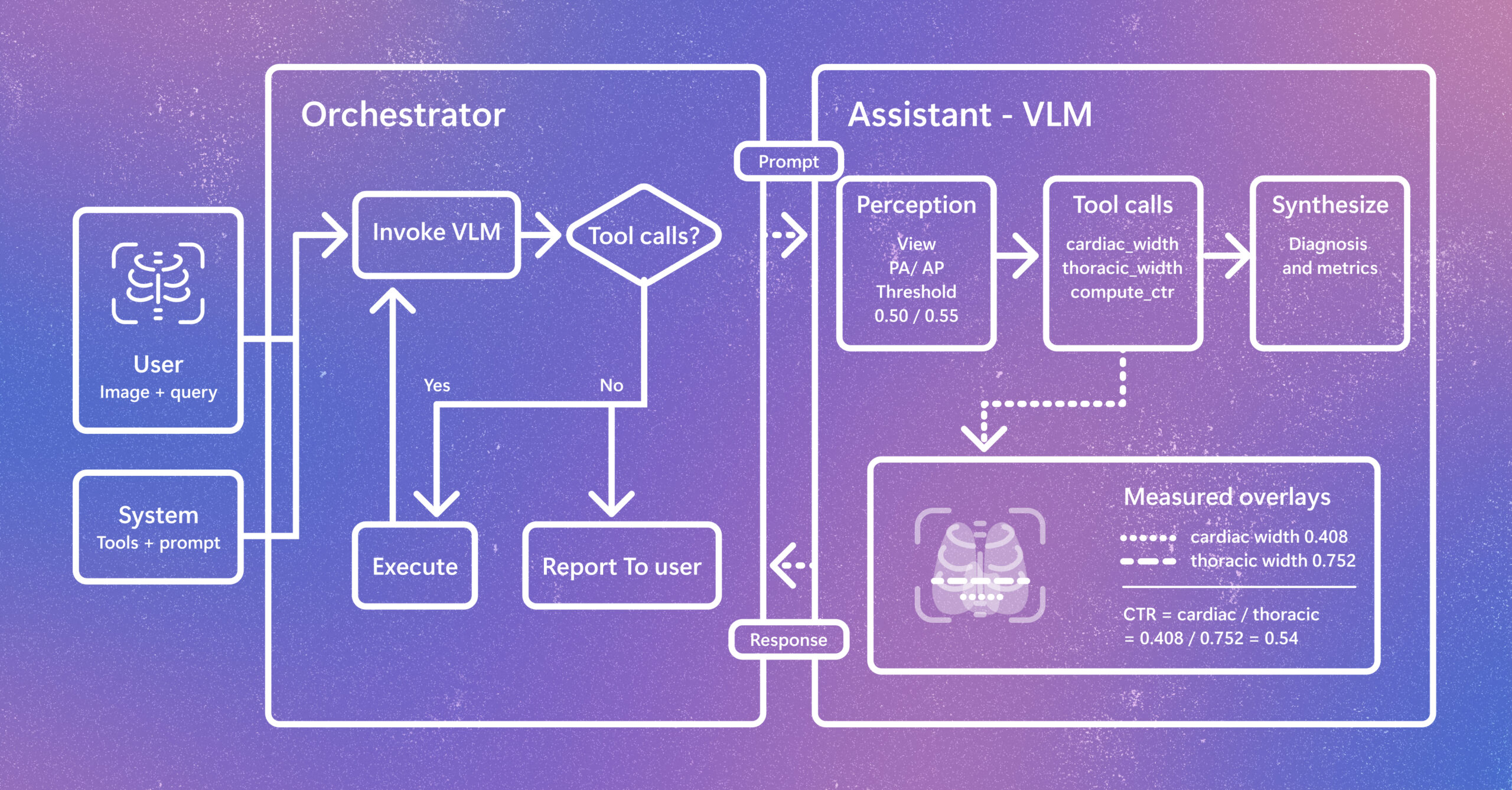
Introducing CARE-X: Towards Clinically Useful Radiology VLMs with Auxiliary Supervision, Reward-Aligned Learning, and Tool-Augmented Measurement

Radiology AI is evolving beyond report generation. CARE-X explores a unified approach that combines flexible reasoning, calibrated predictions, and measurement-based tools for chest X-ray interpretation. The post Introducing CARE-X: Towards Clinically Useful Radiology VLMs with Auxiliary Supervision, Reward-Aligned Learning, and Tool-Augmented Measurement appeared first on Microsoft Research.

We use cookies to run the site and, with your consent, for analytics and to show ads. See our Cookie Policy.