Skip to content

Noise-Aware and Dynamically Adaptive Federated Defense Framework for SAR Image Target Recognition

Yuchao Hou (Shanxi Normal University Taiyuan China) Zixuan Zhang (Shanxi Normal University Taiyuan China) Jie Wang (Shanxi Normal University Taiyuan China) Wenke Huang (Nanyang Technological University Singapore Singapore) Lianhui Liang (Guangxi University Nanning China) Di Wu (La Trobe University Melbourne Australia) Zhiquan Liu (Jinan University Guangzhou China) Youliang Tian (Guizhou University Guiyang China) Jianming Zhu (Central University of Finance and Economics Beijing China) Jisheng Dang (Lanzhou University Lanzhou China) Junhao Dong (Nanyang Technological University Singapore Singapore) Zhongliang Guo (University of St Andrews St Andrews United Kingdom)
Sep 2026
Machine Learning Computer Vision Cybersecurity

Abstract

As a critical application of computational intelligence in remote sensing, deep learning-based synthetic aperture radar (SAR) image target recognition facilitates intelligent perception but typically relies on centralized training, where multi-source SAR data are uploaded to a single server, raising privacy and security concerns. Federated learning (FL) provides an emerging computational intelligence paradigm for SAR image target recognition, enabling cross-site collaboration while preserving local data privacy. However, FL confronts critical security risks, where malicious clients can exploit SAR's multiplicative speckle noise to conceal backdoor triggers, severely challenging the robustness of the computational intelligence model. To address this challenge, we propose NADAFD, a noise-aware and dynamically adaptive federated defense framework that integrates frequency-domain, spatial-domain, and client-behavior analyses to counter SAR-specific backdoor threats. Specifically, we introduce a frequency-domain collaborative inversion mechanism to expose cross-client spectral inconsistencies indicative of hidden backdoor triggers. We further design a noise-aware adversarial training strategy that embeds $\Gamma$-distributed speckle characteristics into mask-guided adversarial sample generation to enhance robustness against both backdoor attacks and SAR speckle noise. In addition, we present a dynamic health assessment module that tracks client update behaviors across training rounds and adaptively adjusts aggregation weights to mitigate evolving malicious contributions. Experiments on MSTAR and OpenSARShip datasets demonstrate that NADAFD achieves higher accuracy on clean test samples and a lower backdoor attack success rate on triggered inputs than existing federated backdoor defenses for SAR target recognition.

View source

Similar papers

#computer vision Review Sep 2017

Agile Software Development Methods: Review and Analysis

This publication proposes a definition and a classification of agile software development approaches and analyses ten software development methods that can be characterized as being "agile" against the defined criterion.

P. Abrahamsson, O. Salo, Jussi Ronkainen et al. · 727 citations · ⚡54
#computer vision Jun 2008

The impact of agile practices on communication in software development

The study shows that agile practices improve both informal and formal communication, but indicates that, in larger development situations involving multiple external stakeholders, a mismatch of adequate communication mechanisms can sometimes even hinder the communication.

M. Pikkarainen, Jukka Haikara, O. Salo et al. · 401 citations · ⚡48
#machine learning Review Open access Oct 2014

Software development in startup companies: A systematic mapping study

The results indicate that software engineering work practices are chosen opportunistically, adapted and configured to provide value under the constrains imposed by the startup context.

Nicolò Paternoster, Carmine Giardino, M. Unterkalmsteiner et al. · 394 citations · ⚡54

Diffusion models as plug-and-play priors

The possibility of inferring high-dimensional data inference in a model that consists of a prior and an auxiliary differentiable constraint given some additional information is considered, thereby allowing a range of potential applications in adapting models to new domains and tasks.

Alexandros Graikos, Esmeralda S. Whitammer, N. Jojic et al. · 316 citations · ⚡15

Trajectory Balance: Improved Credit Assignment in GFlowNets

It is proved that any global minimizer of the trajectory balance objective can define a policy that samples exactly from the target distribution, and empirically demonstrate the benefits of the trajectories balance objective for GFlowNet convergence, diversity of generated samples, and robustness to long action sequenc...

Esmeralda S. Whitammer, Moksh Jain, Emmanuel Bengio et al. · 302 citations · ⚡60

Related blog posts

Microsoft Research Blog Aug 11, 2026

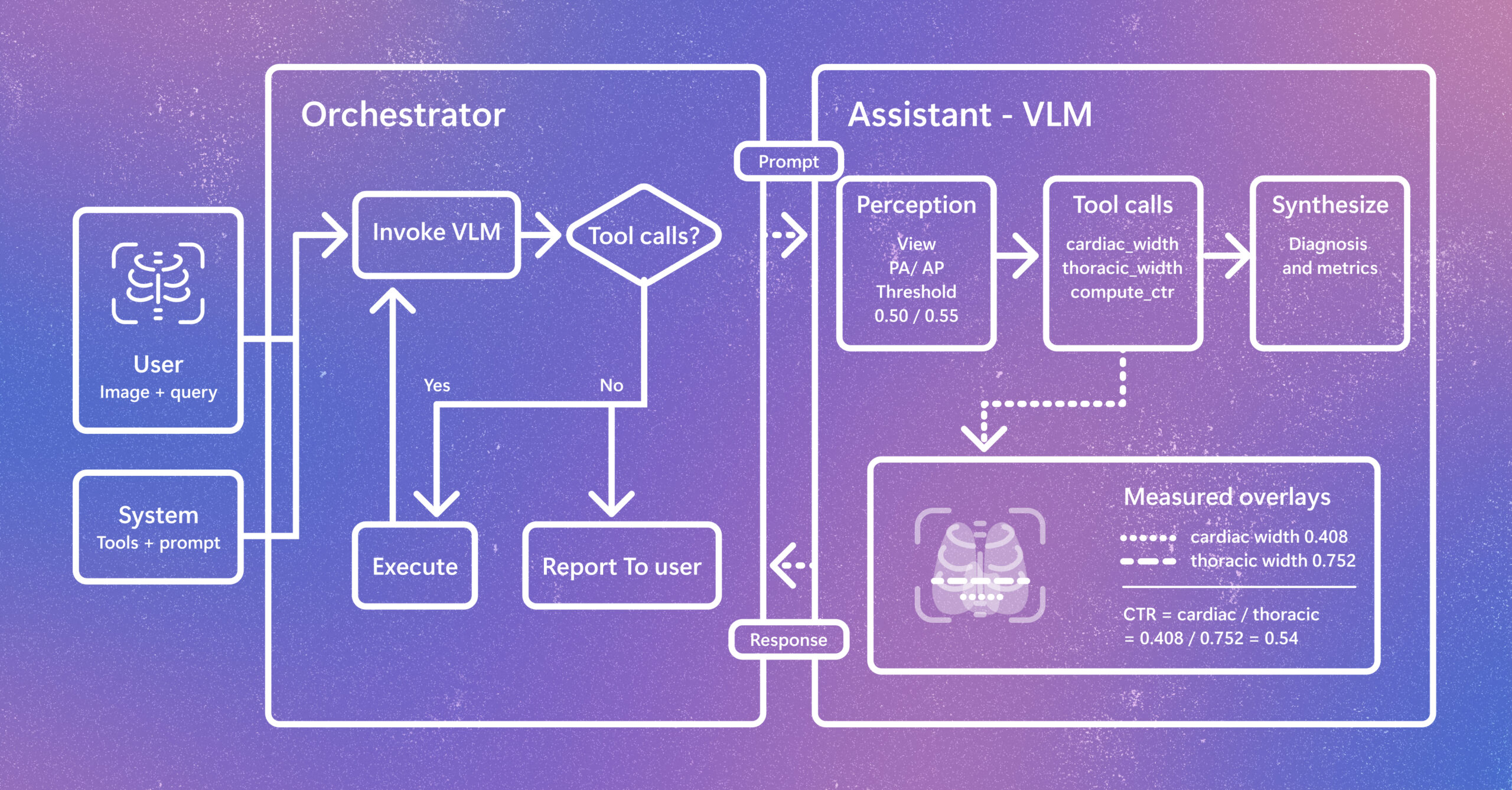
Introducing CARE-X: Towards Clinically Useful Radiology VLMs with Auxiliary Supervision, Reward-Aligned Learning, and Tool-Augmented Measurement

Radiology AI is evolving beyond report generation. CARE-X explores a unified approach that combines flexible reasoning, calibrated predictions, and measurement-based tools for chest X-ray interpretation. The post Introducing CARE-X: Towards Clinically Useful Radiology VLMs with Auxiliary Supervision, Reward-Aligned Learning, and Tool-Augmented Measurement appeared first on Microsoft Research.

MIT News · Artificial Intelligence Oct 7, 2026

Discovering the value of humanistic inquiry

Students in MIT’s Concourse program delve deeply into the human condition, debate challenging questions, and learn to develop judgment about issues that can’t be quantified.

We use cookies to run the site and, with your consent, for analytics and to show ads. See our Cookie Policy.
