Skip to content

Physically Partitioned KVCache Format for CPU--GPU Load Balancing in MoE Inference

Sep 2026 · 0 citations · 49 references
Computer Science

TL;DR

InplaceKVCache is proposed, the first KVCache abstraction whose format fixes each byte's physical residency at write time, so that the CPU--GPU load balance can be adjusted without moving data after placement, turning load balancing into pure scheduling.

Abstract

Single-GPU long-context inference with Mixture-of-Experts (MoE) models requires spilling the key-value cache (KVCache) to CPU memory. The spilled KV serves two complementary purposes---transferring to the GPU for attention computation, or computing in-place on the CPU---which demand opposing physical states. The optimal split between them varies with workload, yet existing KVCache abstractions offer only storage semantics over a monolithic object of a single physical state, and cannot express dynamic load balancing. We propose InplaceKVCache, the first KVCache abstraction whose format fixes each byte's physical residency at write time, so that the CPU--GPU load balance can be adjusted without moving data after placement. It realizes this as a four-region layout along two dimensions---device affinity and access pattern---turning load balancing into pure scheduling. Built on this abstraction, WriteScope splits CPU--GPU shares along the sequence dimension, and a portable roofline performance model determines the optimal CPU share as sequence length evolves, with online feedback tracking CPU cost drift. On three MoE models (DeepSeek-V2-Lite, Qwen3-30B-A3B, Mixtral-8$\times$7B) with a 32~GB VRAM budget, WriteScope supports end-to-end inference at the 1M-token aggregate scale. In the long-context regime ($\ge$8K), it achieves geometric-mean speedups of $1.5\times$--$2.5\times$ on A100 and $1.4\times$--$1.7\times$ on V100 over four reproduced baselines, while vLLM, SGLang, and KTransformers fail even with a doubled KV budget. A DeepSeek-V4-Flash case study validates composition with native sparse attention.
View source

Similar papers

Understanding and Optimizing KV-cache Management for Long-Context LLM Inference A

This model reveals one key opportunity: dividing a restore request proportionally between the storage path and the GPU can improve inference performance while still meeting SLOs, and reduces the KV-cache storage stack to a performance model based on per-tier capacity, per-tier and interconnect bandwidth, and GPU arithm...

Unknown authors · 0 citations
Book Open access Sep 2026

LLM KV-cache: To Restore or To Recompute, That Is the Question

The challenges of the restoration-recomputation trade-off are investigated and its impact on inference performance when left unaddressed, and an I/O-aware KV-cache management policy is presented that dynamically navigates this trade-off.

Amirhossein Najafizadeh, Vasily Tarasov, Alex Merenstein et al. · 0 citations
Preprint Sep 2026

Weave: Fine-Grained Dynamic SM Scheduling in an MoE Megakernel for Compute-Communication Overlap

Weave is presented, to the authors' knowledge the first MoE overlap system that performs fine-grained dynamic SM scheduling - deciding per layer and per GPU by routing results at runtime, and achieves a 2.89x geometric-mean MoE-layer speedup and a 1.33x geometric-mean end-to-end speedup over five state-of-the-art basel...

Ziyu Huang, Yangjie Zhou, Chen-Hao Zhu et al. · 0 citations

Related blog posts

Microsoft Research Blog Sep 30, 2026

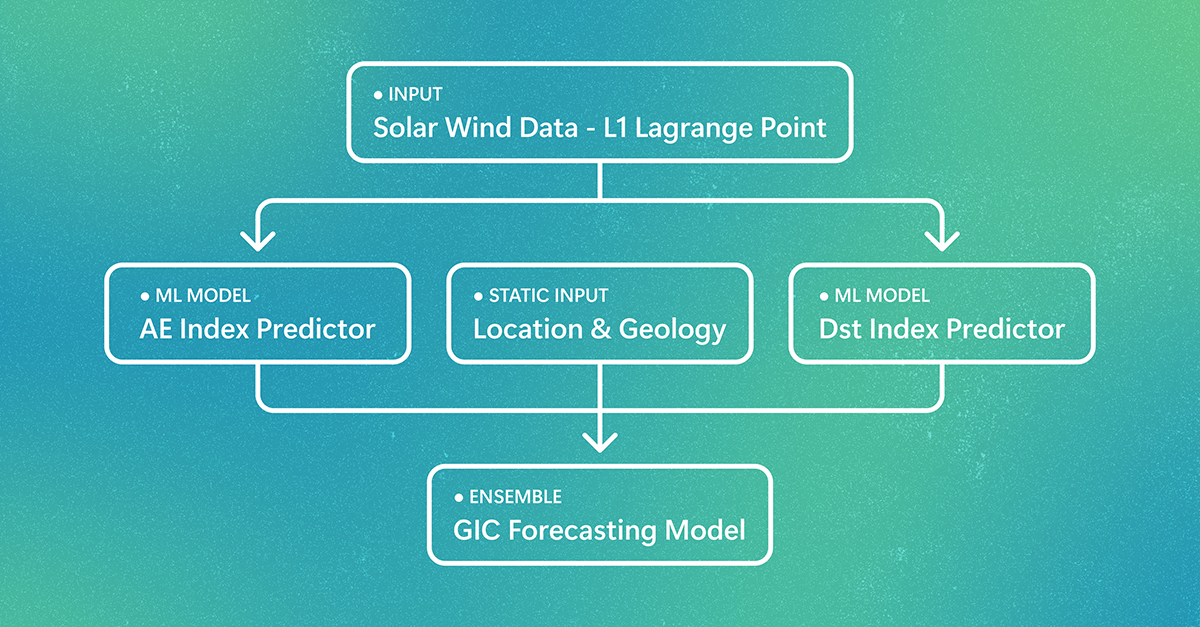
Forecasting space weather risks on power grids

Extreme space-weather events can damage power systems on Earth and degrade GPS accuracy and satellite operations. A new machine learning system can predict where damage is likely to occur 30-60 minutes before a storm arrives. The post Forecasting space weather risks on power grids appeared first on Microsoft Research.

We use cookies to run the site and, with your consent, for analytics and to show ads. See our Cookie Policy.