This paper addresses formal explainability of classifying neural networks by introducing a flexible symbolic framework for an efficient, guided computation of explanations of the NN behavior, parametrized by the activations of internal neurons, and using logical engines such as SMT solvers.
Abstract
Formal explainability of classifying neural networks (NNs) is an active area of research, providing explanations with provable guarantees of the classification within continuous regions of the input feature space. However, the existing techniques are either limited to individual input features without guarantees on their relations or the provided solutions fail to scale to deep architectures. This paper addresses these issues by introducing a flexible symbolic framework for an efficient, guided computation of explanations of the NN behavior, parametrized by the activations of internal neurons, and using logical engines such as SMT solvers. Unlike prior methods that rely on specialized NN verifiers, our method yields explanations that are not restricted in shape. Our algorithm is implementable on top of a general-purpose logical solver, isolating the NN-specific encoding from the algorithmic framework. We experimented with a wide range of benchmarks from the domains of image recognition and medicine, illustrating the advantages of the new method, particularly in computational efficiency. Notably, our approach enables logical explanation of deep networks not amenable to prior logic-based methods.
It is shown that across a broad class of ANNs trained on diverse tasks, their inference logic can indeed be reformulated as sparse symbolic interactions, and two common mathematical criteria lead to the emergence of such sparse symbolic interactions.
This work proposes a logic-based framework for node classification in Simple Graph Convolution (SGC) networks that uses minimal abductive explanations as an intermediate representation for rule extraction.
Bryan Lima Cavalcante, Thiago Alves Rocha· 0 citations
It is shown that the vector representations of a variety of neural networks can be closely approximated with symbolic structures, providing a potential way to reconcile longstanding symbolic conceptions of intelligence with the vector-based nature of modern AI.
R. Thomas McCoy, Paul Soulos, Tal Linzen et al.· 1 citation
This work introduces a biologically motivated neural architecture in which both neural activations and learning signals are represented by non-negative activity, and synapses have fixed sign, while still supporting backpropagation-like learning.
It is demonstrated that network architecture and its coeficients can be learned together by unifying concepts of evolutionary search within a population based traditional training process.
Structural reasoning, the ability to recognize and make inferences over the relational structure between objects and concepts, is a hallmark of human cognition, yet prevailing methods often collapse relational topology into flat embeddings, cannot discover hidden structure and lack interpretability. We introduce Neural...
Zi-Xing Jia, Yu-Hang Pan, Ni Ji· 0 citations
Related blog posts
MIT News · Artificial Intelligence· news.mit.eduOct 2, 2026
Martin Trust Center Managing Director Bill Aulet introduces Dear Dreamer, a free platform for middle and high school students who want to learn about entrepreneurship.
Microsoft Research Blog· microsoft.comSep 30, 2026
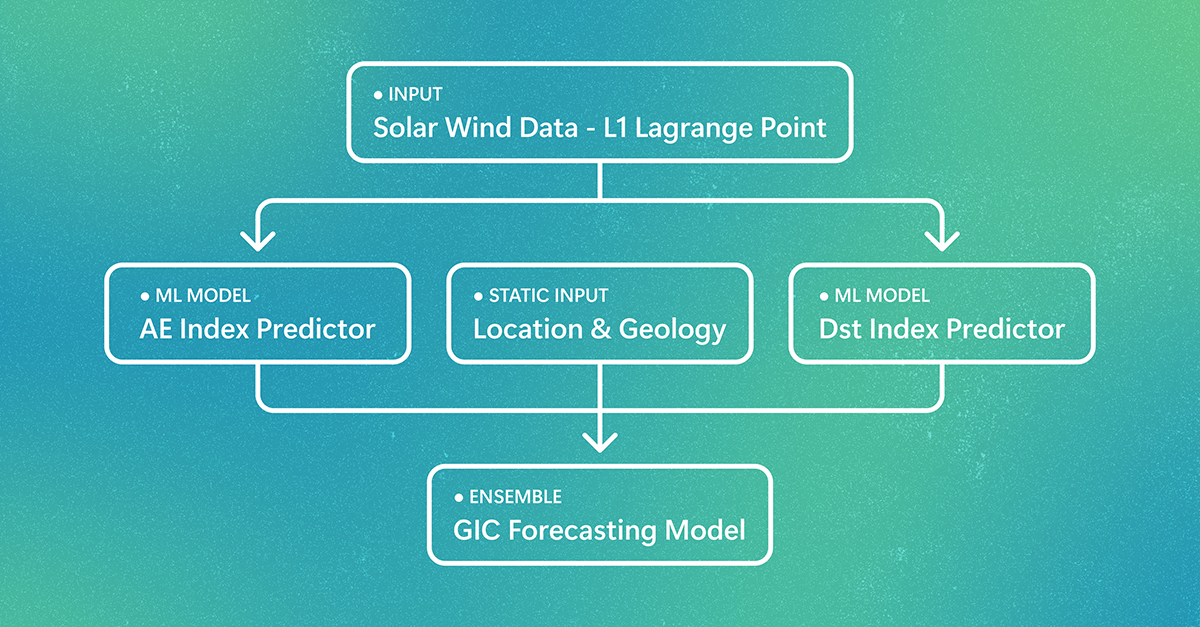
Extreme space-weather events can damage power systems on Earth and degrade GPS accuracy and satellite operations. A new machine learning system can predict where damage is likely to occur 30-60 minutes before a storm arrives. The post Forecasting space weather risks on power grids appeared first on Microsoft Research.
We use cookies to run the site and, with your consent, for analytics and to show ads.
See our Cookie Policy.