This work proposes MAPA, an otherwise vanilla masked autoencoder with two spatial encodings, an anatomical region embedding and a relative positional encoding that together enable it to learn neural representations that transfer to unseen subjects and across various tasks.
Abstract
Brain-computer interfaces (BCIs) decode neural activity to restore lost function. Typically, training a high-performance neural decoder requires a large labeled dataset to be collected from every new subject. One way to reduce the labeled data cost is self-supervised pretraining, which learns general neural representations from unlabeled recordings that accumulate across subjects. However, for intracranial electroencephalography (iEEG) recordings, self-supervised learning has been challenging due to differences in contact placement and neuroanatomy between subjects. We propose MAPA, an otherwise vanilla masked autoencoder with two spatial encodings, an anatomical region embedding and a relative positional encoding, which together enable it to learn neural representations that transfer to unseen subjects and across various tasks. MAPA sets a new state of the art across all three regimes of the Neuroprobe benchmark without fine-tuning: within-session, cross-session, and cross-subject. In the cross-subject regime, a linear probe on MAPA's features needs only ${\sim}164$ labeled trials to reach the accuracy that takes 3,500 without pretraining. Our results show that self-supervised pretraining can scale across heterogeneous iEEG recordings and reduce the labeled data needed for accurate decoding in new subjects.
One of the key challenges in brain computer interfaces (BCIs) is to understand the visual perceptual content (VPC) of non-invasive electroencephalography (EEG) signals with high accuracy, without the aid of brain mapping techniques, which is hindered by high inter-subject variations and the non-stationary nature of neu...
Mehran Ali· Journal of Engineering and C...· 0 citations
Intracranial electroencephalography (iEEG) is widely used to record electrical activity directly from electrodes inside the human brain, making it an attractive modality for neural decoding. However, progress in iEEG decoding, especially toward general-purpose foundation models, remains difficult to measure reliably: d...
Geeling Chau, Saba Hashemi, Yonghyeon Gwon et al.· 0 citations
BrainWideBench is presented, a benchmark for evaluating across-animal transfer on multi-region neural recordings, built on the International Brain Laboratory Brainwide Map dataset of neural and behavioral recordings spanning 276 brain regions from 139 mice performing a sensory-guided decision-making task.
Alexandre Andre, S. Mahato, Vinam Arora et al.· arXiv.org· 0 citations
Decoding perceived speech from non-invasive brain recordings has garnered significant attention in recent years due to its wide range of potential applications. However, existing methods face considerable challenges in cross-subject decoding, primarily due to limited generalizability and the absence of explicit mechani...
Ao-Ke Zhang, Bo Wang, Xihong Wu et al.· 1 citation· ⚡1
Perceived speech decoding based on non-invasive brain-computer interface (BCI) signals has been extensively studied in recent years. Research in this field primarily faces two challenges: extracting neural representations with rich spatiotemporal information and achieving cross-subject generalization. Although separate...
General anesthesia offers a rare opportunity to observe the human brain under a standardized, controlled perturbation. Yet intraoperative electroencephalography (EEG) is almost always reduced to a single proprietary depth index, collapsing a rich trajectory into one number and discarding how a brain moves between state...
J. Perdereau, Virginie Loison, Kanssaa El Ayeb et al.· 0 citations
Related blog posts
MIT News · Artificial Intelligence· news.mit.eduOct 2, 2026
Martin Trust Center Managing Director Bill Aulet introduces Dear Dreamer, a free platform for middle and high school students who want to learn about entrepreneurship.
Microsoft Research Blog· microsoft.comSep 30, 2026
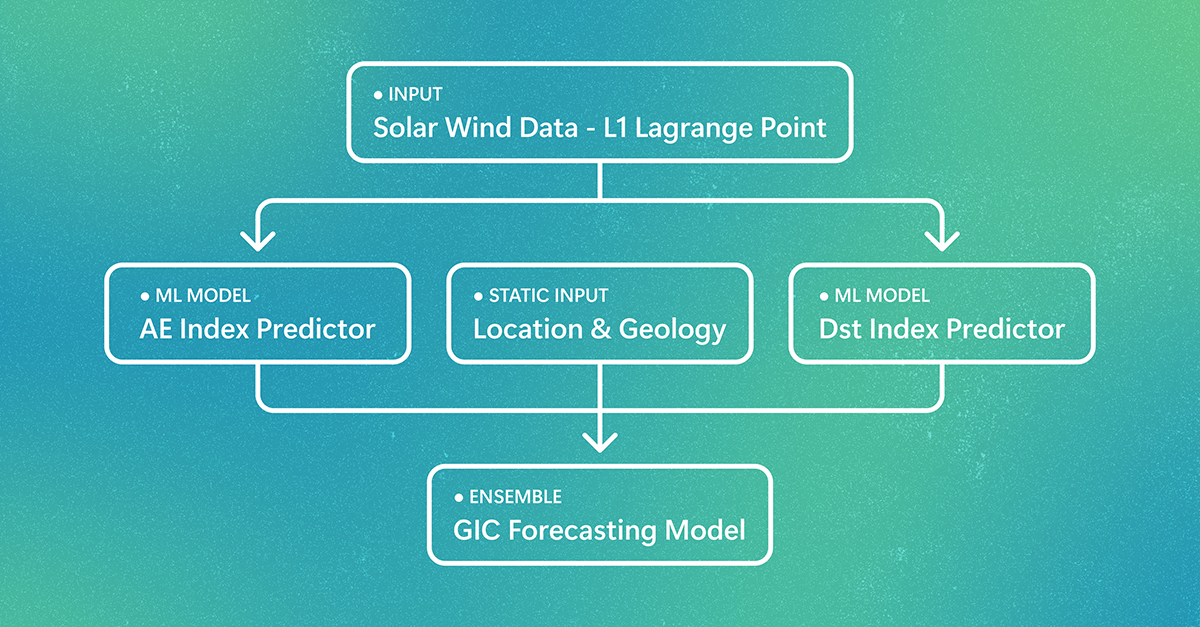
Extreme space-weather events can damage power systems on Earth and degrade GPS accuracy and satellite operations. A new machine learning system can predict where damage is likely to occur 30-60 minutes before a storm arrives. The post Forecasting space weather risks on power grids appeared first on Microsoft Research.
We use cookies to run the site and, with your consent, for analytics and to show ads.
See our Cookie Policy.