Skip to content

Feature Map Compression for Split Learning in Mobile Wireless Environment: Theory and Practice

Oct 2026 · IEEE Transactions on Mobile Computing · Vol 25, pp. 17520-17534 · 0 citations · 50 references

Abstract

Split Learning (SL) enables collaborative model training by distributing computation between resource-constrained mobile edge devices and a central server. In this distributed framework, mobile edge devices compute the early layers of the model and transmit feature maps to the server. However, due to practical mobile wireless bandwidth limitations, these feature maps should be compressed before transmission. In this paper, we propose a lightweight Mask-Encoded Sparsification (MS) compressor that enhances Top-<inline-formula><tex-math notation="LaTeX">$k$</tex-math><alternatives><mml:math><mml:mi>k</mml:mi></mml:math><inline-graphic xlink:href="qu-ieq1-3696694.gif"/></alternatives></inline-formula> sparsification with a narrow-bit mask, significantly reducing compression error while improving computational and communication efficiency. Our theoretical analyses reveal that feature map compression generally induces estimator bias in the gradients. Furthermore, we establish the relationships between compression error and convergence, as well as between the choice of cutlayer and output error. The first relationship demonstrates that reducing compression error facilitates convergence, confirming the advantage of MS, whereas the second provides theoretical guidance for determining the cutlayer, indicating that earlier layers are more sensitive to compression errors. Extensive experiments on vision and language models demonstrate that our method outperforms existing compression techniques in terms of compression error and model performance, achieving up to a 21.38× speedup in communication efficiency under wireless environments.

View source

Similar papers

#computer vision Review Sep 2017

Agile Software Development Methods: Review and Analysis

This publication proposes a definition and a classification of agile software development approaches and analyses ten software development methods that can be characterized as being "agile" against the defined criterion.

P. Abrahamsson, O. Salo, Jussi Ronkainen et al. · 727 citations · ⚡54
#computer vision Jun 2008

The impact of agile practices on communication in software development

The study shows that agile practices improve both informal and formal communication, but indicates that, in larger development situations involving multiple external stakeholders, a mismatch of adequate communication mechanisms can sometimes even hinder the communication.

M. Pikkarainen, Jukka Haikara, O. Salo et al. · 401 citations · ⚡48
#machine learning Review Open access Oct 2014

Software development in startup companies: A systematic mapping study

The results indicate that software engineering work practices are chosen opportunistically, adapted and configured to provide value under the constrains imposed by the startup context.

Nicolò Paternoster, Carmine Giardino, M. Unterkalmsteiner et al. · 394 citations · ⚡54

Related blog posts

GPT-Lab Sep 17, 2026

Beyond Prompt Engineering: The Role of Tacit Knowledge in Software Engineering

AI is making software generation faster, but speed does not remove the need for expertise. As more work is delegated to AI, tacit knowledge may become one of the most important human advantages in software engineering. The post Beyond Prompt Engineering: The Role of Tacit Knowledge in Software Engineering appeared first on GPT-Lab.

Microsoft Research Blog Aug 31, 2026

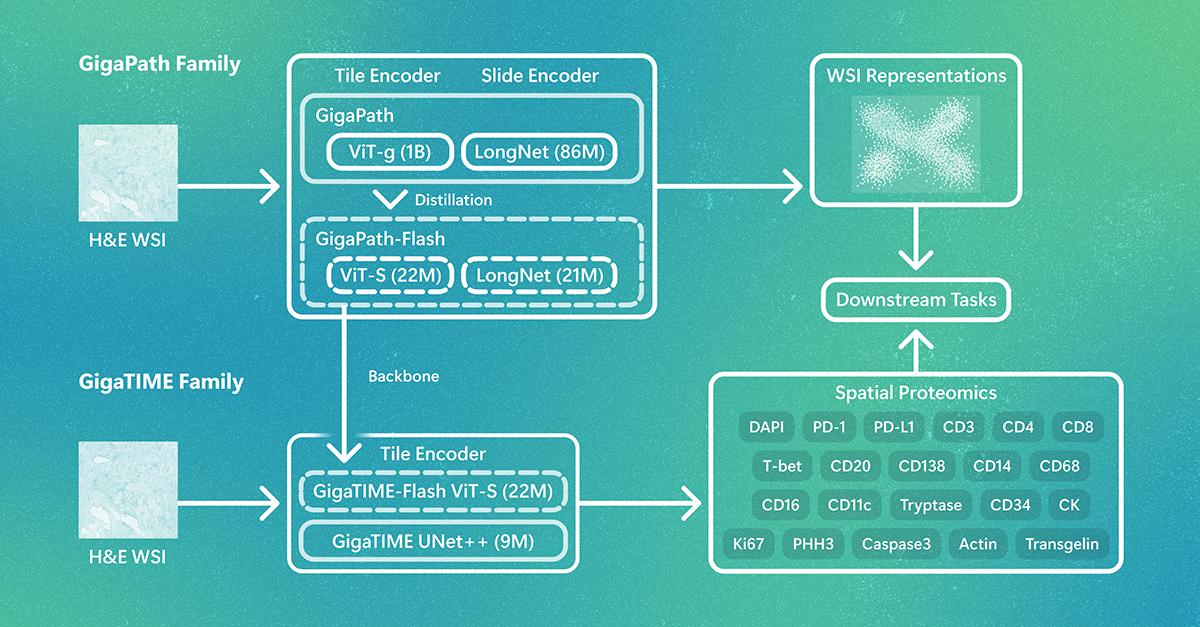
GigaPath-Flash and GigaTIME-Flash: Toward population-scale discovery with efficient pathology foundation models

What if pathology foundation models could do more with less? GigaPath-Flash and GigaTIME-Flash cut computational demands while maintaining strong performance, opening the door to larger studies and broader exploration. The post GigaPath-Flash and GigaTIME-Flash: Toward population-scale discovery with efficient pathology foundation models appeared first on Microsoft Research.

We use cookies to run the site and, with your consent, for analytics and to show ads. See our Cookie Policy.