Sep 2026· Proceedings of the International Conference on Parallel Processing· 0 citations· 8 references
TL;DR
WAQ-LLM is proposed, a performance optimization framework to find the optimal deployment configuration for multi-instance LLM serving that can provide adaptive and hybrid configurations to handle diverse workloads, surpassing static deployments limited to a single instance type.
Abstract
The deployment of Large Language Models (LLMs) on multi-instance GPU clusters has become essential to meet the surging demand for generative AI applications. While scaling out instances increases throughput, the distinct computational characteristics of prefill and decode phases introduce significant resource contention, making it challenging to satisfy stringent Service Level Objectives (SLOs) for responsiveness and generation speed. Existing serving solutions typically rely on static deployment strategies—either aggregating or disaggregating these phases—which often fail to adapt to the interference patterns caused by varying request arrival rates and sequence lengths. In this work, we propose WAQ-LLM, a performance optimization framework to find the optimal deployment configuration for multi-instance LLM serving. Specifically, we first establish an analytical workload-aware queueing model that captures the LLM computational characteristics and queuing behavior of both aggregation and disaggregation designs. We then formulate the deployment configuration problem as a constrained optimization problem and develop a polynomial-time algorithm to efficiently identify configurations that minimize Time-per-Output-Token (TPOT) while satisfying SLOs. Extensive experiments are conducted on a 16-GPU cluster across various LLMs and workload settings. WAQ-LLM consistently outperforms AIConfigurator, NVIDIA’s official product-level solution, reducing TPOT by 21.62% on average and up to 81.7%. Moreover, WAQ-LLM can provide adaptive and hybrid configurations to handle diverse workloads, surpassing static deployments limited to a single instance type (either PD aggregation or disaggregation).
The results are packaged in the Greenfield Startup Model (GSM), which explains the priority of startups to release the product as quickly as possible, and the need to shorten time-to-market, by speeding up the development through low-precision engineering activities.
Carmine Giardino, Nicolò Paternoster, M. Unterkalmsteiner et al.· IEEE Transactions on Softwar...· 178 citations· ⚡14
Software startup companies develop innovative, software-intensive products within limited timeframes and with few resources, searching for sustainable and scalable business models.
M. Unterkalmsteiner, P. Abrahamsson, Xiaofeng Wang et al.· e-Informatica Software Engin...· 157 citations· ⚡17
This study conducts a case survey study based on the secondary data of the major pivots happened in 49 software startups, and demonstrates that customer need pivot is the most common among all pivot types.
Sohaib Shahid Bajwa, Xiaofeng Wang, Anh Nguyen-Duc et al.· Empirical Software Engineeri...· 127 citations· ⚡15
The comparison of adopter and non-adopter sample reveals three potential adoption inhibitor, security, data privacy, and portability, which underlines the importance of the technical and security perspectives for research investigating the adoption of technology.
Nattakarn Phaphoom, Xiaofeng Wang, S. Samuel et al.· Journal of Systems and Softw...· 111 citations· ⚡8
The ongoing work building a Raspberry Pi cluster consisting of 300 nodes is presented, with potential use cases being an inexpensive and green test bed for cloud computing research and a robust and mobile data center for operating in adverse environments.
P. Abrahamsson, S. Helmer, Nattakarn Phaphoom et al.· IEEE International Conferenc...· 110 citations· ⚡7
The results indicate that software developers are a slightly happy population, but the need for limiting the unhappiness of developers remains, and 219 factors representing causes of unhappiness while developing software are identified.
D. Graziotin, Fabian Fagerholm, Xiaofeng Wang et al.· International Conference on...· 84 citations· ⚡6
Related blog posts
MIT News · Artificial Intelligence· news.mit.eduOct 1, 2026
Able to defeat top-ranked human players and more efficient than other models, the new system could help decision-makers in military maneuvers or business negotiations.
Microsoft Research Blog· microsoft.comSep 29, 2026
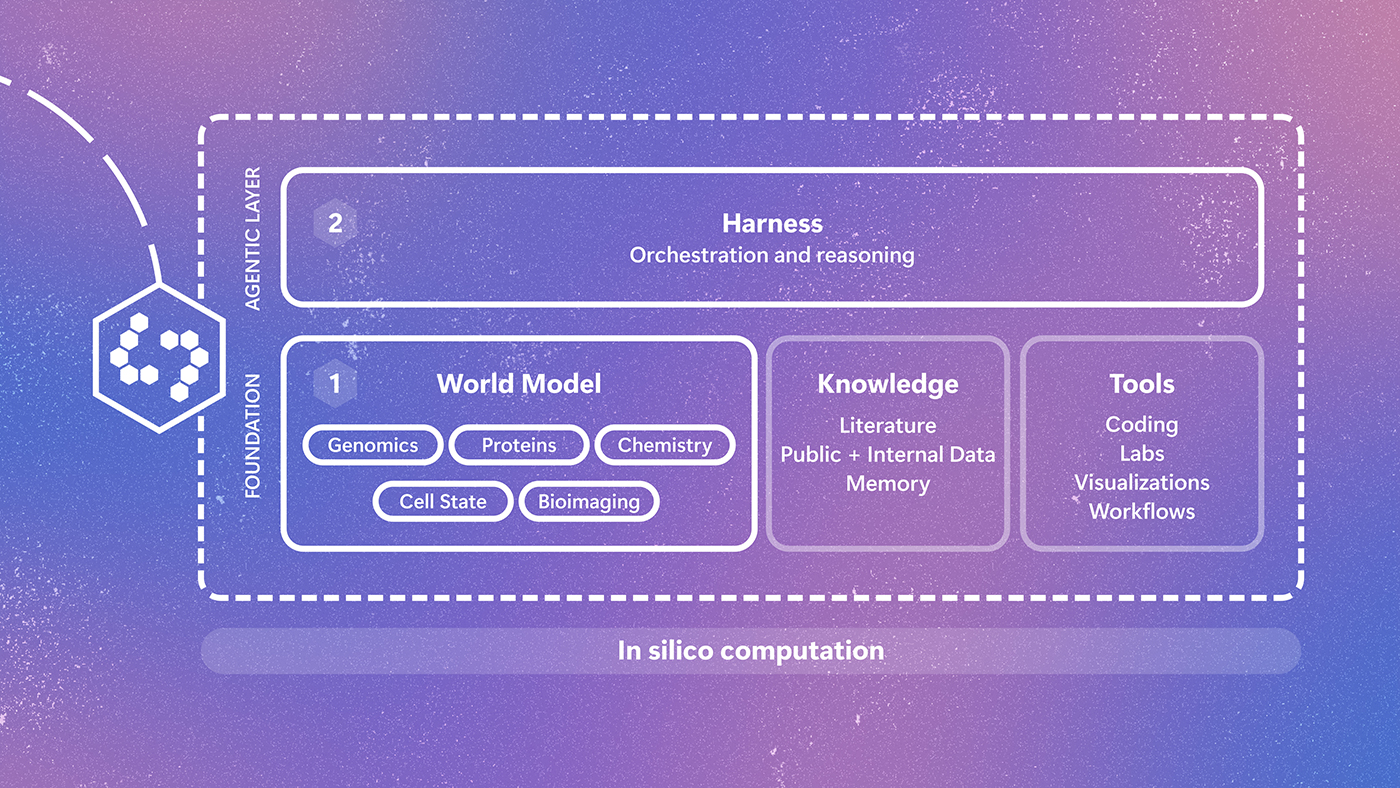
Biology doesn't operate in silos, and neither should the AI representation of it. Quine is an early-stage research effort to create a multimodal world model of biology. By connecting insights across biological scales and modalities, Quine helps scientists computationally search a space far larger than intuition allows and prioritize hypotheses before they reach the lab. Experimental results provide important feedback, helping researchers sharpen future research directions. The post Introducing Q…