Policy drift takes shape through a nonlinear differential equation - framed within the policy state space - with support from Lyapunov stability concepts alongside bifurcation methods alongside bifurcation methods, and the Intent Drift Rate appears: a concrete number per dialogue turn built as the time-based change in...
Harsh Verma· International Journal of Sci...· 1 citation
This conceptual paper theorizes agentic workflows systems, where an AI agent or agents proactively perceive, plan, act and reflect throughout the entire software development lifecycle (SDLC); its implications for end to end software engineering automation are discussed.
Harsh Verma· World Journal of Advanced Re...· 1 citation
AI-driven cybersecurity in the software engineering field is discussed, where machine learning, deep learning, natural language processing, and reinforcement learning can be applied throughout the software development lifecycle to provide increased security.
Harsh Verma· World Journal of Advanced Re...· 0 citations
Intent-Based Security (IBS), a structured approach built on foundational ideas from access control, zero-trust models, and principal-agent dynamics, shows why trusting identities fails against invisible threats.
Harsh Verma· International Journal of Sci...· 0 citations
Reach audiences
Advertise in front of researchers, engineers, and readers.
The speed of cloud computing and artificial intelligence, which have transformed the way software applications are designed and deployed. The cloud-based AI systems provide a scalable, adaptable, and cost-efficient solution to build intelligent systems capable of processing large amounts of data and running complicated...
Harsh Verma· World Journal of Advanced Re...· 0 citations
The Dark Forest hypothesis treats cosmic silence as the strategic consequence of uncertainty, catastrophic vulnerability and incentives for pre-emptive attack. Its central conclusion is usually stated intuitively rather than derived from an explicit incomplete-information game. This paper develops the Bayesian Dark For...
Kwan Hong TAN· Zenodo (CERN European Organi...· 0 citations
The Dark Forest hypothesis treats cosmic silence as the strategic consequence of uncertainty, catastrophic vulnerability and incentives for pre-emptive attack. Its central conclusion is usually stated intuitively rather than derived from an explicit incomplete-information game. This paper develops the Bayesian Dark For...
Kwan Hong TAN· Zenodo (CERN European Organi...· 0 citations
Reliability Beyond Accuracy in Crop Classification Benchmarks (Supplementary Materials)Introduction: Near-perfect crop-label accuracy can conceal uncertainty, perturbation sensitivity, and weak explanations. This study evaluates these reliability dimensions without treating benchmark classification as agronomic recomme...
Kwan Hong TAN· Zenodo (CERN European Organi...· 0 citations
This conceptual article develops a formal theory of atypical human failure in which severe life-course consequences can emerge from a conjunction of adverse conditions, a low-frequency behavioural lapse, stochastic outcome mechanics, categorical legal or institutional thresholds, and dynamically propagating collateral...
Kwan Hong TAN· Zenodo (CERN European Organi...· 0 citations
This conceptual article develops a formal theory of atypical human failure in which severe life-course consequences can emerge from a conjunction of adverse conditions, a low-frequency behavioural lapse, stochastic outcome mechanics, categorical legal or institutional thresholds, and dynamically propagating collateral...
Kwan Hong TAN· PhilPapers (PhilPapers Found...· 0 citations
Reliability Beyond Accuracy in Crop Classification Benchmarks (Supplementary Materials)Introduction: Near-perfect crop-label accuracy can conceal uncertainty, perturbation sensitivity, and weak explanations. This study evaluates these reliability dimensions without treating benchmark classification as agronomic recomme...
Kwan Hong TAN· Zenodo (CERN European Organi...· 0 citations
AI delegation can remove the comparison evidence needed to establish whether automation continues to improve outcomes. This paper develops the counterfactual preservation principle: sustained claims of current comparative benefit require a continuing source of identification whose temporal relevance remains defensible....
Kwan Hong TAN· Zenodo (CERN European Organi...· 0 citations
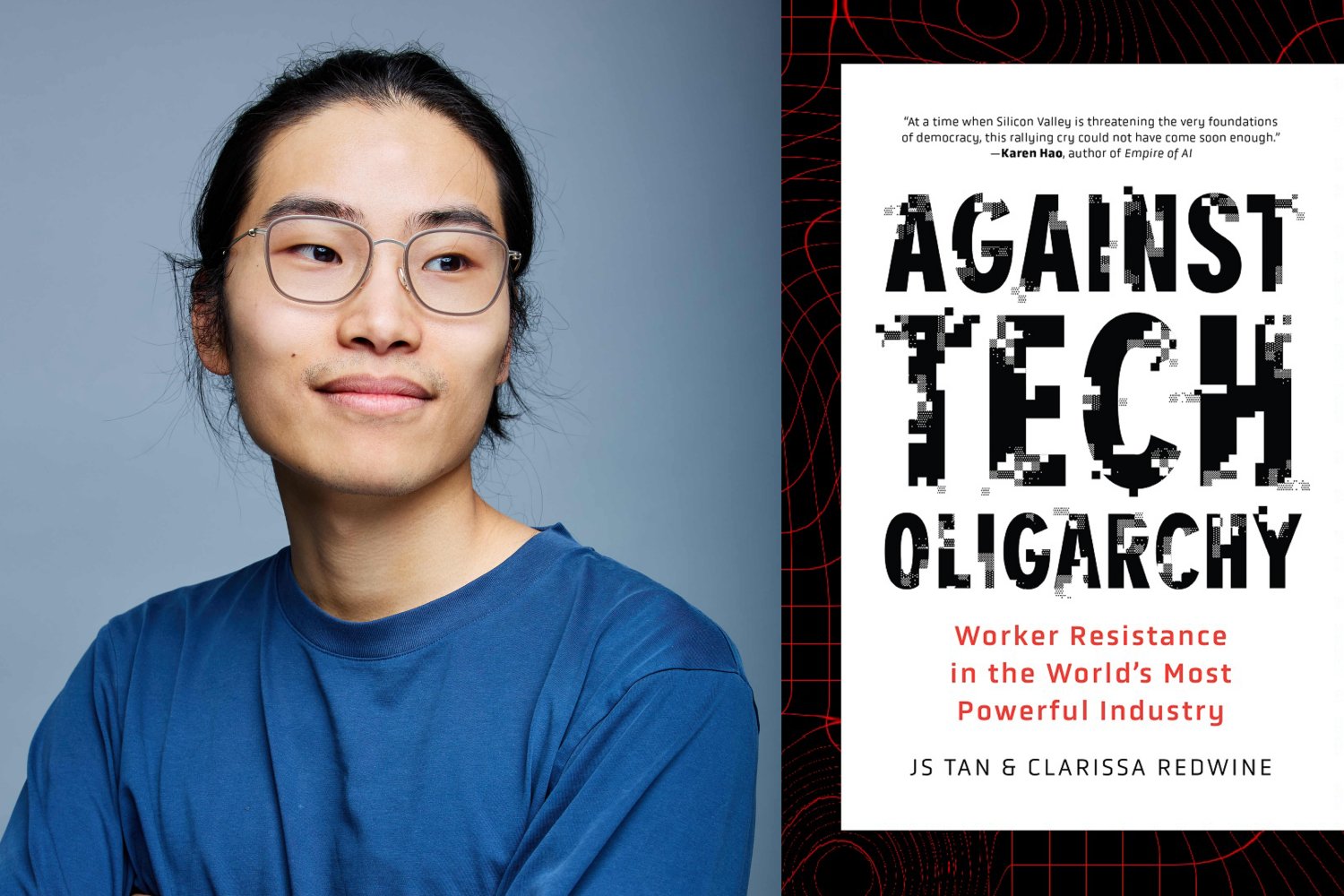
Writing as a participant and researcher, PhD student JS Tan SM ’22 has co-authored a new book about the rise of tech worker protests and the employer backlash that followed.
Requirements in large systems rarely exist in isolation. Their meaning depends on the wider project context - other requirements, policies, decisions, tests, and implementation details. That becomes especially important when AI is used for review, because spotting a possible conflict or gap is only the beginning. ReqSpace explores how AI, visualisation, and connected project context can help reviewers understand those findings, trace the relationships behind them, and focus on the questions that…
AI is making software generation faster, but speed does not remove the need for expertise. As more work is delegated to AI, tacit knowledge may become one of the most important human advantages in software engineering. The post Beyond Prompt Engineering: The Role of Tacit Knowledge in Software Engineering appeared first on GPT-Lab.