A model of desirable JSF factors is offered that contributes to the body of knowledge related to the decision-making process when selecting a JSF and is useful for Web and JSF developers.
Amantia Pano, D. Graziotin, P. Abrahamsson· 7 citations· ⚡1
A model of desirable JavaScript framework adoption factors is offered that contributes to the body of knowledge related to the adoption of technology by software engineers and is useful for decision makers when evaluating JavaScript frameworks, as well as for developers for producing desirable frameworks.
Amantia Pano, D. Graziotin, P. Abrahamsson· Empirical Software Engineeri...· 35 citations· ⚡1
This publication proposes a definition and a classification of agile software development approaches and analyses ten software development methods that can be characterized as being "agile" against the defined criterion.
P. Abrahamsson, O. Salo, Jussi Ronkainen et al.· arXiv.org· 727 citations· ⚡54
The preliminary finding results in a list of 17 security challenges with regards to technical, organizational and methodological perspectives, which provides initial explanation about the less emphasis on methodological and organizational security concerns in cases.
Anh Nguyen-Duc, Ronald Jabangwe, P. Paul et al.· XP Workshops· 45 citations· ⚡2
It is found that agile development is known to hardware entrepreneurs, however it is limitedly adopted, and four categories of tactics are found that enable hardware startups agile in their early stage business and product development.
Anh Nguyen-Duc, Xiaofang Weng, P. Abrahamsson· International Symposium on E...· 13 citations
This report documents the program and the outcomes of Dagstuhl Seminar 18182 "Software Business, Platforms, and Ecosystems: Fundamentals of Software Production Research".
P. Abrahamsson, J. Bosch, S. Brinkkemper et al.· Dagstuhl Reports· 12 citations
This paper presents Essencery, a tool for essentializing software engineering methods and practices using the Essence graphical syntax and presents an empirical evaluation of the tool by means of a qualitative, quasi-formal experiment, which confirms that the tool is easy to use and useful for its intended purpose.
A. Evensen, Kai-Kristian Kemell, Xiaofeng Wang et al.· arXiv.org· 5 citations
This paper studies Essence in an educational setting to evaluate its usefulness for software engineering students while also investigating barriers to its adoption in this context.
Kai-Kristian Kemell, Anh Nguyen-Duc, Xiaofeng Wang et al.· International Conference on...· 5 citations
Jennifer Neville did not want to go into computer science—but that’s exactly where she landed. Neville discusses the starts and stops that led to her professional sweet spot and her work identifying “surprising failures” making it hard for AI to handle complexity. The post What AI gets wrong and what failure teaches us appeared first on Microsoft Research.
MIT News · Artificial Intelligence· news.mit.eduOct 2, 2026
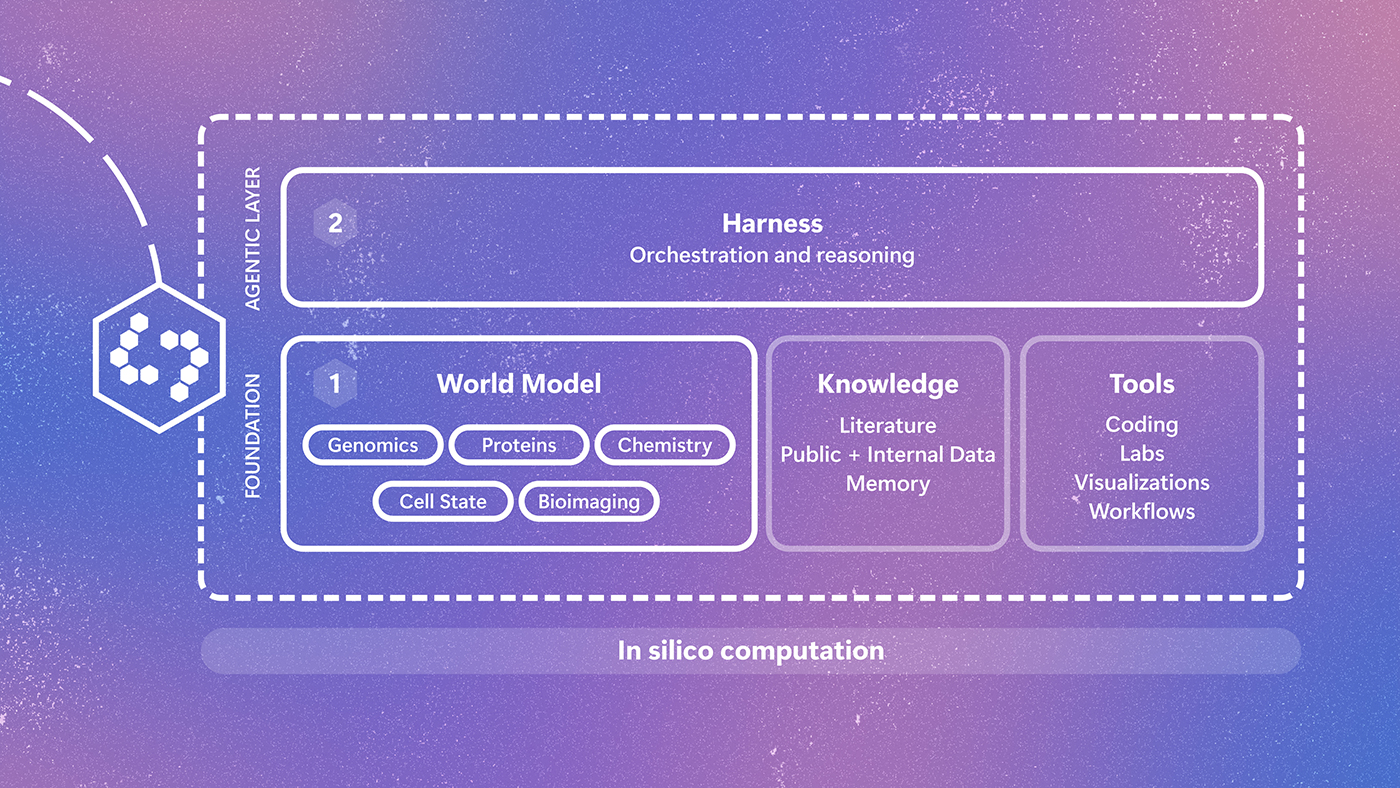
Biology doesn't operate in silos, and neither should the AI representation of it. Quine is an early-stage research effort to create a multimodal world model of biology. By connecting insights across biological scales and modalities, Quine helps scientists computationally search a space far larger than intuition allows and prioritize hypotheses before they reach the lab. Experimental results provide important feedback, helping researchers sharpen future research directions. The post Introducing Q…