An Iterative Improvement Process for conducting SPI within individual agile project teams is proposed, which aims at increasing the ability of software developers to improve the development process based on their experiences and context knowledge.
O. Salo, P. Abrahamsson· Software Process: Improvemen...· 81 citations· ⚡5
This book constitutes the refereed research proceeding of the 14th European Software Process Improvement Conference, EuroSPI 2007, held in Potsdam, Germany in September 2007 and contains 18 revised full papers presented.
P. Abrahamsson, N. Baddoo, T. Margaria et al.· European Conference on Softw...· 0 citations
This panel brings together community experts to share and discuss research and field experience that can ameliorate cultural challenges to create synergies in Agile software practices.
S. Fraser, P. Abrahamsson, R. Biddle et al.· International Conference on...· 3 citations
The study shows that agile practices improve both informal and formal communication, but indicates that, in larger development situations involving multiple external stakeholders, a mismatch of adequate communication mechanisms can sometimes even hinder the communication.
M. Pikkarainen, Jukka Haikara, O. Salo et al.· Empirical Software Engineeri...· 401 citations· ⚡48
Agile methods continue to gain popularity. In particular, the Scrum method appears to be on the verge of becoming a de-facto standard in the industry, leading the so called Agile movement. While there are success stories and recommendations, there is little scientifically valid evidence of the challenges in the adoptio...
A. Marchenko, P. Abrahamsson· Agile Conference· 59 citations· ⚡11
Some claim that especially in the field of agile software development the research lags years behind of the practice. In this paper, we characterize the status and main challenges for research on agile software development, and propose a preliminary roadmap, focusing on providing more empirical research, primarily on e...
Torgeir Dingsøyr, T. Dybå, P. Abrahamsson· Agile Conference· 92 citations· ⚡7
The results show that the embedded industry has been able to apply agile methods in its development processes and that the appreciation of the agile methods and their individual practices appears to increase once adopted and applied in practice.
O. Salo, P. Abrahamsson· IET Software· 238 citations· ⚡9
A comparative case study of five small scale software development projects where the effect of TDD on program design was studied using both traditional and package level metrics reveals that an unwanted side effect can be that some parts of the code may deteriorate.
Maria Siniaalto, P. Abrahamsson· Central and East European Co...· 35 citations· ⚡2
There is a vital need for devising a research agenda for identifying and dealing with architecture-centric challenges in agile software development to make it possible to guide the future research on integrating Architecture-centric methods in agile approaches and give advice to the software industry on dealing with Ar...
M. Babar, P. Abrahamsson· International Conference on...· 13 citations
Jennifer Neville did not want to go into computer science—but that’s exactly where she landed. Neville discusses the starts and stops that led to her professional sweet spot and her work identifying “surprising failures” making it hard for AI to handle complexity. The post What AI gets wrong and what failure teaches us appeared first on Microsoft Research.
MIT News · Artificial Intelligence· news.mit.eduOct 2, 2026
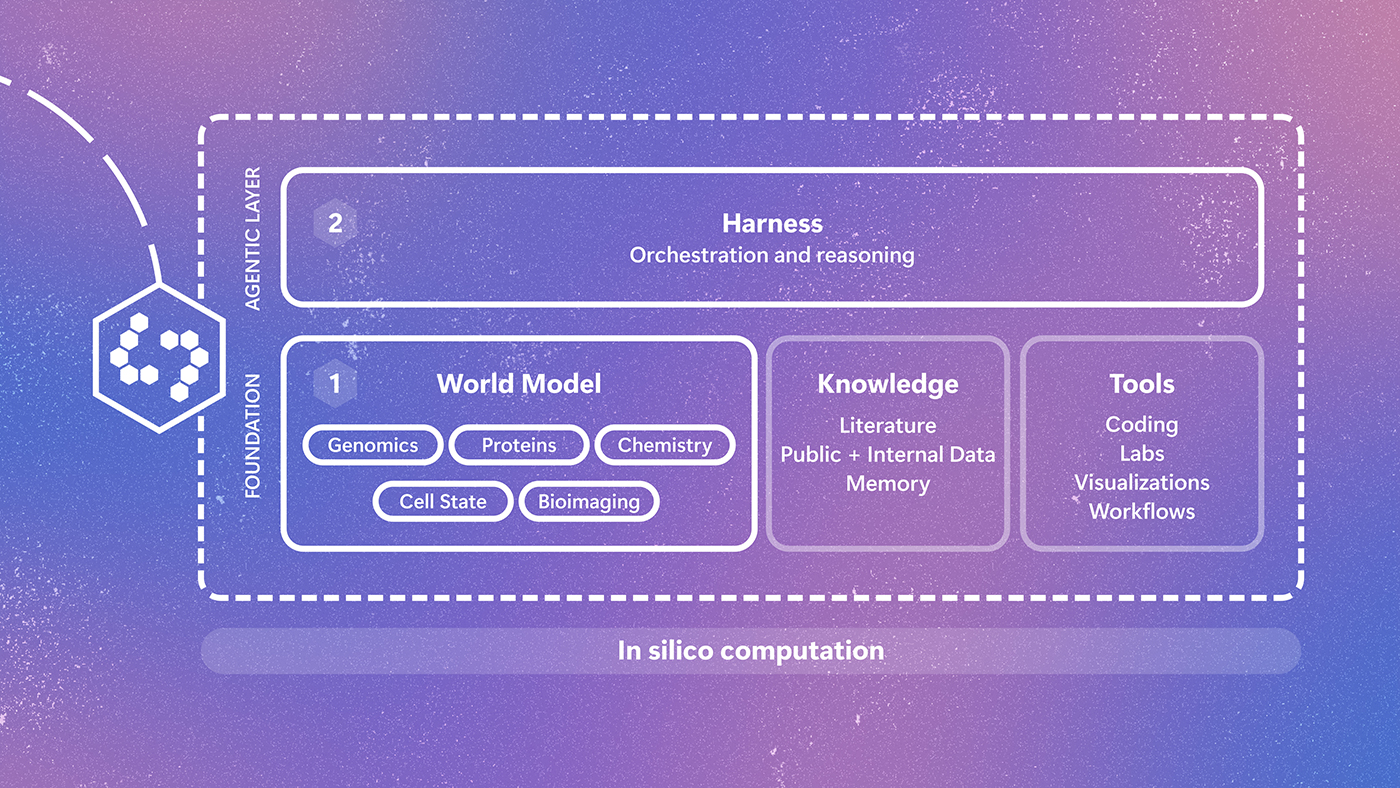
Biology doesn't operate in silos, and neither should the AI representation of it. Quine is an early-stage research effort to create a multimodal world model of biology. By connecting insights across biological scales and modalities, Quine helps scientists computationally search a space far larger than intuition allows and prioritize hypotheses before they reach the lab. Experimental results provide important feedback, helping researchers sharpen future research directions. The post Introducing Q…