Software engineering theory and practice is still to a large extent based more on faith than on science. Only by contributing to the scientific and empirically grounded body of knowledge within a specific area of application, theory and practice can develop. Experimentation is an important scientific approach to collec...
K. Kautz, P. Abrahamsson· 36th Annual Hawaii Internati...· 1 citation
While extreme programming (XP) relies on certain principles, it requires an extensive set of tools to enable an effective execution of its practices. In many companies, putting stories on the board may not be sufficient for managing rapidly changing requirements. The objective of This work is to report the results from...
J. Kääriäinen, Juha Koskela, P. Abrahamsson et al.· Proceedings of the EUROMICRO...· 19 citations
The analysis reveals that XP pays almost no attention on the usability of the software, apart from some actions that can be regarded as implicit usability evaluations, and that in XP the team transfers the responsibility of the product's usability to the customer.
Timo Jokela, P. Abrahamsson· International Conference on...· 72 citations· ⚡5
Reach audiences
Advertise in front of researchers, engineers, and readers.
Empirical results show that with less than 4% effort it is possible to hold post-iteration workshops that significantly help to improve and optimize practices and enhance the learning and satisfaction of the project team.
O. Salo, Kari Kolehmainen, Pekka Kyllönen et al.· International Conference on...· 37 citations
A controlled case study approach is presented, which has been applied in a study of extreme programming methodology performed in close-to-industry settings, which considers the generation of both quantitative and qualitative data
O. Salo, P. Abrahamsson· International Conference on...· 53 citations· ⚡2
Results from a study of a mobile application development project where the Offsite Customer Process Model was empirically evaluated show that the model itself is context-dependent and it has to be adapted to the underlying development process.
Mikko Korkala, P. Abrahamsson· European Conference on Softw...· 9 citations· ⚡1
This paper suggests a test development process model that takes software reuse techniques and activities into account and shows further that in order to produce reusable test material, the software entities must be expressed in terms of features, in which the test materials are attached to.
M. Karinsalo, P. Abrahamsson· International Conference on...· 12 citations
This book constitutes the refereed research proceeding of the 12th European Software Process Improvement Conference, EuroSPI 2005, held in Budapest, Hungary in November 2005 and contains 18 revised full papers presented.
R. Messnarz, P. Abrahamsson, Ita Richardson· European Conference on Softw...· 0 citations
The empirical results offer support for the argument that the Naked Objects approach is suitable for agile software development and reveal weaknesses in the current Naked Object Framework.
Heikki Keränen, P. Abrahamsson· International Conference on...· 2 citations
Jennifer Neville did not want to go into computer science—but that’s exactly where she landed. Neville discusses the starts and stops that led to her professional sweet spot and her work identifying “surprising failures” making it hard for AI to handle complexity. The post What AI gets wrong and what failure teaches us appeared first on Microsoft Research.
MIT News · Artificial Intelligence· news.mit.eduOct 2, 2026
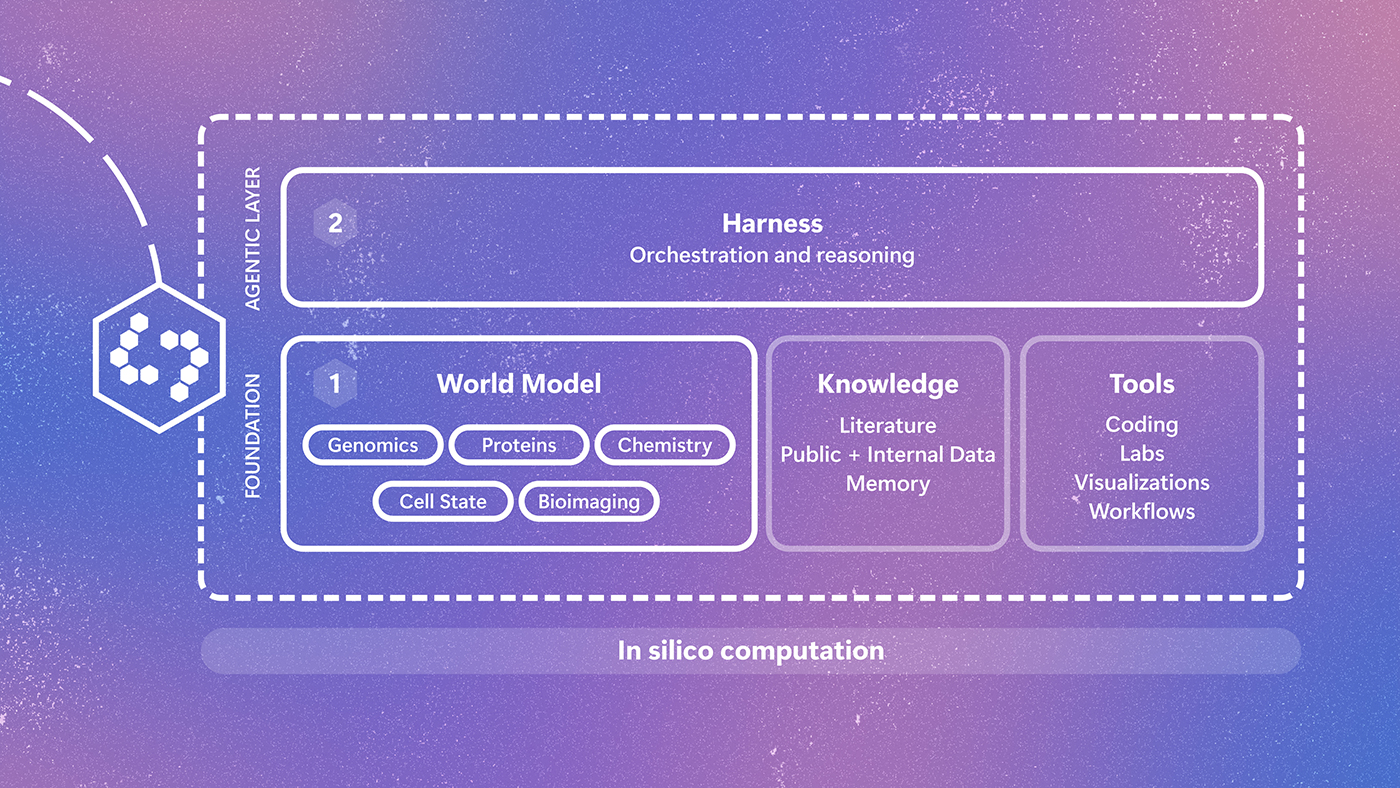
Biology doesn't operate in silos, and neither should the AI representation of it. Quine is an early-stage research effort to create a multimodal world model of biology. By connecting insights across biological scales and modalities, Quine helps scientists computationally search a space far larger than intuition allows and prioritize hypotheses before they reach the lab. Experimental results provide important feedback, helping researchers sharpen future research directions. The post Introducing Q…