Accurate trajectory forecasting and well-defined predictive uncertainty are crucial for reliable, safety-critical applications such as autonomous driving. Most trajectory prediction approaches provide point estimates only, while uncertainty-aware approaches typically quantify uncertainty only in the trajectory space. I...
We study personalized federated linear stochastic approximation (LSA), a framework which notably encompass personalized temporal difference learning. In this setting, heterogeneous agents collaborate to solve distinct linear fixed-point equations, each corresponding to an agent-specific learning problem. A central open...
Safwan Labbi, Paul Mangold, Eric Moulines· 0 citations
We study online sparse linear regression (OSLR) where any algorithm is restricted to accessing only $b$ out of $d$ attributes per instance for prediction and $b_0\geq 0$ additional attributes after prediction, which was proved to be NP-hard. Previous work focused on designing computationally efficient algorithms under...
Xiaofeng Cao, Junfan Li, Langzhang Liang et al.· 0 citations
Acquiring realistic microstructure data through Electron Backscatter Diffraction (EBSD) is costly and time consuming, often relying on specialised equipment. As microstructures strongly influence material properties, generating realistic samples is essential for modelling the behaviour of polycrystalline materials. We...
Dawid Lipinski, Jixiang Qing, Henry Moss· 0 citations
Reach audiences
Advertise in front of researchers, engineers, and readers.
Synthetic tasks are increasingly used both as probes of language-model capability and as pretraining data. Both uses are often justified by loss reduction: falling loss is treated as informative, and faster loss reduction with more sampling as evidence that a task is worth sampling. We separate three signals. A task is...
Federated reinforcement learning (FRL) enables distributed agents to collaboratively train decision-making policies, but its decentralized training process also exposes global policy learning to Byzantine manipulation. Existing poisoning attacks primarily focus on how to construct malicious updates, while trajectory-le...
Population gradient flow is a common tool for reasoning about how neural networks adapt, including after pretraining. We show that it can mispredict finite-batch stochastic gradient descent (SGD) qualitatively, and we trace the discrepancy to a specific mechanism. In a two-unit ReLU regression, a source task drives the...
Ruo-Yu Zhao, Ming-Xuan Zhang, Jian-Bo Dai et al.· 0 citations
Experiments show that MotiveMob consistently achieves better distributional fidelity than competitive pretraining-based and prompting-based methods under user-level and temporal distribution shifts, demonstrating robust generalization to out-of-distribution mobility patterns.
Meng-Kun Gao, Zeng-Qing Wu, Ren-He Jiang et al.· 0 citations
On-policy distillation (OPD) trains a student model by aligning its policy with a teacher model on trajectories generated by the student model itself. Through this process, the student policy moves toward the teacher on the prompts used for distillation. However, these prompts are often private and costly, creating a n...
Yilong Yang, Wenzhuo Shang, Yule Liu et al.· 0 citations
Public mobile and wearable mental-health datasets often provide summarized feature tables rather than synchronized raw sensor streams. In these releases, each anchor corresponds to a survey or label time and may combine phone or wearable summaries, prior symptom scores, demographics, clinical variables, and source-avai...
Wen-Tao Wang, Li-Feng Han, Zi-Ning Ren et al.· 0 citations
Experiments show that CryoCue improves backbone localization near hetero components and achieves more accurate protein structure reconstruction, and is introduced, a framework that uses hetero information to guide protein reconstruction.
Xu Han, Chao-Zhuo Li, Xiao-Wei Yuan et al.· 0 citations
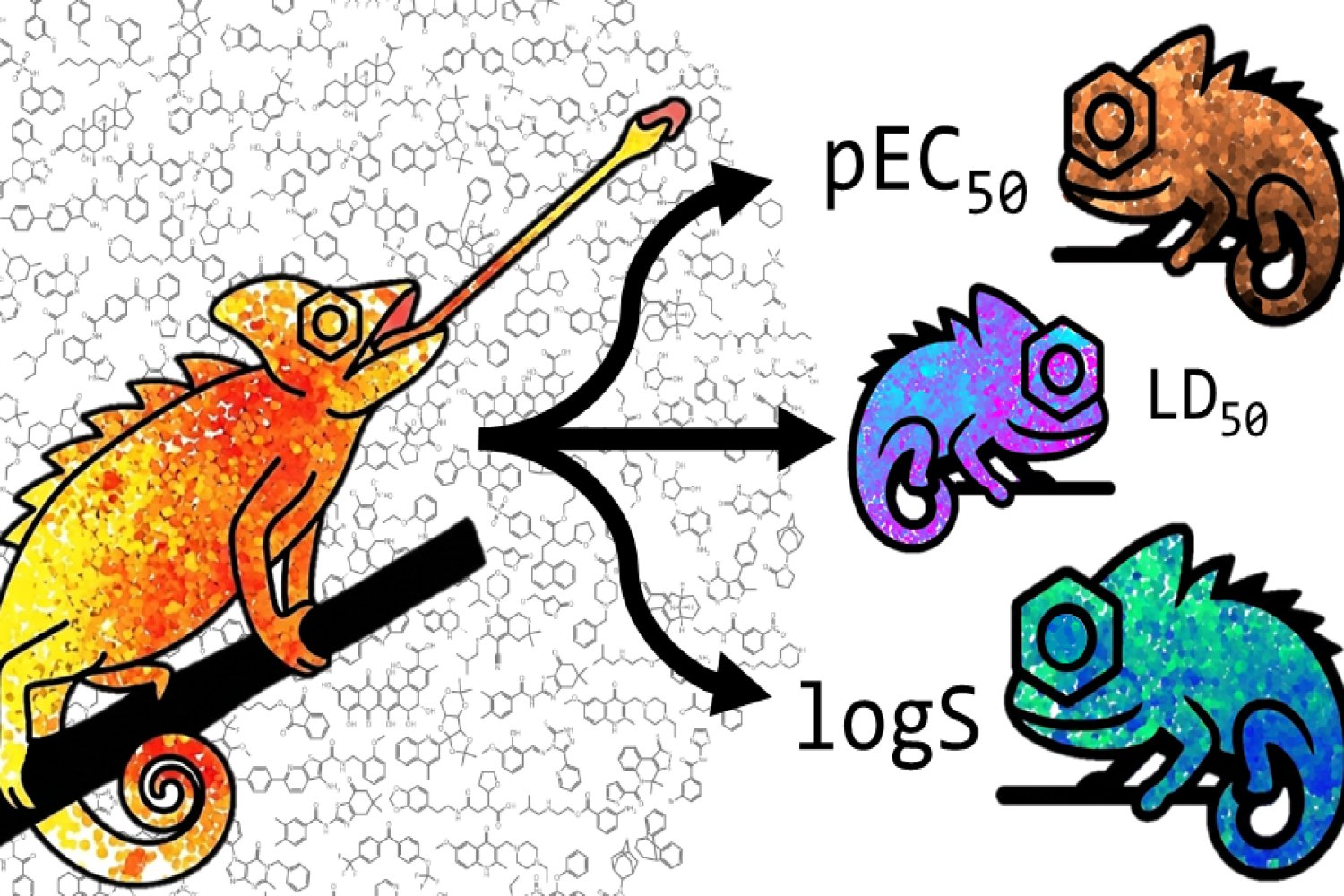
A machine-learning approach called CheMeleon provides a practical way to develop new drugs or other molecules with much less detailed, expensive experimentation.
Research Manager Mike Walker reflects on a career spanning hacker culture, cybersecurity, and AI, sharing lessons about trust, teamwork, leadership, and why solving difficult problems requires curiosity, judgment, agility—and an understanding of the rules. The post Learn the rules: The hacker mindset appeared first on Microsoft Research.
We use cookies to run the site and, with your consent, for analytics and to show ads.
See our Cookie Policy.