#generative ai
Sep 2026
Using Generative AI Before, During, and After Faculty Mentoring.
D. Adekunle, Cory Stephens
· Nurse Educator · 0 citations
Category
2,717 papers
This systematic review examines how artificial intelligence (AI), including generative AI and explainable AI (XAI), is reshaping assessment practices in higher education. Drawing on 31 empirical, conceptual, and review-based studies published between 2015 and 2025, the review identifies major shifts in the use of AI-su...
Artificial Intelligence (AI) has rapidly transformed pharmaceutical sciences, biotechnology, and life science research by enabling intelligent data analysis, predictive modeling, and automation of complex scientific workflows. Modern AI technologies, including machine learning, deep learning, natural language processin...
Perceived generative AI complementarity was positively associated with both psychological resources, and both resources were positively associated with job engagement and job embeddedness.
Reach audiences
Advertise in front of researchers, engineers, and readers.
ABSTRACT This review explores the pedagogical affordances of Gemini Live, Google's multimodal generative AI (GenAI) chatbot, for communicative language teaching, with particular attention to task‐based interaction. Unlike earlier text‐ or voice‐based GenAI chatbots, Gemini 2.5 released in 2025 integrated live vision an...
Non-convex optimization is notoriously bottlenecked by the ubiquity of high-dimensional saddle points and degenerate energy plateaus, where standard gradient descent, momentum methods, and stochastic Langevin dynamics suffer polynomial or exponential deceleration O(1/ε²) or spurious limit cycles. In this work, inspired...
Following the long inertia of Enlightenment influence and decades of neoliberal propaganda, generative AI is hailed as the most recent revolutionary force that is prophesied to redefine not only what education and knowledge production mean, but also what human civilization could potentially look like. This thesis criti...
Technology is increasingly integrated into dairy cattle management to monitor health and productivity. The rise of artificial intelligence (AI) has led to a plethora of claims that AI could improve animal welfare, yet much of this discussion lacks critical reflection. The overall aim of my thesis was to critically eval...
This instructional guide constitutes Session 1 of the four-part professional development course "Dual-Fluency Teacher: From Blind-Spot Analysis to Redesign Using the IAT Model" (August–September 2026). Session 1 focuses on unpacking the epistemic network of curriculum materials by transitioning from linear textual cont...
This paper proposes an AI-enabled target architecture for integrating generative and agentic AI capabilities into Enterprise Architecture. It combines capability modelling, governance, data and platform architecture, lifecycle controls, and investment analysis to show how organizations can move from isolated AI experim...
The entanglement between technology and methodology in qualitative research has largely been overlooked in management and organization studies (MOS). In this paper, we rectify this inattention, proposing that the way we analyze qualitative data be viewed as a socio-technical practice. Guided by social construction of t...
: Creativity is fundamentally a collaborative process. As generative AI becomes increasingly integrated into creative work, understanding how it reshapes collaboration becomes critical. This pre-registered study directly compares human-human and human-AI collaboration dynamics across two creative tasks: the Alternate U...
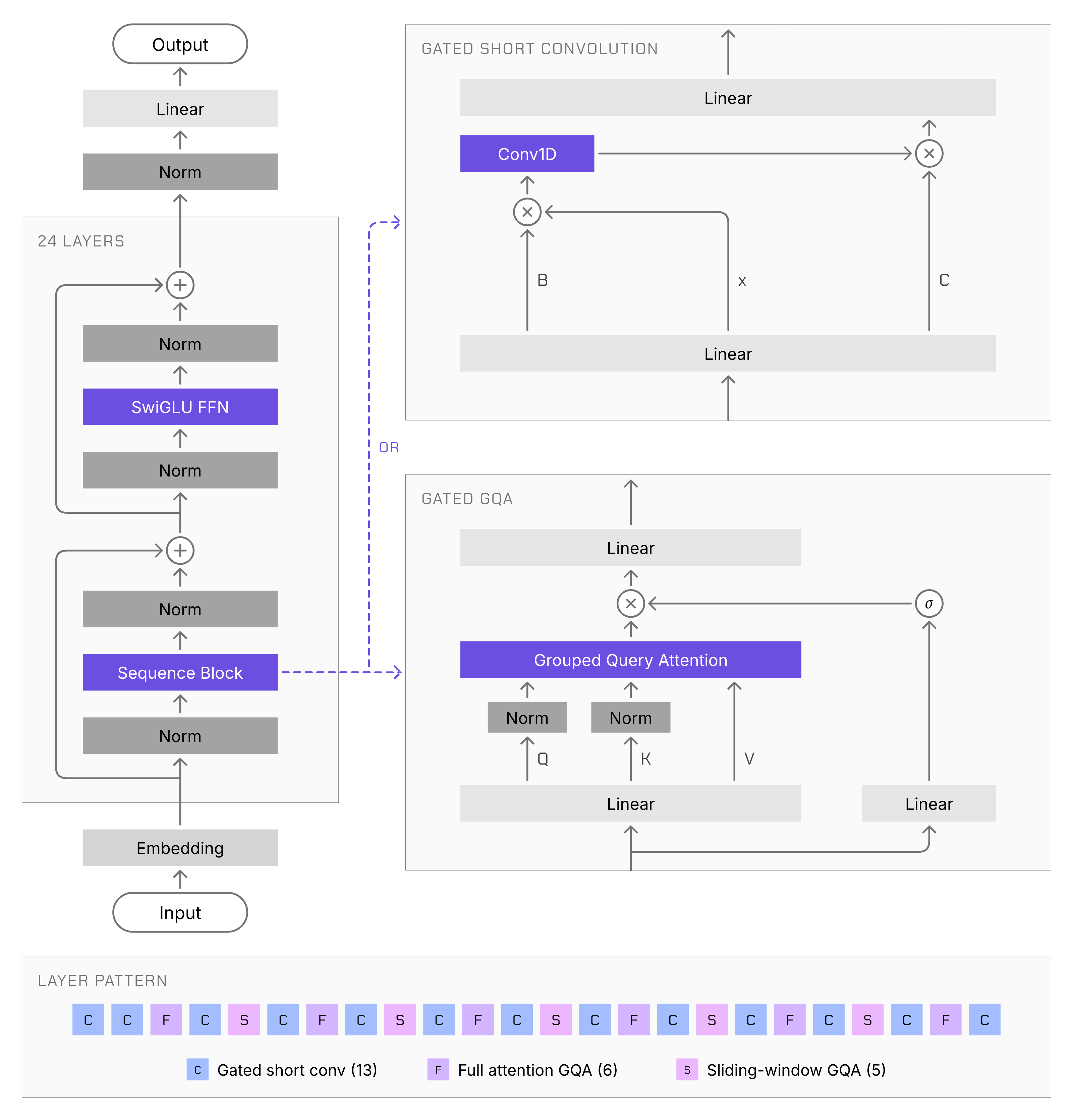
A Blog post by Liquid AI on Hugging Face
In Compton Lecture, the distinguished legal scholar warns of potential “loss of the Enlightenment” while suggesting ways innovations can meet our civic and cultural needs.
Generative AI
Assistant Professor Benjamin Lindquist studies how engineers deliberately injected randomness into early AI, giving rise to deep-learning models that sometimes hallucinate.
Flint-interactive gives AI agents a language for creating interactive visualizations. Click a chart, filter data, highlight related content, and explore beyond the view the author originally chose. The post Flint-interactive: A language for creating interactive data visualizations appeared first on Microsoft Research.
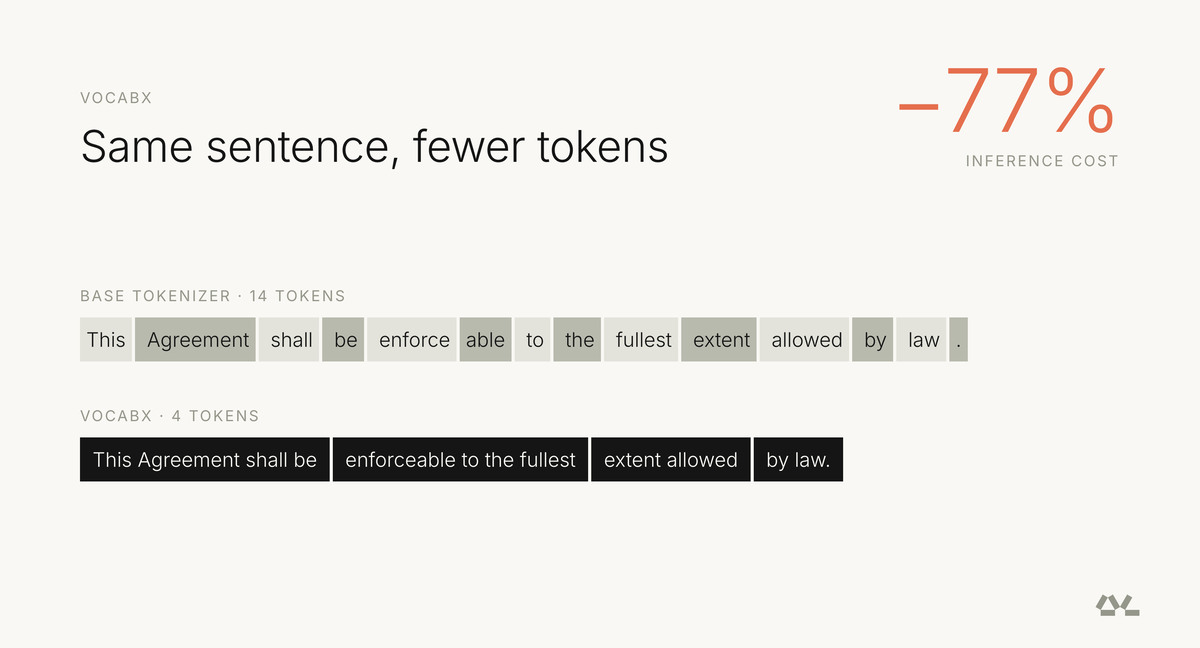
A Blog post by Dharma-AI on Hugging Face
We use cookies to run the site and, with your consent, for analytics and to show ads. See our Cookie Policy.