The dataset can be used to examine relationships among Generative AI usage, cognitive skill development, learning behaviour, personalised learning, and students’ learning outcomes using statistical techniques such as descriptive statistics, reliability analysis, correlation analysis, and regression analysis.
The rapid advancement of digital technology and Artificial Intelligence (AI) has significantly transformed the teaching and learning of Mathematics and Natural Sciences (STEM). While offering opportunities for adaptive and personalized instruction, these intelligent tools also introduce critical challenges to students'...
Muhibatur Rohmatul Akhiroh, Dulhamin Arif, Ani Hoerunisa et al.· SCIENCE Jurnal Inovasi Pendi...· 0 citations
This work proposes EraseSAE, a novel framework that leverages sparse autoencoders to achieve surgical concept erasure in DiT-based T2V diffusion models via a principled decompose-attribute-erase pipeline, and introduces the Partitioned Convolutional Sparse Autoencoder.
Xing-Hao Wang, Dong Li, Wei Yu et al.· 0 citations
How undergraduate primary care educators should be cautious of the heightened challenges to academic integrity posed by AI is highlighted, as well as key areas for medical educators to support learners' early engagement with AI.
Shabana Bharmal, Erik Blair, Michael Page· Journal of Primary Health Ca...· 0 citations
Reach audiences
Advertise in front of researchers, engineers, and readers.
This paper measures realized generative-AI adoption in frontline service occupations using task-level and occupation-level data from the Anthropic Economic Index, U.S. employment data, and O*NET. Sales, office and administrative support, food preparation and serving, and personal care and service account for 31.74 perc...
Sriramkrishnan Nandhakumar· Zenodo (CERN European Organi...· 0 citations
Abstract Disparities in the quality of healthcare persist globally, with poor-quality care contributing significantly to preventable mortality, particularly in low- and middle-income countries. While digital technologies, including generative artificial intelligence (AI), hold promise for improving clinical decision-ma...
Nicholas Rounding, Luthfi Saiful Arif, Janine Berg et al.· npj Digital Medicine· 0 citations
It is argued that, once the capacity to imagine futures becomes abundant, methodological attention must shift from producing more scenarios to managing that abundance while safeguarding quality, and five transferable design principles are consolidated.
J. F. I. Picó, Cristina Adroher Mas, Àngels Morales Lozano et al.· Systems· 0 citations
The Colgate University Libraries leadership team piloted the Viewfinder Exercise as a foundation for building shared organizational values around AI integration and informing the libraries’ strategic plan, revealing unspoken assumptions and tensions that rarely surface in routine project planning.
Generative AI inverts the typical periodization of literary history: the periodizing tag Victorian can now come first and influence what is written, but not robustly in Llama workflows.
This study studies how large language model (LLM)-powered chatbots respond to series of questions about legal reasonableness, and suggests that chatbot responses generally track those of human participants.
Nirav Patel, Emily Wenger, C. Buccafusco· Proceedings of the AAAI/ACM...· 0 citations
Agentic AI systems built on large language models fail in two persistent ways that scaling does not fix: they break under distribution shift, and they cannot explain the decisions they make. We argue these are co-symptoms of one structural deficiency in the data lifecycle that governs how agents are trained, evaluated,...
Assistant Professor Benjamin Lindquist studies how engineers deliberately injected randomness into early AI, giving rise to deep-learning models that sometimes hallucinate.
Microsoft Research Blog· microsoft.comOct 22, 2026
Flint-interactive gives AI agents a language for creating interactive visualizations. Click a chart, filter data, highlight related content, and explore beyond the view the author originally chose. The post Flint-interactive: A language for creating interactive data visualizations appeared first on Microsoft Research.
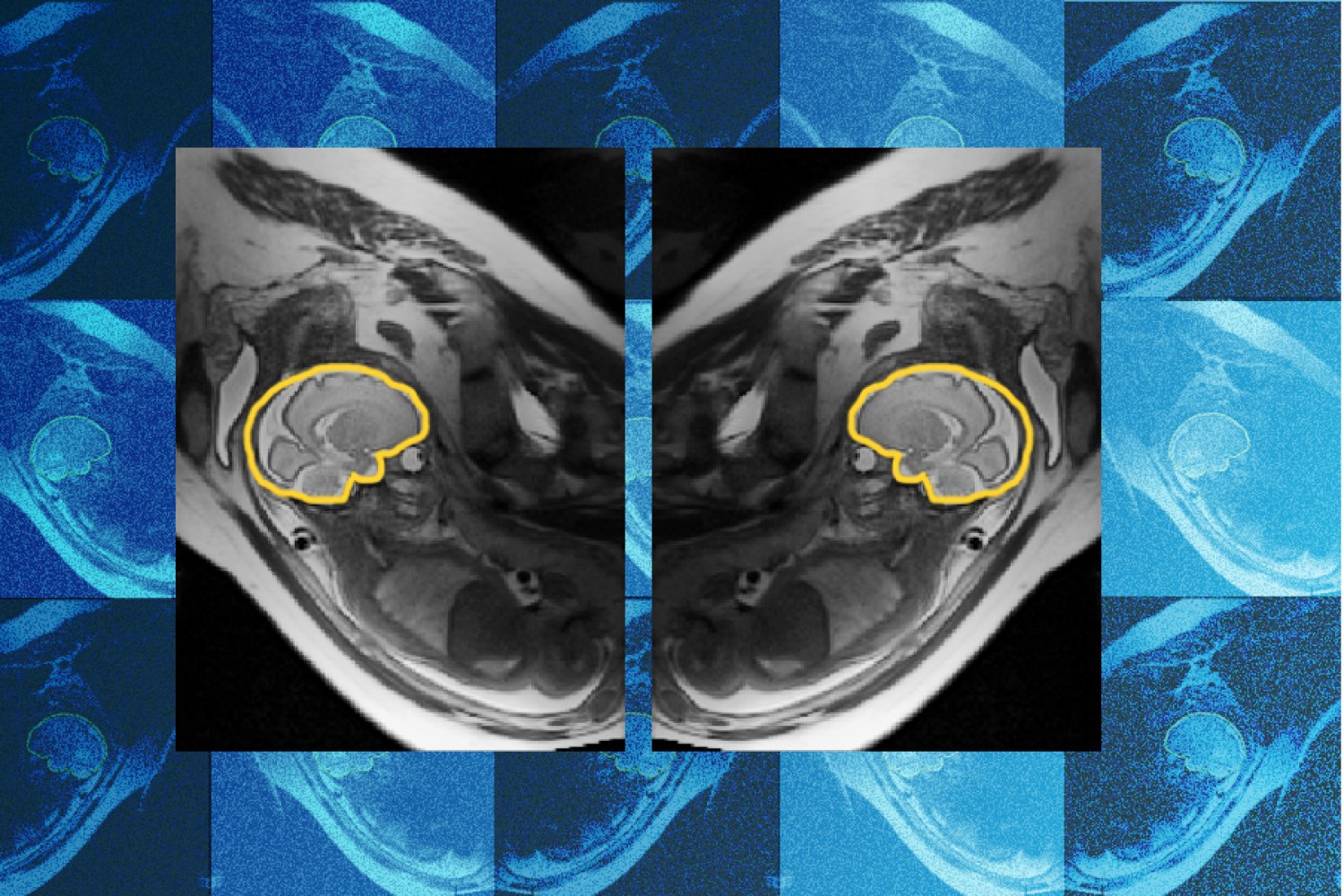
A model developed by researchers at MIT and Boston Children's Hospital adjusts scans on the fly to track fetal movement, potentially sparing families repeat hospital visits.
MIT News · Artificial Intelligence· news.mit.eduOct 18, 2026