It is argued that neither the objections nor the assurances can currently be verified and that this unverifiability, rather than watermarking itself, is the substantive governance failure.
Alexander Nemecek, Vipin Chaudhary, Erman Ayday· 0 citations
The framework distinguishes similarity in observed capability from similarity in how it was formed, supporting analysis of explanation, transfer, replication, dependencies, governance evidence, and geoeconomic foundations.
It is argued that creative violence offers a transferable framework for understanding emerging forms of generative harm beyond deepfakes by shifting attention from reactive content moderation to the politics of creation itself.
Payal Arora, Ana María Miranda Mora, M. Zarzycka· Journal of Online Trust and...· 0 citations
FedMuse is proposed, a privacy-aware federated framework for multi-style text-to-image art generation, in which distributed clients collaboratively train a shared generative model while keeping their private art data local, and an adaptive privacy regularizer is introduced to reduce memorization risk while maintaining...
This dataset contains photorealistic, high-resolution AI-generated facial portraits created by the authors to support research in synthetic media forensics, deepfake detection, and generative source attribution. Existing synthetic face benchmarks focus heavily on legacy Generative Adversarial Networks (GANs) or early l...
Modern AI capability is increasingly a property of an augmented system rather than a frozen model: test-time computation, retrieved evidence, tools, memory, interfaces, and control rules can all change what is feasible. Generative Calculus II (GC-II) asks where such gains come from. It lifts factorial attribution from...
Md. Amir Khusru Akhtar· Zenodo (CERN European Organi...· 0 citations
Using Csikszentmihalyi’s Systems Model of Creativity, Deleuze and Guattari’s Assemblage Theory, and Rowe’s classification of interactive computer music systems, this article explores how AI-mediated environments for real-time, human-machine co-collaboration transform the ontological and political meaning of performance...
Steven Lewis· Zenodo (CERN European Organi...· 0 citations
The findings show that grammatical dimensions of AI positioning pattern differently across evaluative contexts and should not be collapsed into a single agency gradient.
Xuan-Yu Gu, Hao Xu· International Journal of App...· 0 citations
Machine-readable watermarks and model-side provenance metadata answer one question: whether a generative system participated in a text, proof, or code artifact. They do not answer the questions that determine inventorship, academic credit, and institutional ownership: what a human conceived, contributed, decided, rejec...
Melinda B. Chu· Zenodo (CERN European Organi...· 0 citations
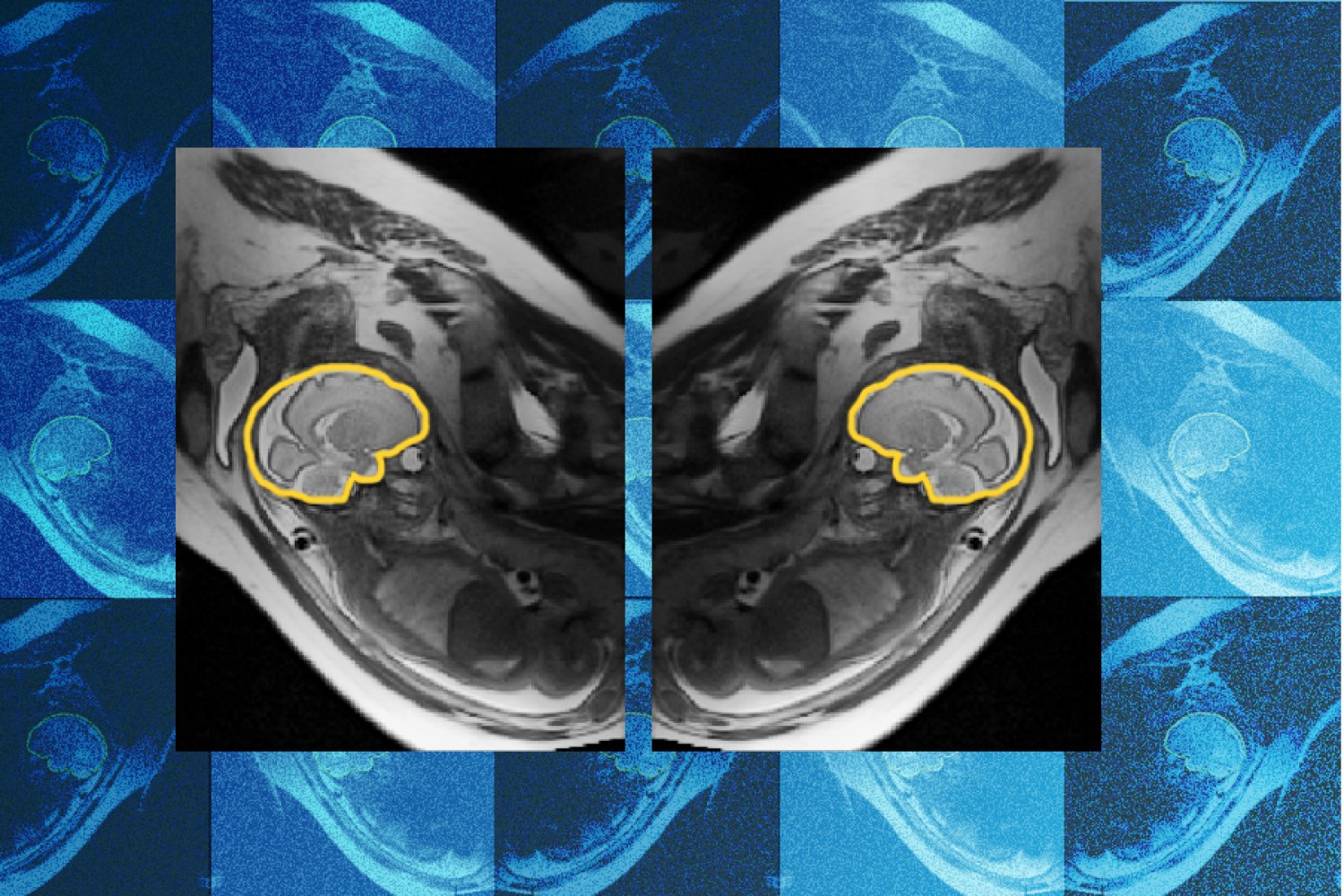
A model developed by researchers at MIT and Boston Children's Hospital adjusts scans on the fly to track fetal movement, potentially sparing families repeat hospital visits.
MIT News · Artificial Intelligence· news.mit.eduOct 18, 2026
A new computational approach reveals how cells communicate to assemble into tissues. This could accelerate stem cell engineering, improve disease models, and inform therapies.
We use cookies to run the site and, with your consent, for analytics and to show ads.
See our Cookie Policy.