Welcome Inkling by Thinking Machines
More from the blog
Thinking of ACE? We Can Do It with Fewer Tokens
A Blog post by IBM Research on Hugging Face
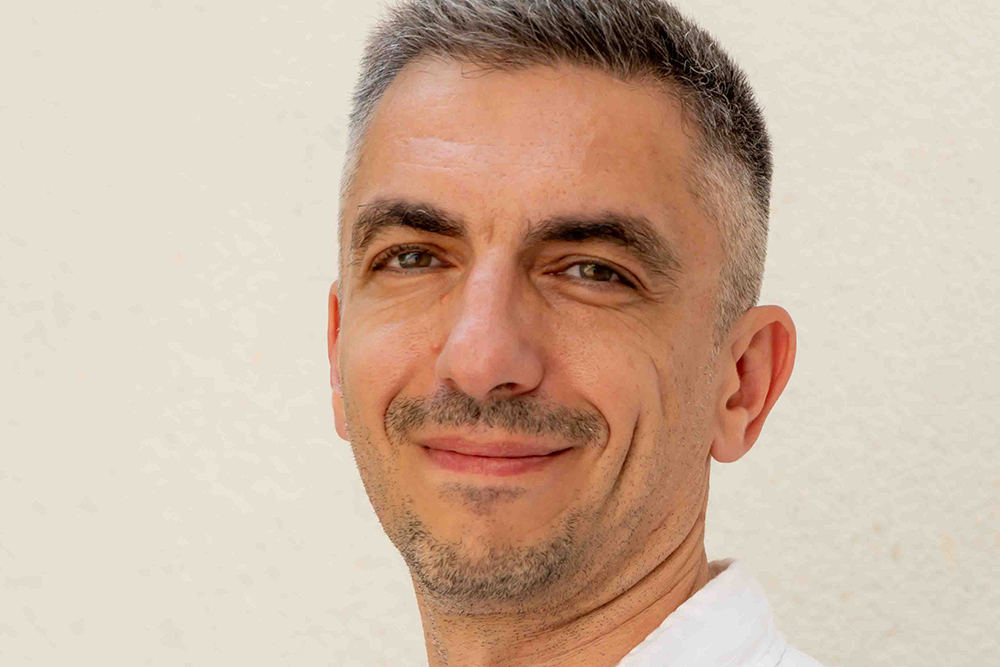
Alexander Rakhlin named director of the MIT Statistics and Data Science Center
An expert in machine learning, statistics, and computation, Rakhlin succeeds Professor Ankur Moitra.

Towards a quantum computer that learns from its errors
Machine Intelligence
Accelerating Gemini Nano models on Pixel with frozen Multi-Token Prediction
Machine Intelligence
Related papers
Spikformer V2: Join the High Accuracy Club on ImageNet with an SNN Ticket
This work introduces a pioneering exploration of Self-Supervised Learning (SSL) within the SNN, and proposes a novel Spiking Self-Attention (SSA) and Spiking Transformer (Spikformer) that achieves 80+% accuracy on ImageNet.
EquiPocket: an E(3)-Equivariant Geometric Graph Neural Network for Ligand Binding Site Prediction
EquiPocket is proposed, an E(3)-equivariant Graph Neural Network for binding site prediction, which comprises three modules: the first one to extract local geometric information for each surface atom, the second one to model both the chemical and spatial structure of protein and the last one to capture the geometry of the surface via equivariant message passing over the surface atoms.
The Optimal Sample Complexity of Multiclass and List Learning
It is shown that the maximum hypergraph density of any multiclass hypothesis class is upper-bounded by its DS dimension, which proves a longstanding conjecture of Daniely and Shalev-Shwartz (2014) and determines the optimal dependence of the sample complexity on the DS dimension for multiclass as well as list learning.
Fermi-Dirac thermal measurements: A framework for quantum hypothesis testing and semidefinite optimization
Quantum measurements are the means by which we recover messages encoded into quantum states. They are at the forefront of quantum hypothesis testing, wherein the goal is to perform an optimal measurement for arriving at a correct conclusion. Mathematically, a measurement operator is Hermitian with eigenvalues in [0,1]. By noticing that this constraint on each eigenvalue is the same as that imposed on fermions by the Pauli exclusion principle, we interpret every eigenmode of a measurement operator as an independent effective fermionic mode. Under this perspective, various objective functions in quantum hypothesis testing can be viewed as the total expected energy associated with these fermionic occupation numbers. By instead fixing a temperature and minimizing the total expected fermionic free energy, we find that optimal measurements for these modified objective functions are Fermi-Dirac thermal measurements, wherein their eigenvalues are specified by Fermi-Dirac distributions. In the low-temperature limit, their performance closely approximates that of optimal measurements for quantum hypothesis testing, and we show that their parameters can be learned by classical or hybrid quantum-classical optimization algorithms. This leads to a new quantum machine-learning model, termed Fermi-Dirac machines, consisting of parameterized Fermi-Dirac thermal measurements-an alternative to quantum Boltzmann machines based on thermal states. Beyond hypothesis testing, we show how general semidefinite optimization problems can be solved using this approach, leading to a novel paradigm for semidefinite optimization on quantum computers, in which the goal is to implement thermal measurements rather than prepare thermal states. Finally, we propose quantum algorithms for implementing Fermi-Dirac thermal measurements, and we also propose second-order hybrid quantum-classical optimization algorithms.