Vibe Coding XR: Accelerating AI + XR prototyping with XR Blocks and Gemini
Human-Computer Interaction and Visualization
More from the blog
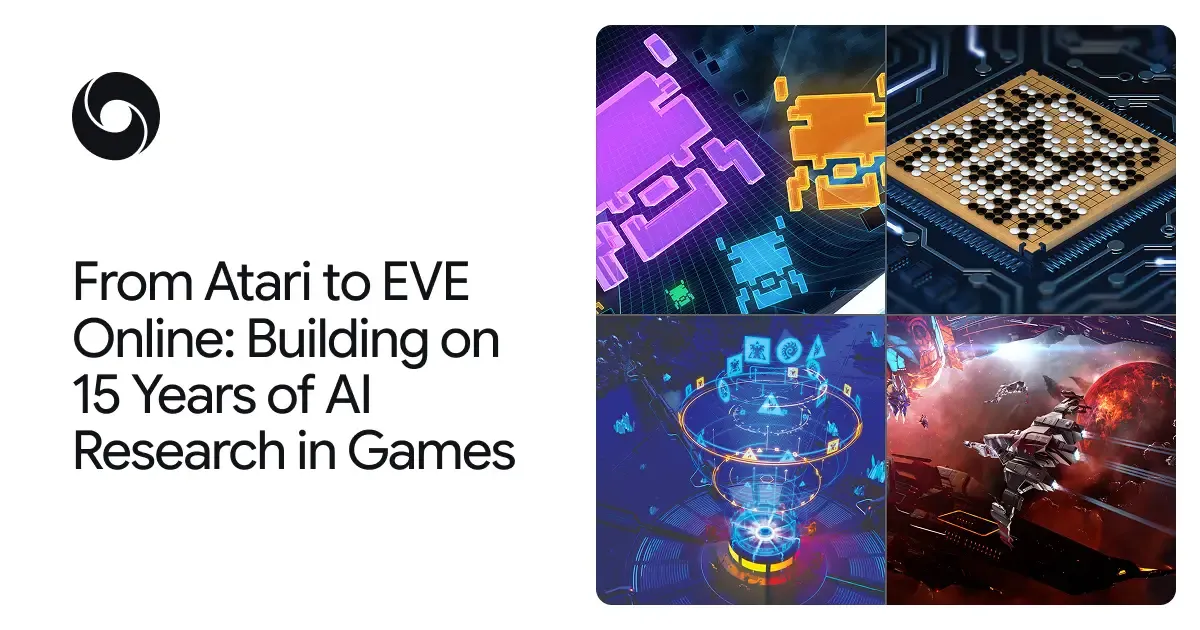
From Atari to EVE Online: Building on 15 Years of AI Research in Games
Google DeepMind partners with game studios to prototype breakthrough AI gameplay.

Introducing Gemini 3.7 Flash
Gemini 3.7 Flash is our most intelligent workhorse model yet for coding and agents.
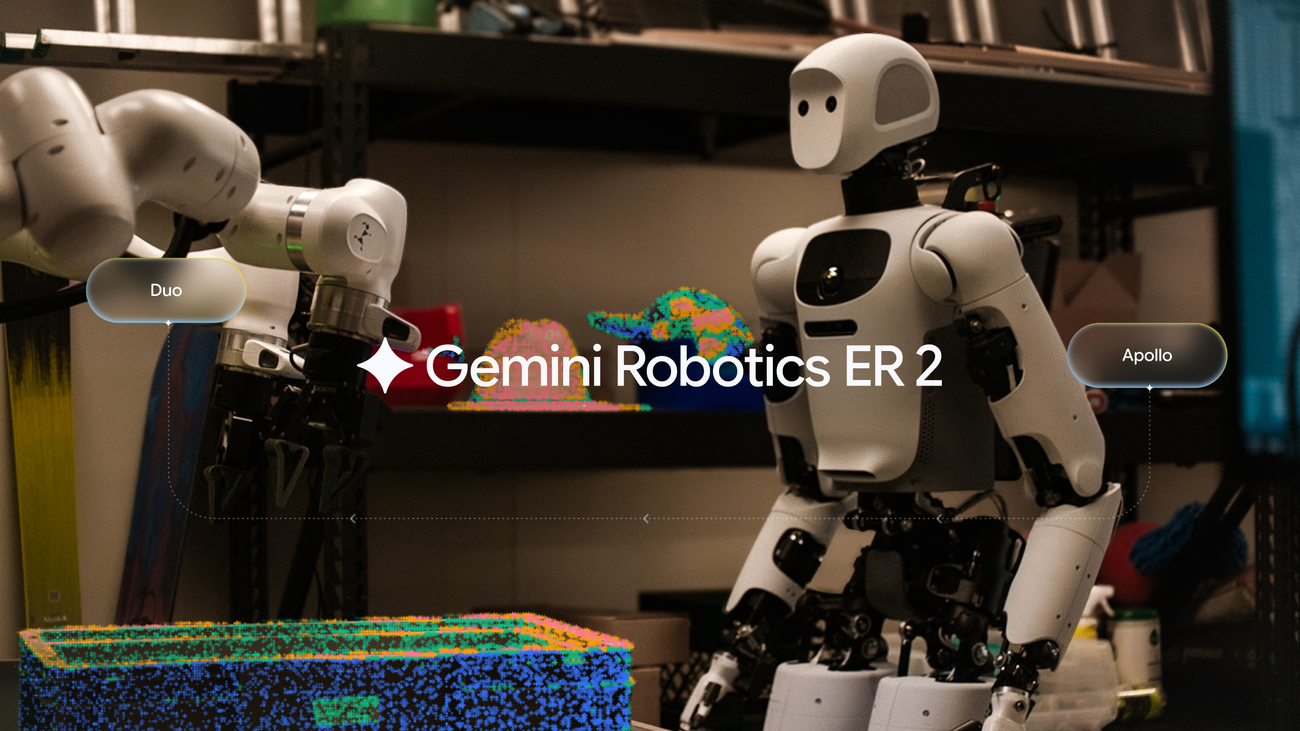
Gemini Robotics ER 2: powering robotics with video understanding, task orchestration, and multi-robot collaboration
Gemini Robotics ER 2 helps robots reason, collaborate, and solve real-world tasks. It represents a step change in video understanding, tool orchestration, and multi-robot collaboration for robotic applications.
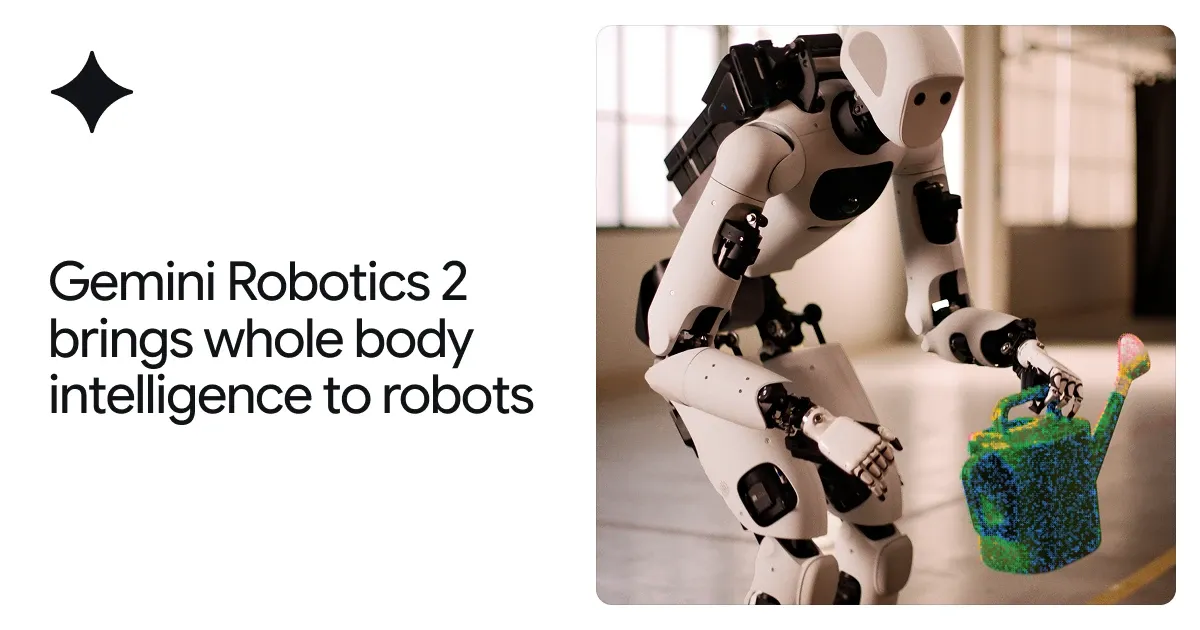
Gemini Robotics 2 brings whole body intelligence to robots
From feet to fingertips — we are teaching robots intelligent whole-body control, fine dexterity, and teamwork to complete a broad range of complex tasks.
Related papers
Artificial Intelligence for Real-Time Cyber Threat Classification and Emerging Threat Detection: A Structured Review of Methods, Datasets, Challenges, and Research Directions
The reviewed literature indicates that AI-based methodologies often demonstrate superior detection capabilities for intricate and previously unseen attack patterns compared to traditional methods; however, direct performance comparisons are complicated due to discrepancies in datasets, experimental designs, and evaluation protocols.
Adaptive Repayment Optimisation for SME Lending: A Stochastic Programming Framework with Generative AI Explanation
The Adaptive Repayment Optimisation Engine is introduced, a novel framework that applies constrained stochastic optimisation to the design of loan repayment schedules for small and medium-sized enterprises (SMEs) and contributes to the operations research literature by bridging stochastic programming, explainable AI, and financial regulation in a novel application domain.
EgoCITE: Context-Augmented Indexing and Time-Aware Retrieval for Long-Horizon Egocentric Memory
This work introduces EgoCITE (Egocentric Context-augmented Indexing and Time-aware Evidence retrieval), a long-horizon agentic memory framework for egocentric QA that improves accuracy over agentic memory baselines by at least 4.4--14.2% while achieving 36$\times$ lower cost than long-context LLM agents.
Bernstein-Vazirani Networks: Quantum Machine Learning by Interference
We introduce Bernstein-Vazirani Networks (BVNs), a non-variational quantum machine learning framework that leverages quantum interference for supervised learning, demonstrated on vision and representation learning tasks. In their standard form, BVNs follow the principle of quantum Fourier sampling: labelled data are placed in superposition and interfered in the Fourier basis to extract globally informative features. We then define generalised BVNs that enable interference in problem-adapted bases, yielding more expressive models under the same measurement budget as in the standard setting. BVNs achieve universal function approximation through (over)complete interference bases, while training of BVNs is gradient-free. Experiments on synthetic and real-world classification tasks, as well as implicit image representation, show strong generalisation capabilities and competitive performance with classical and quantum baselines.